
Experiences
Day trips, boat outings, traditions you can join in on — what to do beyond another lounger on the beach.
Cycling the Costa del Sol: 5 Routes for Every Level plus Where to Rent
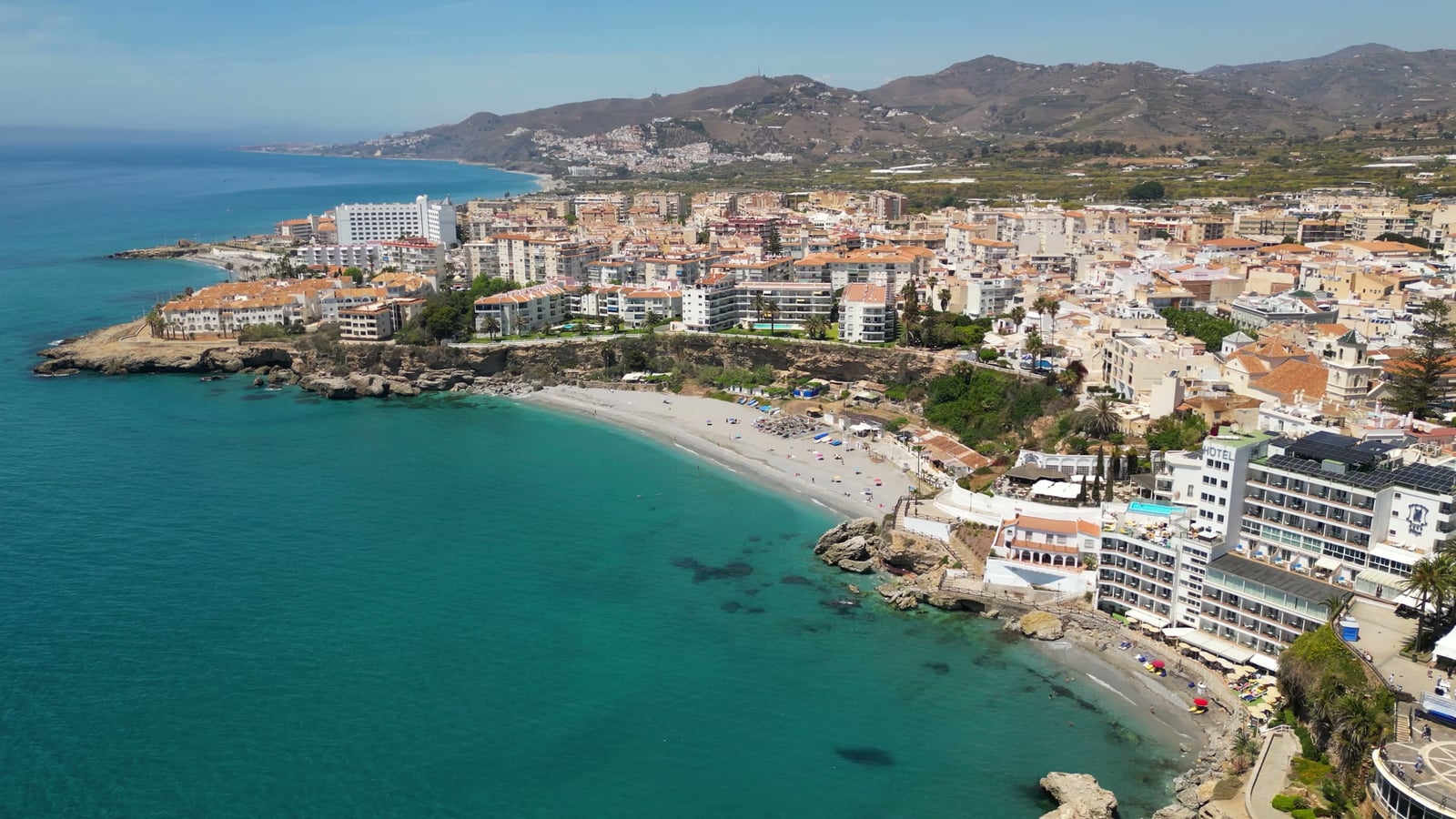
The Costa del Sol has a twin character for cyclists: 100 km of flat coast path where you can just roll, and 600 metres straight up if you head inland. Here are five routes for every level, where to rent a bike, and which months to avoid. Senda Litoral — The flat 100 km coast path for everyone. The Senda Litoral has been the through-going gravel path along the whole Costa since 2020: 100 km from Estepona via Marbella to Torrox. No climb, no technical bits, no cars. Perfect for kids 8+, beginners and family outings. We do a 30-km loop from Marbella to Cabopino every September — start 09:00, lunch at a chiringuito, back around 14:00. The path has shaded sections but summer (12:00-17:00) is unworkable due to 35°C+ on the open parts. Start Marbella: Puerto Deportivo, head east 30 km loop: Marbella → Playa de Cabopino, 2 hours one way Best months: April + May + September + October Avoid: July/August 11:00-18:00 (health risk) Marbella → Ojén — The 600m climb in 12 km. The Marbella to Ojén ride is the classic climb of the western Costa: 12 km, 600 metres altitude, 5.8% average gradient. Doable in 75-90 minutes for mid-trained cyclists (40 km/week). At the top: the white mountain village of Ojén at 380m, with café-restaurants for lunch and spectacular sea views. We do this once a month — the descent is 25 minutes of pure fun. Departure: Marbella Puerto Deportivo, route via MA-577 Time up: 75-90 min Best months: May + June + September + October Lunch up there: Restaurante La Posada del Conde €15 menu del día Tip: leave before 09:00 to return to Marbella before 12:00 Sierra Blanca route — For mountain lovers. For advanced cyclists: the Sierra Blanca cycling route from Marbella up to Refugio de Juanar (1100m) — 18 km, 900 metres climb, 5% average. This is a serious ride you should budget 2.5-3 hours for. UK pro team Sky/Ineos has done its Sierra Nevada warm-ups here. We went last October with a friend prepping for a gran fondo — tough, stunning views over the coast plus the mountains at once. Departure: Marbella Puerto Deportivo Time: 2.5-3 hours climb, 1 hour back Required: 80+ km/week training Avoid: summer (no shade), winter (possible ice) Tip: book coffee + bocadillo ahead at Refugio de Juanar (phone +34 952 881 000) Cabopino loop — Beach plus pine-forest mountain biking. Playa de Cabopino sits 17 km east of Marbella with the Reserva Natural Los Monteros right behind it — pine forest with 30 km of MTB tracks. No climb, but sandy stretches and roots — a perfect beginner MTB spot. We come here with the kids (from 10 years old) — 1.5 hour loop is enough for a morning. Back at Cabopino: chiringuito for lunch, beach for the afternoon. Departure: park at Cabopino harbour MTB track: follow the red trail markers Time: 90 min comfortable, 2.5 hours full Level: beginner-intermediate Tip: bring water and a snack, no facilities on the track Estepona → Casares route — White villages by bike. From Estepona to Casares (15 km, 350m climb) is a mid-level route that combines coastal cyclists with culture seekers. Casares is one of the most beautifully whitewashed mountain villages in Andalusia — stacked vertically on a rock outcrop, with a Moorish castle ruin on top. We usually do this ride in October — start at Puerto de Estepona, A-377 inland to Casares, lunch on Plaza de España, return via MA-8300 (quieter and prettier). Departure: Puerto Deportivo Estepona Time: 90 min up, 60 min back (mostly downhill) Lunch: Restaurante Casares Centro €18 menu Best months: May + October (summer = too hot) Tip: weekends are busier with cyclists — midweek more room Where to rent + practical. Bikemania Marbella: Puerto Banús office, road bikes €25/day, mountain bikes €20/day, e-bikes €35/day — open daily 09:00-19:00 CycleSpain Marbella: road and tri-bike specialist, €30-50/day — reservation only Bici Marbella Centro: town and Senda Litoral cruisers €15/day — walk-in from 10:00 Helmet: mandatory included, bring your own pedals if you ride clips Best months: May + June + September + October (July/August only before 09:00 or after 19:00) Avoid in July/August: Sierra Blanca route, Ojén climb (no shade, 38°C+) Insurance: ask specifically for 'todo riesgo' bike insurance, not all shops do this by default --- Photos: Calapito (public domain), Zarateman (CC0), via Wikimedia Commons.

Alhambra Granada: How Locals Plan a Stress-Free Visit
The Alhambra is Spain's most-visited monument — 8,500 tickets a day, fully allocated 6 weeks out in July/August. But knowing three tricks (ticket trick, route reversal, tapas quarter) turns it from a stress day into one of the best day trips you can take from the Costa del Sol. Alhambra tickets — Three ticket strategies. The Alhambra of Granada has three main sections (Palacios Nazaríes, Generalife, Alcazaba) and your ticket fixes your slot for the key one: the Nasrid Palaces. Three strategies that work: Book 3 months ahead via tickets.alhambra-patronato.es — €19.09 standard ticket Book a guided tour if standalone tickets are gone — €40-60 (Civitatis or GetYourGuide) — guaranteed entry Last-minute cancellations — Monday morning 09:00 for the following week, small batches released For anyone who can't get Nasrid tickets: buy the Generalife + Alcazaba-only ticket (€7.42) — always available, that's 70% of the Alhambra experience. We did this two years ago in July when all palace tickets were gone — still a full day. Bring your passport: required at entry, name on ticket must match Early slot: 08:30 or 09:00 are cooler and quieter Tip: download your ticket offline beforehand — wifi and signal inside are unreliable The reverse route through the complex. Default everyone follows the arrows: entry → Alcazaba → Palacios → Generalife. We flip it: entry → Generalife first → Palacios → Alcazaba last. Reason: Generalife has the smallest crowd in the morning, and the Nasrid Palaces take the morning-tour groups around 11:00. By doing Generalife first you arrive in the Palacios around 10:30 when the first groups have moved through. We walked this route last October with my in-laws — three full hours in the complex without feeling rushed. Generalife first: 30 min, cool morning Palacios Nazaríes: 90 min, between morning groups Alcazaba last: 30 min, with view across Granada Tip: bring 1.5L of water — tap water inside is OK Albaicín — The Moorish quarter opposite the Alhambra. The Albaicín is the Moorish-Andalusian hillside quarter across from the Alhambra — UNESCO listed, narrow white streets, 12th-century city walls still partly intact. We always head to Albaicín after the Alhambra (around 14:00) — first lunch on Plaza Larga, then a walk up to Mirador de San Nicolás for the iconic Alhambra view. Especially around 18:30 in summer — the Alhambra glows red at sunset from this spot. Mirador San Nicolás: free, the most famous Alhambra photo point Tapas bars in Albaicín: Bodegas Castañeda (free tapa with every drink, classic), La Tana (wine bar) Tip: explore Plaza Larga for the street bars — most tapas tourism sits lower near the cathedral Catedral de Granada — The forgotten city centre. A lot of people forget Granada has a serious city centre beyond the Alhambra. The Catedral de Granada — built 1523-1704 on the foundations of the main mosque — is surprisingly empty compared to the Alhambra. €5 entry, the beautiful Capilla Real next to it (€6) where Queen Isabella I and Ferdinand are buried. We come here every visit to Granada — better Spanish Renaissance architecture than in Seville. Open: Mon-Sat 10:00-18:30, Sun 15:00-18:00 Price: €5 cathedral, €6 Capilla Real, €10 combo Tip: combine with the Madraza (old Muslim university) — free, next to the Capilla Real Practical: route from the Costa del Sol. Car from Marbella: A-7 + A-44, 2 hours (200 km) Train: Costa del Sol has no direct train to Granada — only Málaga → Granada (90 min, €28) Bus: ALSA Marbella → Granada direct, 3 hours, €18 one-way Best months: April + May + October (summer is 38°C+, complex has no shade) Time plan: leave 07:00 → 09:00 in Granada → Alhambra 09:30-13:30 → Albaicín lunch + mirador 14:00-18:00 → return 19:00 = full day Stay over: for those wanting to take it slow — book a hotel in Albaicín and do the Alhambra the next morning --- Photos: Jebulon (public domain/CC0), Benjamin Smith (CC BY-SA 4.0), via Wikimedia Commons; Google Maps contributors.
Ronda Day Trip: What Locals Don't Tell You About the White City on the Cliff
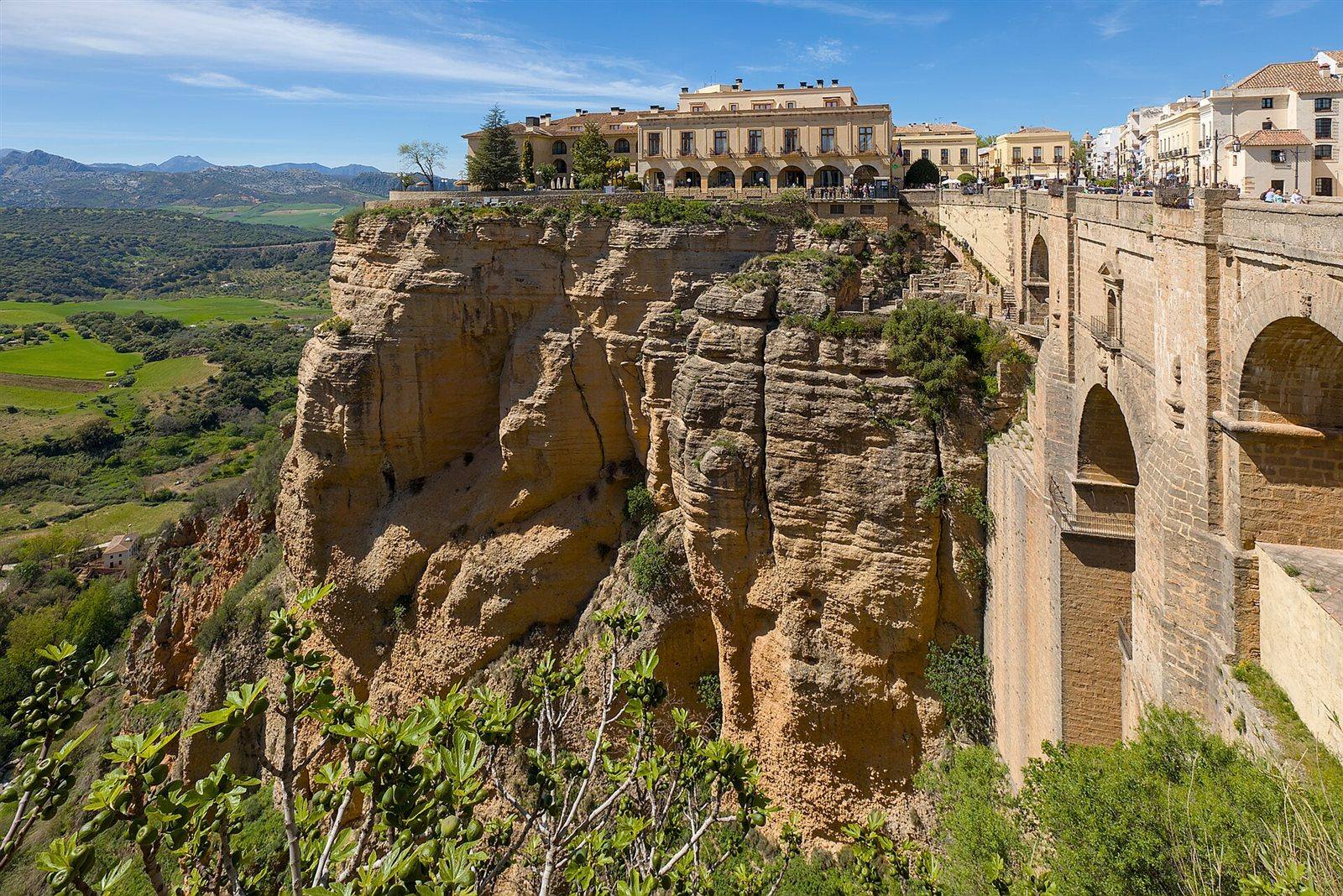
Ronda is one of the top 5 visited spots from the Costa del Sol — and that's why 90% of what's written about it is the same story: Puente Nuevo, bullring, terrace with view. Here's what a day-trip veteran tells you about the spots in Ronda where you actually move the needle. Plaza de Toros — Skip the tour, head to the museum. The Plaza de Toros de Ronda is the oldest bullring in Spain (1785). The standard tour costs €9 and runs 30 minutes — but 80% of what they show you is the arena itself, which you already overlook from the top tier. What a local guide told us two years ago: head straight to the Museo Taurino in the same building. That has the actual historical pieces — Ernest Hemingway's letter to the Ordoñez family, Goya's commission for the Pedro Romero portrait, and the first bullfighting masks from 1785. That museum gets five minutes in the standard tour while it deserves thirty. Open: daily 10:00-18:00 (summer), 19:30 in July-August Price: €9 including museum and arena Tip: head to the museum first before 11:00 (groups arrive from then) Casa del Rey Moro — The Moorish water mine is the highlight, not the garden. Casa del Rey Moro sells tickets for 'palace + garden + water mine'. Skip the palace (empty rooms), the garden is OK, but the water mine is the genuinely spectacular bit: 187 stairs down into the Tajo gorge, through Moorish tunnels carved in the 14th century. The first time we came here our daughter was 7 and the combination of candlelight and silence was terrifying and magical. Allow 30 minutes for the descent plus return alone. Open: daily 10:00-19:00 Price: €10 for water-mine-only access (ask for it) Not for: small kids under 5, knee problems Shoes: sturdy, it's slippery Bodega Descalzos Viejos — Wine in a 16th-century chapel in the gorge. Of all 13 bodegas in Ronda, Bodega Descalzos Viejos is the only one literally in the gorge — in an abandoned Franciscan chapel from 1599 on the west side below the town. The wine tour runs 2 hours, costs €25, and ends with a tasting of five wines on the terrace overlooking the Tajo. We went for our 12th anniversary — the owner told us it took 12 years to convince Spanish heritage authorities that a chapel could be restored as a winery. Tours: daily 11:00 + 13:00 + 15:00 + 17:00 Reservation required via descalzosviejos.com Best bottle: Esencia Tinto 2021 (€32) Pedro Romero — Eat partridge, not oxtail. Restaurante Pedro Romero opposite the bullring has been Ronda's most historic taberna since 1947. What they don't tell you: their famous rabo de toro (oxtail stew) is still offered for €22 — but 9 of 10 portions are the mass-produced version made from beef. What you SHOULD order: the perdiz a la rondeña (partridge Ronda-style, €28). That's their specialty since 1947, locally caught, slow-cooked in Manzanilla wine and served with orange. When I ordered this two years ago, the waiter looked at me as if I'd passed an exam. Open: daily 13:00-16:00 and 20:00-23:00 Reservation required for lunch and dinner Wine: ask for the house (Tio Romero, 7-year barrel) — free with menu del día Mirador alternative — Skip the Puente Nuevo queue. The Puente Nuevo itself is iconic — that stays. But the standard photo spot (Plaza de España side) is jammed with tour buses 10:00-14:00 in July-August. Our counter-tip: walk 8 minutes to the Mirador de Aldehuela on the west side of Ronda — fewer people, better light angle after 16:00, and from here you can see the bodegas (including Descalzos Viejos) in the gorge. Free, no reservation. Location: Calle Aldehuela on the west side Best time: 16:00-18:00 (sun behind you, gorge in full light) Other alternative: Mirador El Tajo at Hotel La Maestranza Practical: route and planning from the coast. From Marbella: A-376 (90 min), from San Pedro Alcántara via A-369 (75 min, scenic) Bus: daily 09:00 from Marbella bus station (€8 one-way, Damas Bus) Parking: Plaza de Toros car park €1.50/hour, avoid street parking (usually full) Best months: April + May + September (summer is 40°C in the gorge) Time plan: leave 09:00 from coast → 11:00 in Ronda → bodega 13:00 → lunch 15:00 → mirador 16:30 → return 18:00 = full day --- Photos: Benjamin Smith, José Luis Filpo Cabana, Tesla Delacroix (CC BY-SA 4.0), Matt Blackwell (CC BY-SA 2.0), via Wikimedia Commons; Google Maps contributors.
Caminito del Rey: Spain's Most Spectacular Walk and How to Get a Ticket
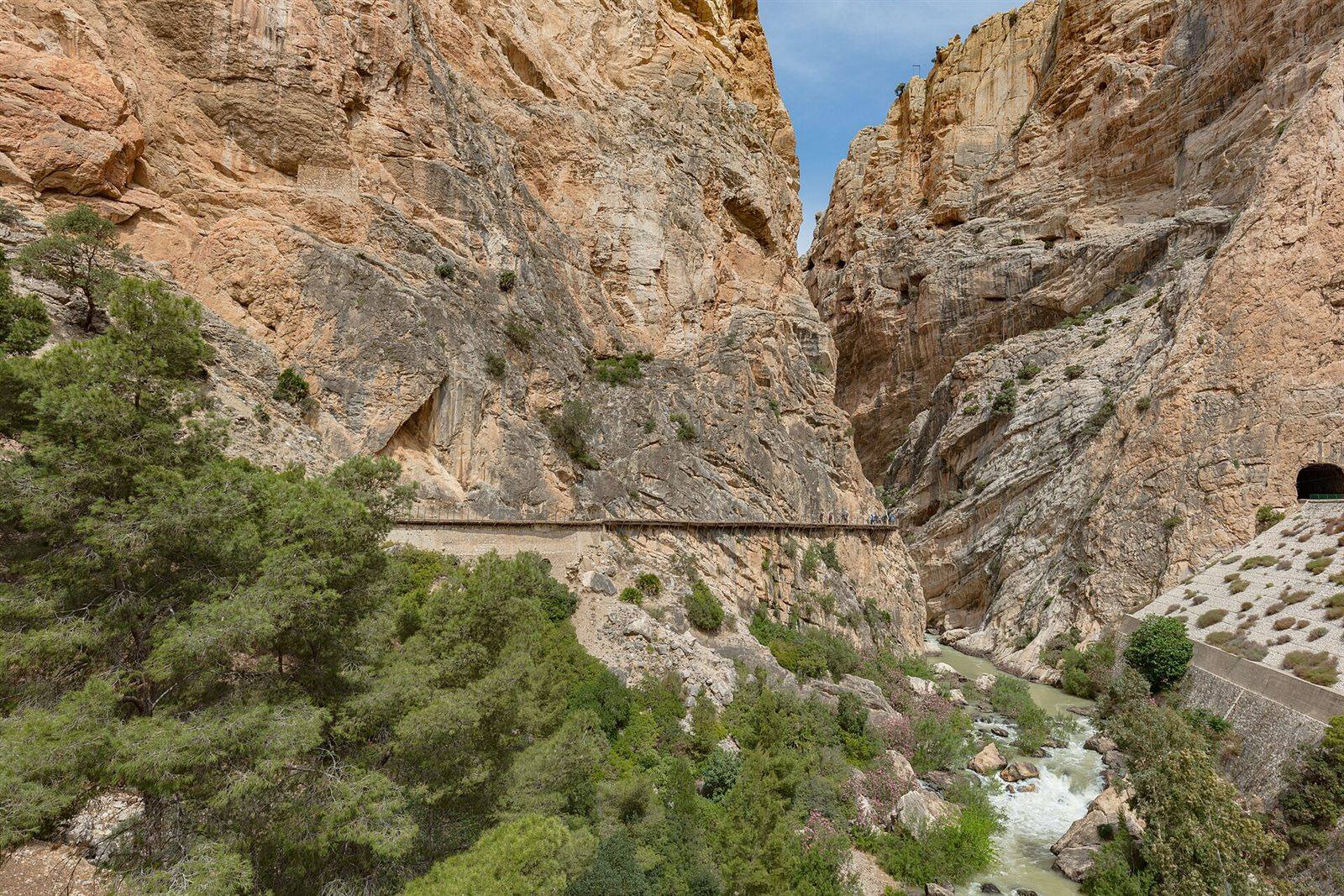
Caminito del Rey has been Spain's most famous walk since the 2015 restoration — a wooden boardwalk 100 metres above the Gaitanes Gorge. But the hardest step isn't the walk itself, it's getting a ticket. Here's how we book it, what you actually see, and what you do around it to turn it into a real day trip. What Caminito del Rey is and isn't. Caminito del Rey is a 7.7 km walking route north (Ardales) to south (El Chorro), of which about 3 km is the restored wooden boardwalk over the Gaitanes Gorge. Helmet required, one-way, minimum age 8. The walk takes 3-4 hours — not technically demanding (no climbing) but mentally taxing for anyone with vertigo. The first time we came here in 2023 I thought 'this is over-hyped' — until I stood on the first plank and saw the river 100 metres below. It is not over-hyped. It's not: a hard mountain hike — it's a restored wooden boardwalk on a flat path It is: six high sections where you really look through the gorge Helmet rental included in the ticket How to get a ticket — the tricks that work. Tickets go online via caminitodelrey.info. Standard release is 90 days ahead, but in July/August everything is gone weeks out. What we do: Monday 09:00 (Madrid time) check — that's when cancellations are released. Alternative: book a guided tour at €18 (instead of €10 self-guided) — more slots available and you get the history. For El Chorro this is the only way in on a busy summer Saturday. Best months: April + May + September + October (summer is hot, little shade) Self-guided: €10, your own pace Guided: €18, departures every 30 min, EN/ES/NL available Cancellations: same-week cancellations often surface Friday morning The route in practice: four highlights to look for. The route runs north to south — you start at the Conde de Guadalhorce reservoir near Ardales, end at El Chorro train station. The four visual highlights to spot: (1) the first boardwalk after 30 min where the plank narrows, (2) the suspension bridge midway with a glass section in the middle, (3) the Roman aqueduct remnant on your right around km 4, and (4) the Pintada Kings path (painted rock wall) at km 5.5. Our son (10) did the full route without complaining — for 8-year-olds it's doable. Bring: water (1L pp), sun hat, comfortable shoes — no sandals Don't bring: tripod (not allowed), large backpack (must be worn at the front) Tip: small photo stop at section 2 (suspension bridge) — keep moving otherwise Before or after: lunch in Ardales or El Chorro. If you start from the north (Ardales) Restaurante El Mirador is the logical pre-walk lunch — terrace with view across the gorge, menu del día €15, fish on Fridays from Málaga. After the walk you arrive in El Chorro — there El Kiosko (directly opposite the train station) is the better call: a bocadillo de lomo plus beer for €8, perfect after 4 hours of walking. We went for the first option last summer and the gorge view during lunch made the walk after extra charged. Lunch before: El Mirador Ardales — from 13:00 Lunch after: El Kiosko El Chorro — from 14:00 Tip: reservation worth it in July/August for El Mirador Transport: train, shuttle, parking. The smart way: train from Málaga María Zambrano to El Chorro — €4.50 one-way, 40 min. From El Chorro take the shuttle (€2.50) to the north end. Walk south back to the station, take the same train back. No parking stress. The alternative — car — requires parking in Ardales and then a shuttle to El Chorro for the car return. Train from Málaga: daily 07:55 + 16:40 (in each direction) Shuttle station-north: every 30 min from El Chorro car park Parking car: €4/day at the north entrance car park (Ardales) Total time: 7 hours including transport and lunch Day-of checklist. Reservation: minimum 30 days ahead, ideally 60 days Arrival: 30 min before your slot at the north entrance ID: passport or ID card required at check-in Not for: kids under 8, severe vertigo For: anyone with basic fitness who can walk 4 hours on flat terrain --- Photos: Diego Delso (CC BY-SA 4.0), via Wikimedia Commons; Google Maps contributors.

Dolphin Watching in Estepona: What to Expect & How to Book
In short: The Dolphin Watching Adventure in Estepona Bay is a family-friendly boat trip that gives you a good chance of spotting wild dolphins — and sometimes other sea creatures too. The experience holds 4.7 stars from 626 reviews. Your best chances are in the morning when the sea is calm. To check availability and book, head to the activity page. Few things on the Costa del Sol stay with you like the moment a fin slices through the water right beside the boat. Dolphin watching in Estepona Bay is exactly that kind of experience: you head out onto the calm bay, the water glints, and with a little luck wild dolphins surface alongside the bow. It's a trip that enchants children and adults alike, which is why it pays to know what to expect before you step aboard. What to expect on the trip. This experience is loved for good reason: it holds 4.7 stars from 626 reviews, a strikingly high rating that tells you most guests step off the boat smiling. You head out onto Estepona Bay, a relatively sheltered stretch of coast where dolphins regularly show themselves. These are wild animals in their natural habitat, so there's no show and no fixed script — and that's exactly what makes an encounter so special. Alongside dolphins, other sea creatures are sometimes spotted too, depending on the season and the luck of the day. Exactly what's included and how long you'll be out on the water is best confirmed on the activity page, as it can vary by booking. How to boost your chances of seeing dolphins. Wild animals can't be forced, but you can tilt the odds in your favour. Early in the day the sea is usually calmest, and a flat surface makes dolphins far easier to spot — so a morning trip often gives you the best chances. Keep an eye on the weather too: a calm sea means not only better visibility but also a more comfortable ride. Bring binoculars if you have them, apply plenty of sunscreen and wear a cap or sunglasses against the bright glare off the water. Keep your eyes on the horizon and watch for small movements at the surface; often you'll notice a fin or a ripple before the dolphins come in close. Booking — how it works. Booking is straightforward: you arrange everything online in advance so your place on the boat is secured. Especially in high season and on weekends, trips can fill up fast, so booking early pays off. Want to check availability and book? You can do that via the activity page. Departure & how to get there. The trip departs from Estepona, a charming coastal town on the western side of the Costa del Sol. Coming from Malaga Airport, you're there in roughly 50 to 60 minutes by car, depending on traffic. No car? Arrange an airport transfer or a taxi in advance, so you arrive relaxed and on time at the departure point. You'll find the exact meeting point and times on the activity page when you book. Good to know. This is a family-friendly activity, suitable for both children and adults who love the water and nature. Even if the sun is shining on shore, the wind out at sea can feel fresh, so bring an extra layer. Pack sunscreen, water and a hat or cap too. Exactly what's included — things like any life jackets or refreshments — can vary by booking, so check the details on the activity page before you go. More to do along the coast. Estepona has plenty more to offer than just the bay. To fill out your day, read our Estepona travel guide for the best spots, restaurants and walks in and around the town. Looking for even more along the coast? Browse all activities you can book across the Costa del Sol. Frequently asked questions. Are you guaranteed to see dolphins? No — these are wild animals in their natural habitat, so an encounter can never be one hundred percent guaranteed. The odds are good, though, and you improve them by going in the morning, when the sea is usually calmest and dolphins are easiest to spot. Is the trip suitable for children? Yes, it's a family-friendly activity that both children and adults enjoy. Do bring an extra layer, sunscreen and water for the ride. When is the best time to go? Mornings with a calm sea generally give you the best chances, because the flat surface makes dolphins easier to spot and the ride more comfortable. How do I book the Estepona dolphin trip? You book easily online in advance via the activity page, where you can check current availability and secure your place on the boat.
Kid-Friendly Costa del Sol: 5 Places Off the Beach That Actually Work
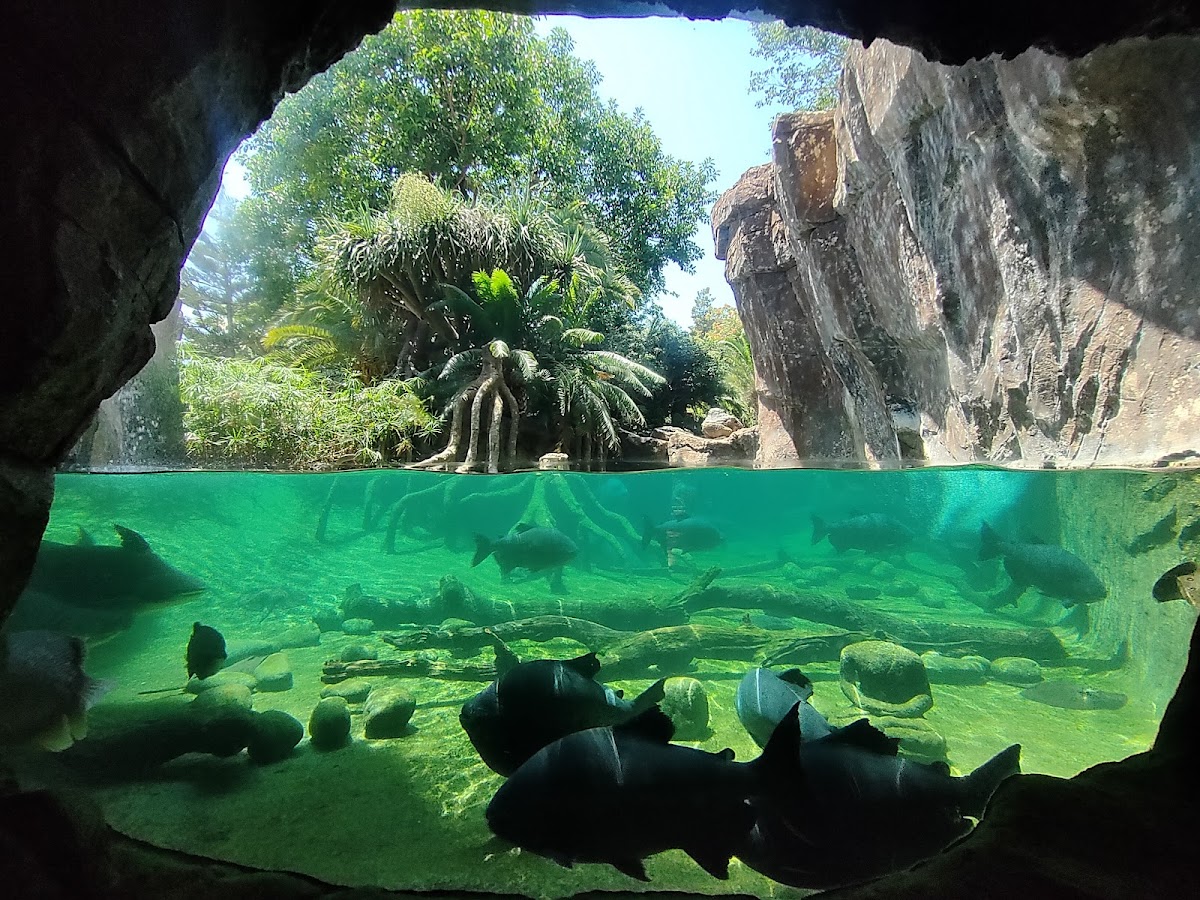
Four days in a row on sand asks a lot of a six-year-old. Here are five places on the Costa del Sol where our own kids actually want to go — no water parks, no Tivoli (that closed permanently in 2020), just real experiences that come back up in the car ride home. Bioparc Fuengirola — The best compact animal park. Bioparc Fuengirola is surprisingly small — two hours and you've done the loop. But the way they house animals is different from a traditional zoo: no bars, deep natural separations and lifelike habitats. We come back here every April — our daughter was four the first time, she's nine now and it still doesn't get old. The gorilla family alone is worth half an hour of watching. Open: daily 10:00-19:00 (summer), shorter hours October-April Price: adults €24, child 3-9 €18, free under 3 Tip: arrive at 10:30 (after the opening rush) and focus on gorillas + Madagascar habitat Lunch: the inside restaurant is OK, better to eat in central Fuengirola after Selwo Aventura Estepona — Safari and water park combined. Selwo Aventura is bigger than Bioparc and needs half a day. Elephants, lions, giraffes — all in semi-wild rounds you can drive through in a jeep. For kids 6+ this is a highlight; for under-4s it gets long. We went in July with a group of three families — €240 total for eight people including the water-slide zone and the skywalk bridge that lifts kids into the tree canopy. Open: April-October daily 10:00-19:00 Price: from €33 adults, €25 children 3-10 Tip: book online ahead for 15% off Food: bring your own lunch, picnic zones have shade Mariposario de Benalmádena — For rainy days and under-5s. Mariposario de Benalmádena is a series of glass domes housing 1500+ tropical butterflies — the perfect spot if it rains or if your under-four is tired of the sun. An hour is enough. The first time we came here with our twin three-year-olds they were transfixed by a green butterfly that landed on my daughter's hand — those moments you can't plan. Open: daily 10:00-19:30 Price: adults €10, child 4-12 €7.50, free under 4 Tip: go before 11:30 for peak butterfly activity Lunch: Costa del Sol Benalmádena has plenty of terrace restaurants within a 5-minute walk Mijas Pueblo — White streets, donkey taxis and the view. Mijas Pueblo at 428 metres above sea level isn't an attraction but it's a day out kids enjoy. The narrow white streets, the view across the whole Costa, and — for those who can appreciate it — the traditional 'burro-taxi' (donkey taxi) kids used to ride. We're ambivalent about the donkey tradition (the animals work hard) but the walk through the centre, an ice cream on Plaza Virgen de la Peña and a look in the bullring museum makes a complete half-day. Free to visit, no entrance Tip: park in the Tenencia garage at the bottom, take the escalator up Food: El Padrastro for those wanting to eat at the edge with a view Aventura Amazonia Marbella — Treetop for kids 6+. Aventura Amazonia Marbella sits near Elviria and is a treetop adventure park with six obstacle-course circuits — from a baby circuit for 4-year-olds to a 14-metre circuit for teenagers and adults. We went last year with our son (then 8) and his cousin (then 11) — both fully absorbed for three hours. Adults can join on the path-1.50 circuit, so it's not a constant supervise-the-children situation. Open: April-October daily 10:00-19:00, weekends also in winter Price: from €18 (basic kids circuit) to €28 (adult full) Booking online required July/August Tip: long trousers and trainers required, bring a change of clothes Practical: age guide and planning. Under 4: Mariposario and Bioparc are both friendly, skip Aventura Amazonia 4-6: all five work, cap Selwo at 4 hours 7-12: all five, add Caminito del Rey or dolphin watching from Fuengirola Teens: Aventura Amazonia full + Selwo plus water-slide zone Combo day: Mijas in the morning + Bioparc in the afternoon (15 min drive between) works well --- Photos: Zarateman (CC0), via Wikimedia Commons; Google Maps contributors.
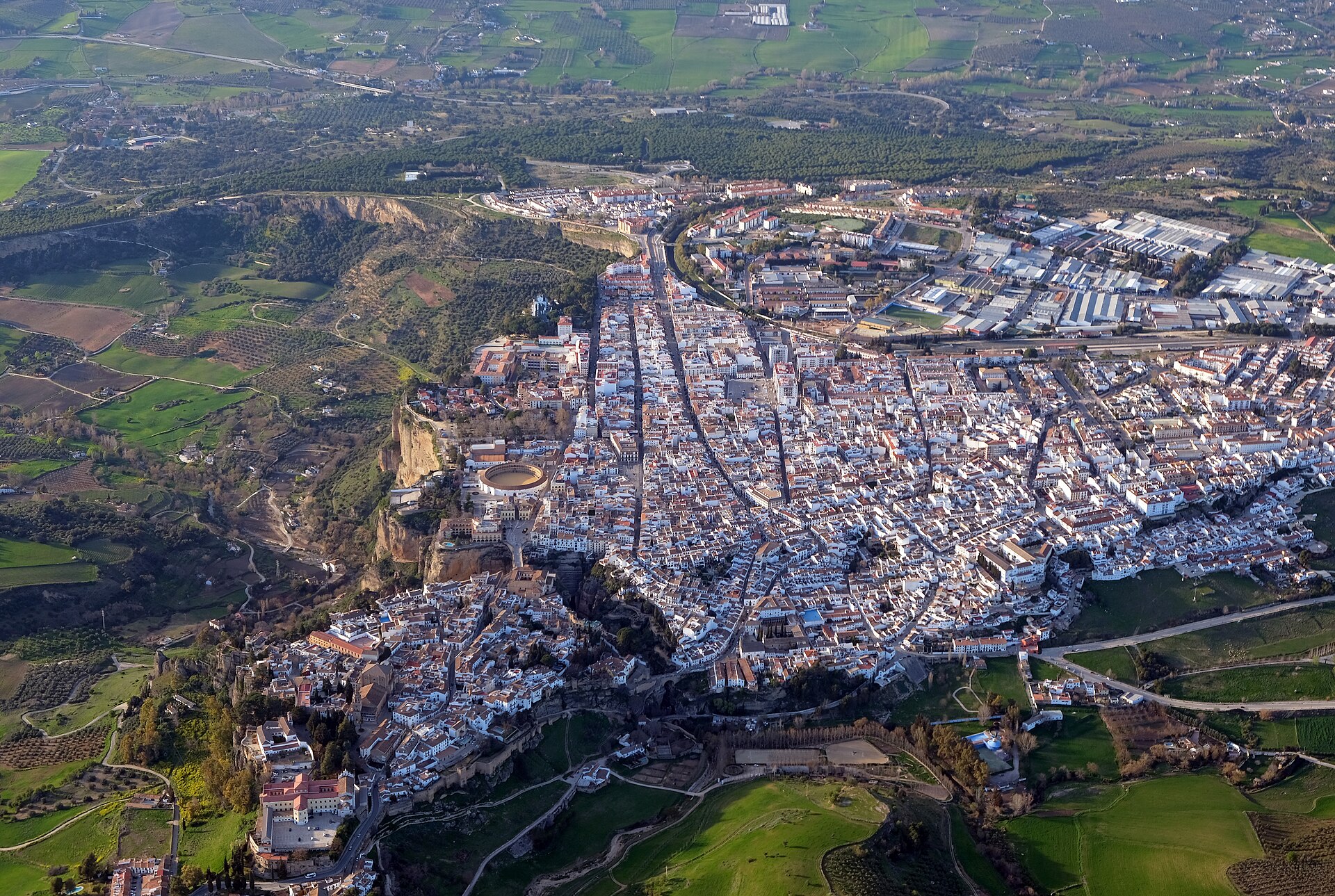
Ronda Day Trip from the Costa del Sol: Complete Guide
Ronda is the one inland trip nearly every visitor to the coast ends up making, and for good reason: a town split in two by a 100-metre gorge, with a stone bridge stitching it back together. We've driven up there more times than we can count, usually when friends visit and want "the one with the bridge." Here's how to do it without wasting your day stuck in coach traffic or queuing behind forty selfie sticks. Getting there: car vs bus. By car from Marbella the fast-and-boring route is the A-7/AP-7 west to San Pedro, then the A-397 mountain road straight up. It's about 50 km and 50–60 minutes, but those last 40 minutes are a proper twisting climb through the Sierra de las Nieves — gorgeous, occasionally stomach-churning, and a magnet for cyclists and Sunday motorbikes. If anyone in the car gets carsick, give them the front seat and stop at the Mirador del Puerto for air. From Málaga you've got two options. The A-357 via Ardales and the El Chorro area is the prettier one (and lets you bolt on the Caminito del Rey if you book ahead). The faster, duller approach loops down to the coast and up the A-397. Either way budget around 1h30 from the city. No car? The bus is genuinely fine. Avanza runs direct coaches from Marbella's bus station (Avenida Trapiche) to Ronda, roughly 1h15–1h45 depending on stops, with several departures a day; a return is around €13–16. From Málaga, Los Amarillos / Avanza run from the María Zambrano estación de autobuses, about 2 hours. The train from Málaga exists but requires a change at Bobadilla and eats half your day — skip it unless you love trains for their own sake. Park in Ronda at the underground car park on Plaza del Socorro or the El Campillo lot near the gorge. Do not try to drive into the old town; the streets are medieval and you will end up reversing past a tour group. The Puente Nuevo and the best photo spot. The Puente Nuevo ("new bridge," finished 1793 — new is relative here) is the reason you came. Most people stand on the bridge itself, which is the one view you don't get a photo of, because you're on it. Here's where to actually shoot it: Mirador de Aldehuela, just off the bridge on the old-town side — the classic postcard angle looking down the gorge. The Jardines de Cuenca, a terraced garden on the new-town side, free, with staggered viewpoints down the cliff. Quieter than the main mirador. The bottom of the gorge. This is the one people miss. Take the path down from Plaza de María Auxiliadora (signed "Mirador / Puente Nuevo"). It's a steep 10–15 minute walk down and a sweatier one back, but standing at the foot of that bridge looking up is the shot. Wear real shoes, not flip-flops. Golden hour from the Aldehuela side, with the late sun hitting the bridge stone, is worth timing your whole day around. The bullring and the rest of the old town. Ronda's Plaza de Toros (1785) is one of the oldest in Spain and, unlike most, you can wander the ring, the sand, and a small museum. Entry is around €9 (audio guide a few euros more). Whether you find it fascinating or grim depends on your feelings about bullfighting; either way the architecture and the adjoining Alameda del Tajo gardens — with their own cliff-edge viewpoints — are worth the stroll. Cross into La Ciudad, the old Moorish half. The Baños Árabes (Arab baths, ~€4.50) are the best-preserved in Spain and genuinely worth 20 minutes. The Casa del Rey Moro gardens have a precarious staircase cut into the rock down to the river — closed on and off for restoration, so check before queuing. What to skip: the Museo del Bandolero (bandit museum) is small and very tourist-trap; the endless souvenir shops on Calle Espinel; and any restaurant with a laminated menu in six languages and a tout outside. Where to eat. The trap is eating on the bridge plaza, where you pay €18 for mediocre paella with a view. Walk five minutes inland instead. Locals point you toward Calle Nueva and the streets around Plaza del Socorro in the new town. For proper rondeño cooking — rabo de toro (oxtail), local goat cheese, mountain sausages — try the sit-down spots away from the gorge; tabancos and family-run places fill up by 2pm with Spanish families, always a good sign. If you just want a quick, cheap, excellent lunch, do what we do: a few tapas at the bar rather than a table on a terrace. Order a tinto de verano (not sangria — that's the tourist tell), some jamón, and the local payoyo cheese. When to go to dodge the crowds. Ronda lives and dies by the coach timetable. Tour buses from the coast and from Seville/Málaga cruise ins around 11am–4pm, and in that window the bridge is shoulder-to-shoulder. The fix is simple: arrive before 10am or after 5pm. We strongly prefer arriving early. Be on the Aldehuela mirador by 9:30 and you'll have the gorge nearly to yourself, do the bullring as it opens, eat lunch at 1:30, and be driving home as the day-trippers are still arriving. Avoid weekends if you can — Saturday is busiest with both tourists and locals up from the coast. September and October are the sweet spot: warm, golden light, harvest season, far thinner crowds than July–August, when the old town bakes and the car parks fill by mid-morning. If you're planning around weather generally, our best time to visit notes apply up here too, just a few degrees cooler. Combine it with Setenil de las Bodegas. If you've got a car and an early start, pair Ronda with Setenil de las Bodegas, 20 km north (about 25 minutes on the A-374/CA-9123). Setenil is the famous village where houses are built into and under the rock overhangs — the streets Cuevas del Sol and Cuevas de la Sombra are the ones you've seen in photos, with the cliff forming the roof over the bars and terraces. It's small; an hour and a lunch is plenty. The trick is sequencing: do Ronda first thing, drive to Setenil for a late lunch around 2pm when the day's coaches have mostly gone, then loop home. Setenil has no real bus connection from the coast, so this combo basically requires driving. Don't try to add a third town — you'll spend the day in the car. Practical tips. Getting there: Car is best (50 min from Marbella, 1h30 from Málaga via the scenic A-357). No car? Avanza buses from Marbella (~€13–16 return, 1h15+) or Málaga's María Zambrano station. Park at Plaza del Socorro or El Campillo; never drive into the old town. Timing: Arrive before 10am or after 5pm. Avoid Saturdays. Best months: May–June and September–October. Photo spot: Walk down into the gorge from Plaza de María Auxiliadora for the iconic upward shot — proper shoes required. Book ahead only if adding the Caminito del Rey (sells out days in advance). The bullring and Arab baths you can buy on the door. Skip: the bandit museum, terrace restaurants on the bridge plaza, and the slow Bobadilla train. Combine with Setenil de las Bodegas (25 min north) only if you're driving — Ronda morning, Setenil for a late lunch. For more inland ideas and what's on while you're here, browse our Ronda guide and the wider Costa del Sol pages.
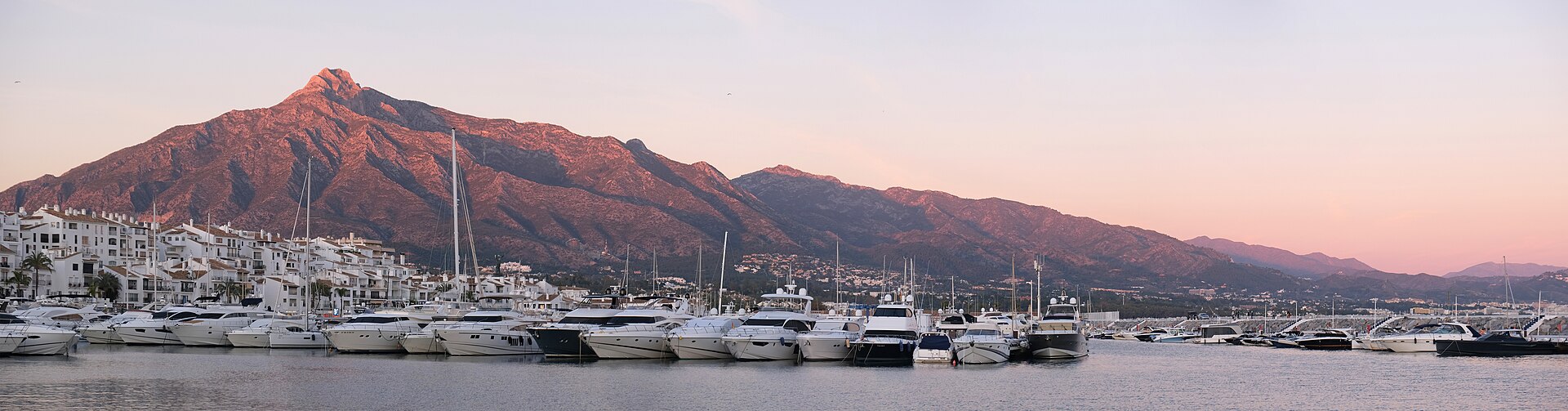
Costa del Sol Boat Trip: Which Marina, When, and How Locals Book It
A Costa del Sol boat trip sits on the tourist map next to Caminito del Rey and the Alhambra. But locals do it differently — no pre-cooked 3-hour schedule from the tourist booth, but their own captain, their own route, and stops at coves with no brochure. Here's how to set that up yourself. Puerto Banús — The luxury marina for speedboats and catamarans. Puerto Banús is the best-known marina on the western Costa del Sol — known for the yachts. But 80% of the real boat-trip work happens here too: speedboat charters for 4-8 people, catamaran cruises, and paddleboard runs to Cala del Cementerio. The first time I hired a captain here last summer I called at 8:00 and was at sea by 10:30 — that's the pace possible here. Speedboat 4 people, half day: €280-380 including captain Catamaran 6 hours: €60-90 per person on a group of 10 Book direct at: Marbella Boat Trips desk at jetty 2 Best months: May-October, July-August fully booked 3 weeks ahead Puerto Deportivo de Marbella — The quieter old harbour. Ten minutes east of Banús sits the Puerto Deportivo de Marbella — the old fishing/sport harbour. No mega-yachts, no posing. But the place where local captains keep their boats for private charters. We rented a 7.5-metre Cobra here in June for €380 for six hours — two captains spoke openly about routes to Cabopino and Calahonda, no broker in between. Notice board on the jetty: check which captains are available that week Route from here: east towards Cabopino + Las Chapas (quiet coves) No language barrier: many captains speak EN/NL/DE Reservation: same-day possible off-season Puerto Deportivo de Estepona — For going south towards Gibraltar. Puerto Deportivo de Estepona is the logical marina if you want Sotogrande, Gibraltar or even across to Tangier. We rented a sailboat here last September for a day — €450 for eight people including captain and a light lunch. Estepona is 30 km closer to Gibraltar than Marbella, so the run to the Bay of Algeciras or the Strait shaves 60-90 minutes of sailing. Sotogrande round-trip: 4 hours, €120-180/person on a group Gibraltar sight: 5 hours, day pass for shore landing €25 extra English-speaking captain: Hugo Verstraeten, +34 670 552 048 Puerto de Fuengirola — Dolphin watching and family trips. Puerto de Fuengirola is the marina where most dolphin-watching trips depart — not from Banús or Marbella. The reason: dolphin populations swim more in this part of the Costa, particularly between 6 and 12 nautical miles offshore. We come here every September with the kids — 2 hours, €25 per child, and the dolphin-sighting odds in May-September are 85%+. Dolphin World Fuengirola departs 10:00 + 12:30 + 15:00 Recommended ages 5+: some boats have glass underwater floors Reservation online works, walk-in works outside July/August Sotogrande — For the truly quiet and premium. Puerto de Sotogrande lies 40 km west of Marbella and is the premium segment of Costa del Sol boat trips. This is where polo players head out with their guests on Saturdays, and where charter yachts of 50ft+ sit available for full-day or weekend rental. We were here on a Friday afternoon in July — the vibe is clearly different, quieter, an older crowd, better wine on the terraces. 40ft motor yacht day: €1500-2500 including captain Polo Saturday boat trip: April-October, lunch on board then polo match from Beach Club Tip: book 3 weeks ahead for Saturdays in July-August Practical: when, how, how much. Best months: May + June + September + early October. July/August is hot but crowded — book 3 weeks ahead Wind direction: Levante (from the east) often makes open sailing impossible, Poniente (from the west) keeps it calm. Check Windguru.cz for the day Captain tip: ask if the captain joins you at anchor (some fish briefly, others stay on board) — some routes only work with local knowledge Food: every boat lets you bring food on board — a local fishing boat around Cabopino for fresh fish (€40 for four people) is a good stop Insurance: mandatory included in good charters — ask for 'seguro a todo riesgo' for private speedboat rentals without captain --- Photos: kallerna (CC BY-SA 4.0), Mark Gilbert (CC BY-SA 3.0), Olaf Tausch (CC BY 3.0), via Wikimedia Commons; Google Maps contributors.
Frequently asked questions about experiences
What's the must-do day trip from Marbella?+
Ronda. An hour and a half through the mountains, ending at the Puente Nuevo bridge over the 100-metre Tajo gorge. Plan for the bullring (Spain's oldest), a long lunch, and a walk through the Barrio Judío. Leave early to beat the buses — empty before 9am, packed after 11am.
Can I walk the Caminito del Rey without booking?+
No. Since the 2015 reopening tickets are mandatory and only sold online via caminitodelrey.info, often selling out weeks ahead. The route runs one-way (north to south) and takes three to four hours including the shuttle back. Avoid July and August — no shade, too hot.
Are boat trips from Puerto Banús worth it?+
A quick one-hour Marbella-and-back tour is more a drive on the sea than an experience. Better: a half-day sailing charter (Marbella Sailing, from €50 pp) or dolphin spotting with Aventura Marina from Estepona — they actually see dolphins regularly, not guaranteed but realistic.