
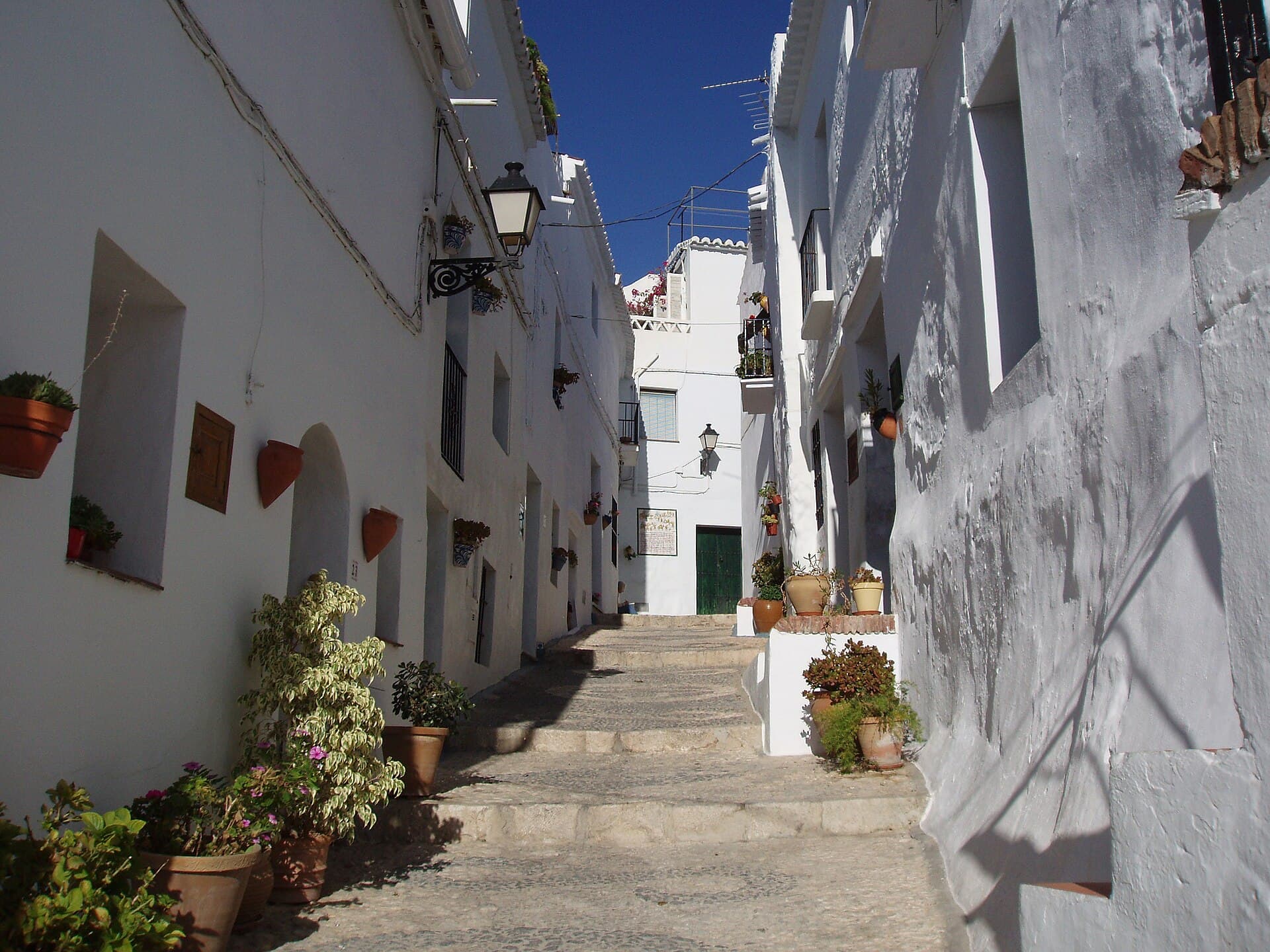
Frigiliana & Nerja: The Costa del Sol's Prettiest Corner
Ask anyone who's lived here a while where the Costa del Sol is still genuinely pretty — not the high-rise stretch, the real thing — and they'll point east, past Málaga, to where the Sierra de Almijara drops almost straight into the sea. That's Nerja, and 7km up the switchbacks behind it, Frigiliana. We do this pair as a single day trip a couple of times a season, and it's the one we send visiting friends to do first.
Here's how to combine both properly, what's worth your time, and what's quietly a tourist trap.
Start at the Balcón de Europa
Nerja's old town funnels everyone down to the Balcón de Europa, a palm-lined promenade built on the stump of a clifftop fortress. It juts out over the sea with a 180-degree view of coves and the mountains behind. It's genuinely beautiful and genuinely mobbed — there's a busker, a guy who'll draw your caricature, and at the very tip a bronze statue of King Alfonso XII that every tourist photographs.
Get there before 11am or after 6pm. Midday in July it's shoulder-to-shoulder. The streets feeding into it — Calle Pintada, Calle Almirante Ferrándiz (locals still call it Calle Cristo) — are the prettiest, whitewashed and tiled, and where the better restaurants hide.
Down the steps on either side are Nerja's town beaches:
- Playa Calahonda — tiny, sheltered, right under the Balcón. Charming but it fills by 10am.
- Playa Burriana — the big one, 800m of sand a 15-minute walk east, with proper chiringuitos. This is where you actually swim and eat.
If you only swim once in Nerja, make it Burriana and have lunch at Ayo's, the paella place at the far end that's been cooking rice in giant pans over orange-wood fires since the 1960s. The all-you-can-eat paella is around €11 and the spectacle is half the point.
The Nerja Caves — go, but manage expectations
The Cuevas de Nerja, 4km east of town, are a genuine natural wonder — vast caverns with one of the world's largest stalactite columns, lit theatrically. Tickets are about €15 (children cheaper), and you should book online for a timed slot in summer because the on-the-day queue is brutal.
Honest take: it's impressive for 30–40 minutes, the walkways are well-made, and it's blessedly cool when it's 33°C outside. But it's a one-way loop, fairly quick, and the gift-shop-and-coach-park energy at the entrance is strong. If your day is tight, the caves are the thing I'd cut before the coves. Bus N-3 runs out here from the centre, or it's a €7–8 taxi.
The Maro coves — the part most people miss
This is the secret that isn't really a secret anymore but still feels like one. East of the caves, around the hamlet of Maro, the Acantilados de Maro-Cerro Gordo cliffs hide a string of small, clear-water coves backed by a waterfall. Playa de Maro is the easiest — there's a dirt car park above and a steepish path down (10 minutes, wear real shoes, not flip-flops). The water is the clearest on this whole coast.
In summer the access road to the cove gets restricted and you may have to park up top and walk, or use the seasonal shuttle. Kayak operators on Burriana run morning trips along these cliffs to the waterfall for around €30–35, which honestly is the best way to see them and skips the parking headache entirely. For more on where the good swimming is along the coast, our best beaches guide has the full list.
Up to Frigiliana
Now drive (or bus) the 7km up. The M-345 bus from Nerja's bus stop on Avenida de Pescia runs roughly hourly, takes about 15 minutes and costs around €1.20. By car it's ten minutes of tight bends with a car park at the bottom of the village — don't try to drive into the old town, the streets are donkey-width and you will regret it.
Frigiliana repeatedly wins "prettiest village in Andalucía" polls and you'll see why in about four steps. The Barribarto quarter — the old Moorish kasbah — is a vertical maze of dazzling-white houses, cobbled ramps, blue plant pots, bougainvillea spilling over everything, and ceramic plaques telling the (bloody) story of the 1569 Morisco rebellion. It's small. You can walk the whole historic core in 90 minutes including coffee stops, and that's the right amount of time.
Things worth doing here:
- Buy a bottle of miel de caña (sugarcane molasses) from Nuestra Señora del Carmen, the last cane-honey mill of its kind in Europe, right in the village.
- Climb to the top for the viewpoint over the valley to the sea — the higher you go, the fewer people.
- Eat at a place with a terrace. El Mirador de Frigiliana and the little bars around Plaza de las Tres Culturas do honest Andalusian food; a plate of local goat, a glass of wine and the view is the whole experience.
The downside: the lower main street is wall-to-wall souvenir shops selling the same fridge magnets, and a few "típico" restaurants on the through-road are overpriced and forgettable. Climb past them. The magic is in the upper lanes where nobody's selling you anything.
Combining both in one day
The rhythm we use:
- Morning — arrive in Nerja by 9.30, walk the Balcón before the crowds, swim at Burriana.
- Lunch — paella at Ayo's or a long lunch on Calle Cristo.
- Early afternoon — either the caves (cool, indoors, good for the hottest hours) or a kayak to the Maro coves.
- Late afternoon — drive up to Frigiliana for golden hour, when the white walls turn warm and the day-trippers have left.
- Evening — dinner on a Frigiliana terrace, then the dark drive back down.
That's a full, satisfying day. Don't try to add the caves and the coves and a long beach session — something will feel rushed.
Best season
Late May, June, and September are the sweet spot: warm sea, long days, and Frigiliana's lanes not yet crammed. July and August are hot and very busy — go early and late, never midday. The Festival de las Tres Culturas in Frigiliana (usually late August) is wonderful but packs the village. April and October are lovely for walking but the sea is still bracing; our sea-temperature page tells you when it's actually swimmable.
Practical tips
- Getting there: From Málaga, the Avanza/ALSA bus to Nerja runs frequently from the bus station (~1 hour, around €5). By car it's the A-7 motorway, about 50 minutes. From the western resorts, see our Nerja page for routes — it's a solid 75–90 minutes from Marbella.
- Park smart: Use Nerja's underground car park near Plaza de España, and Frigiliana's lot at the foot of the village. Don't circle the old towns hunting for street parking.
- Book ahead: Cave tickets online in summer; kayak trips a day or two ahead. Restaurants generally don't need booking except August evenings in Frigiliana.
- Wear proper shoes for the cove paths and Frigiliana's cobbles. Bring water — the village climb is hot.
- Skip if short on time: the lower souvenir strip in Frigiliana and the day's third activity. Less, done well, beats a checklist.
Do it right and this is the corner of the coast people remember long after the beach resorts blur together.
This article is curated by Costa Guide to inspire your visit to the Costa del Sol.
Make the most of your visit
Booking via these links may earn us a commission — at no extra cost to you.
Source: costa-guide
More Insider articles
Marbella's Old Town: What Waits Beyond Plaza de los Naranjos
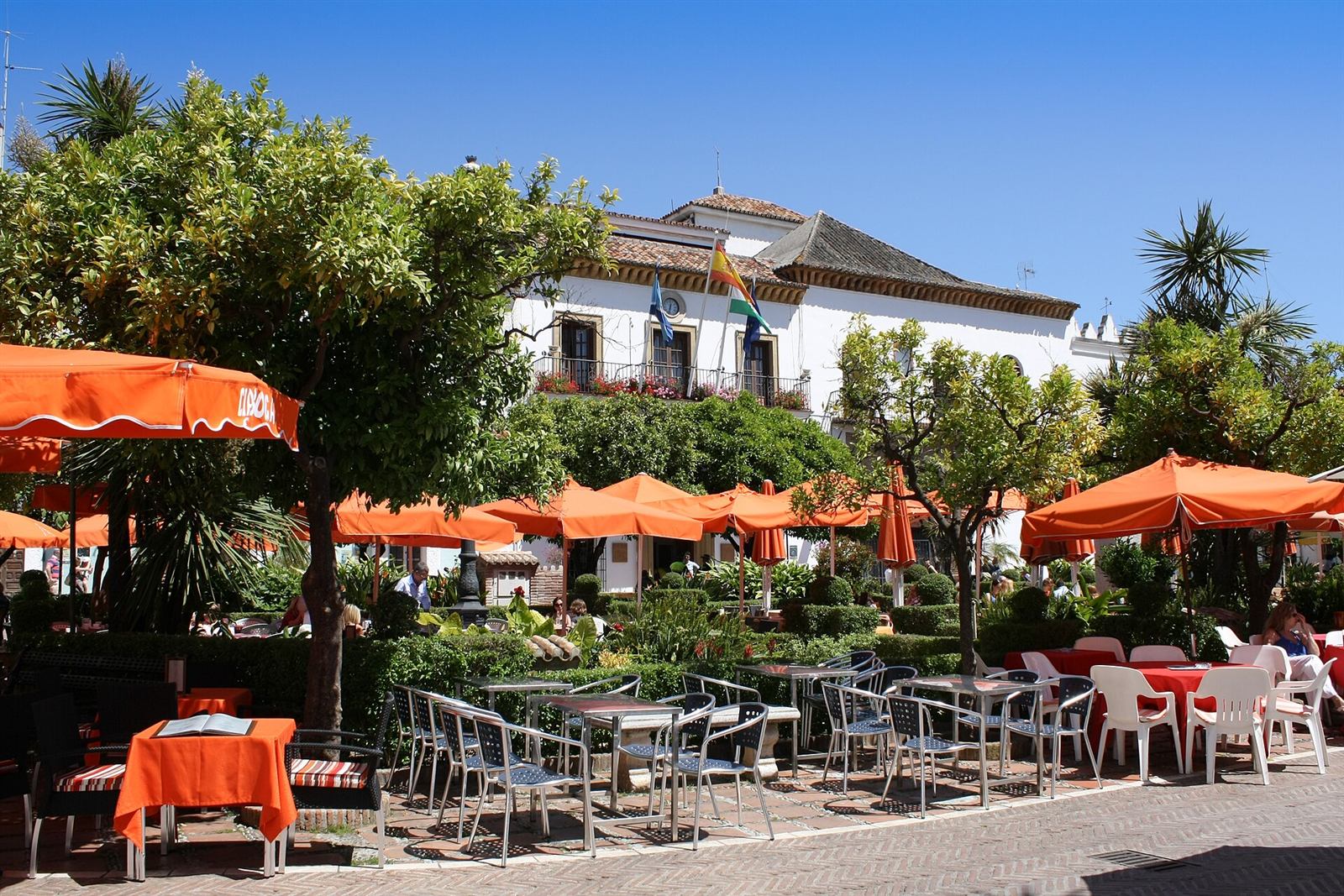
Plaza de los Naranjos gets 95% of the Marbella old-town photos on Instagram. What you lose by staying there: four centuries of church history, a seafood place selling raw prawns since 1958, and the narrowest street in Andalusia outside Seville. Here's the Marbella casco antiguo loop locals walk. Plaza de los Naranjos — Pass through, don't sit. Plaza de los Naranjos has 12 orange trees, a 16th-century fountain, the 1568 town hall, and six restaurants with terraces charging €8 for a beer and €18 for paella in July/August. Come — take the photo — keep walking. We use the plaza as orientation, not destination. Anyone wanting to eat here does it in January when locals take the terrace back. Best time: 09:00-10:30 (quiet, light coffee) Town Hall (Ayuntamiento) free to look at on the east side Tip: the fountain has an inscription from 1504 nobody notices — look Iglesia de la Encarnación — Andalusian Baroque beauty. Five minutes' walk from the plaza, on Calle de la Iglesia, stands Iglesia de Nuestra Señora de la Encarnación — built 1505-1515 on the foundations of a mosque, then rebuilt in 1748 in full Andalusian Baroque. The frescoes inside are 15 minutes of staring. We went here in December for the Christmas mass — free, open to everyone, no tourists. It's one of the few places in Marbella where you actually stand in the city of before the tourism boom. Open: daily 09:30-13:00 and 18:00-20:30, free Tip: Friday evening regularly has an organist recital Don't miss: the silver altar from 1788 (left aisle) Calle Aduar and the side streets — Narrow-white authenticity. From the Plaza walk north along Calle Aduar — the narrowest street in Marbella Casco Antiguo (1.8 metres wide in places). Here you find the white walls with fuchsia-and-red bougainvillea that appear on every postcard — without the plaza's crowds. Walk on to Calle Buitrago, then Calle Remedios, then back via Calle de los Caballeros. We do this loop every Friday morning in May — an hour, no plan, just 16th-century walls. Best time: before 11:00 or after 18:00 Don't miss: the plaque on Calle Buitrago 12 (birthplace of a 17th-century priest) Tip: look up — many houses have Mudejar geometric tiles on the thresholds Restaurante Altamirano — Seafood place since 1958. Altamirano on Plaza Altamirano (200 metres from Plaza de los Naranjos) has been open since 1958, serving pescaíto, shellfish and grilled fish on a shaded terrace for 60 people. We've been coming here since 2018, at least five times a year — nothing changes. Order the gambas blancas (€16 per ración), the chocos a la plancha (€14) and a bottle of Verdejo Rueda (€18). Expect €35-45 pp including drinks — for Marbella Casco Antiguo a normal rate. Open: daily 13:00-16:00 and 20:00-23:30 Reservation yes, +34 952 824 932 — lunch usually fine, evening book ahead Tip: ask for table 14, corner table with view across the whole square Ermita de Santiago — The 15th-century chapel hidden in the walls. Ermita de Santiago is the oldest religious structure in all of Marbella — a 15th-century chapel built straight after the Christian Reconquista of 1485. It hides on Calle Carmen, and only opens for special occasions. We've seen inside twice (funeral, local saint anniversary) — a 6×4 metre Gothic interior so intimate you whisper. From outside: the Mudejar lintel with the Spanish royal coat of arms is worth the detour alone. Open: rarely, usually only during local feasts Exterior: free to view, 24/7 Tip: ask at Iglesia de la Encarnación about the next opening Practical walking route through the old town. Start: Plaza de la Iglesia (park at Recinto Ferial below) Recommended loop: Iglesia → Calle Carmen (Ermita) → Plaza Altamirano (lunch) → Plaza Naranjos → Calle Aduar → Calle Buitrago → back via Calle Remedios Time: 2-3 hours including lunch Best months: May + June + October (mild) Tip: combine with Avenida del Mar (Dalí sculpture garden) — 10 min walk from the centre to the sea --- Photos: Mark Gilbert (CC BY-SA 3.0), Zarateman (CC0), via Wikimedia Commons; Google Maps contributors.
Nerja and the Caves: More Than a Tourist Trap if You Time It Right
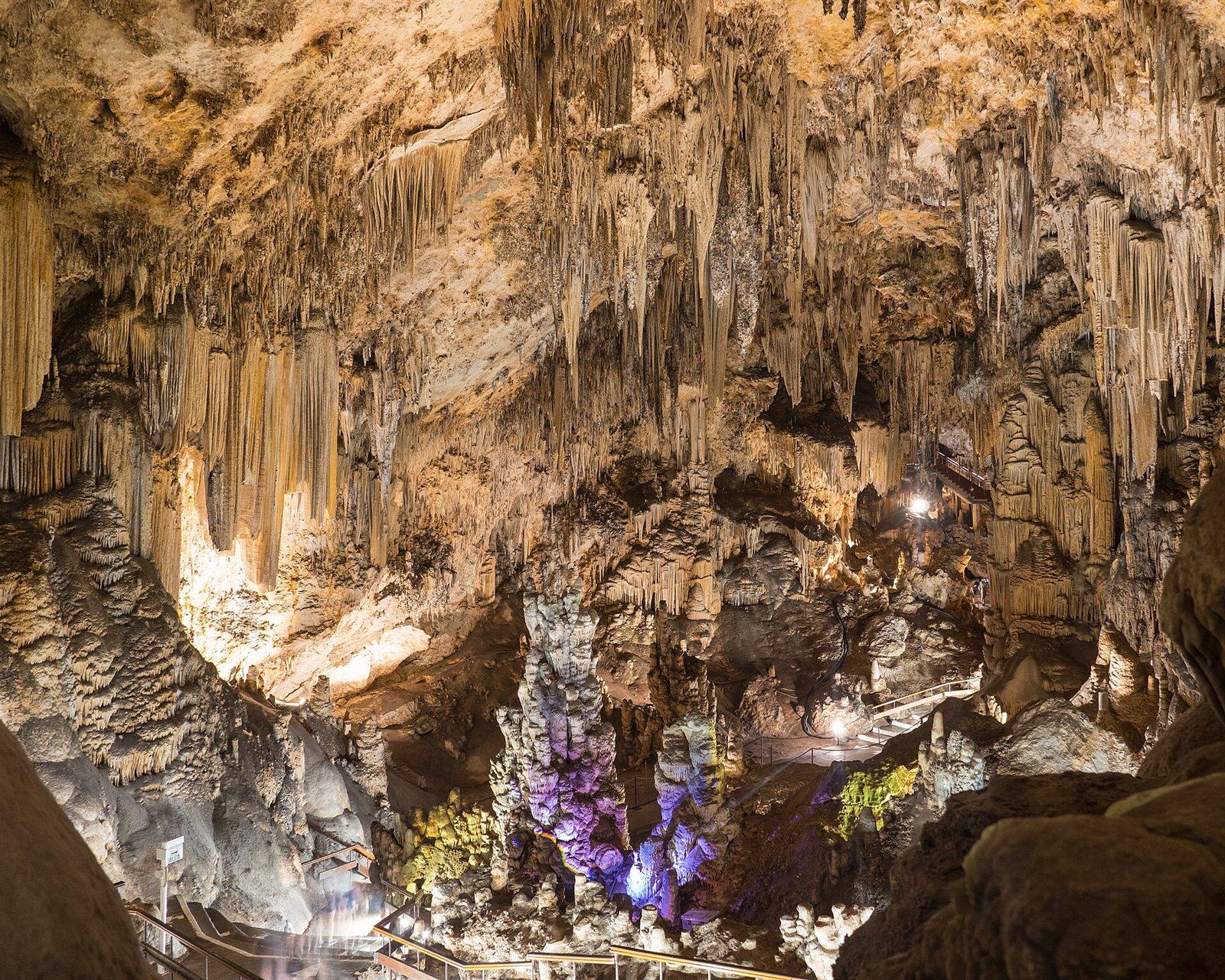
Cuevas de Nerja sits on every top-10 Costa del Sol must-see list — which is exactly what makes it one of the top-10 tourist traps. But if you're inside by 11:00, plan your day around it, and eat at the right places, this remains one of the most spectacular day trips from the coast. Here's the locals' version. Cuevas de Nerja — The trick is timing, not the tour. Cuevas de Nerja were discovered in 1959 by five boys looking for bats. The caves hold paleolithic paintings (some 42,000 years old — archaeologists still argue these might be the world's oldest), the largest stalagmite in the world (32m), and a natural amphitheatre chamber that hosts the Festival Internacional Cueva de Nerja in July/August. We went last October at 10:00 — fifteen minutes' wait, two tour buses ahead of us; at 11:30 three more had arrived. That's the difference. Open: 09:00-19:00 (June-September), 09:00-16:30 (otherwise) Price: €15 adults, €13 child 6-12 Tip: buy ticket online the evening before, arrive 09:45 Skip the tour: choose the audio guide (€3 extra), not the live tour Balcón de Europa — The view and the centre of Nerja. After the caves drive 5 min to the centre of Nerja and park at Parking del Balcón. Balcón de Europa is the iconic promenade view with palms, a marble-white balustrade and views to the Sierra Almijara — free, no waiting. We always head straight to the far east side (most crowd stays on the west side) — from there you see both beaches at once and the photographer has the sun behind them. Best time: 11:30-12:30 or after 17:00 Coffee: Café Rubens on the Balcón does a serious espresso (€2) Tip: keep walking to Calle Carabeo for terrace restaurants with the REAL view Playa de Burriana and Chiringuito Ayo — Paella on the sand. Playa de Burriana is Nerja's main beach — 800m of sand, clear water, and on its east end: Chiringuito Ayo, which serves unlimited paella for €13 per person at lunch. Ayo García (the founder) cooked the pan himself every day for 50 years — he passed in 2023, his son runs it now, and the quality is exactly the same. We come here at least once every holiday — arrive 13:15 (first paella ready 13:30). Open: daily 12:00-22:00 (April-October) Paella special: all-you-can-eat €13 per person, daily 13:30-15:30 Tip: ask for the rice crust on the bottom (socarrat) of the second pan Parking: free along the promenade, full from 12:00 Frigiliana — The white town 10 minutes from Nerja. A lot of people forget Nerja has a side-trip town: Frigiliana, 7 km inland. A completely white village on a mountainside, narrow flower-pot alleyways, and the most beautiful old Moorish quarter on the whole Costa del Sol. We park at the outer edge and walk up — an hour is enough for the centre. On Wednesday morning there's the street market where Frigiliana honey is sold (the honey festival in late April/early May is famous). Free to visit Best time: before 11:00 or after 17:00 (midday is hot) Food: Bar El Mirador for lunch, El Adarve for a fuller dinner Honey: buy at La Casa del Apicultor in the centre Eating in old Nerja — Not at the Balcón. The restaurants directly on the Balcón de Europa are mostly tourist-priced — €18 for freezer-quality paella. Walk one street north (Calle Pintada) and you find Bar Patanegra (€12 menu del día with jamón ibérico) or El Pulguilla for tapas (€2-4 per piece, free tapa with each drink). We always eat here after the caves — that difference between the tourist strip and the locals' strip is exactly one street. Bar Patanegra: Calle Pintada 9, daily 12:00-15:30 and 19:00-23:00 El Pulguilla: Calle Almirante Ferrándiz 26, daily except Monday Tip: at El Pulguilla you get one free tapa per drink — three beers is a full lunch Practical: route from Marbella. Car: A-7 east, 90-110 min (Marbella → Nerja, ~120 km) Bus: ALSA direct Marbella → Nerja, 2 hours, €14 one-way Best months: May + June + September + October (summer = 35°C+ in caves and town) Time plan: leave 08:30 → 10:00 caves → 11:30 Balcón → 13:30 Burriana paella → 16:00 Frigiliana → 19:00 return = full day Combining with Caminito del Rey isn't possible as a day trip — pick one per day --- Photos: Fernando (CC BY-SA 4.0), via Wikimedia Commons; Google Maps contributors.
Málaga Soho Street Art Route: 5 Stops for a Half-Day of Culture
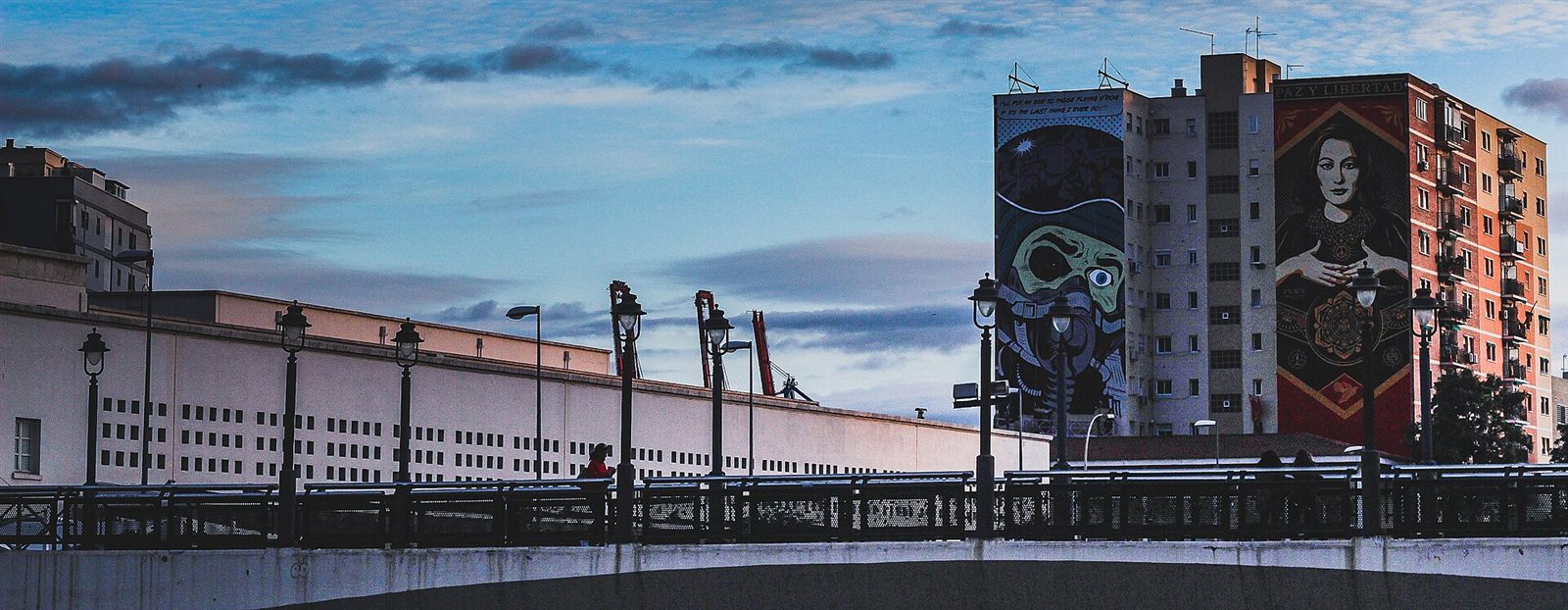
Since 2013 the MAUS festival has run the annual transformation of Málaga's former industrial Soho district into an outdoor gallery. D*Face, Boa Mistura, Obey and ROA — international street-art masters — have left work behind in Soho. Here's the route you can walk in half a day plus one indoor museum stop for the afternoon. Soho — D*Face and Boa Mistura by Plaza de la Marina. Soho Málaga — the 6-block area between Calle Carretería and the port — began its transformation in 2013 with the MAUS festival. The first mural: D*Face's giant face above Calle Tomás Heredia, a pop-art-meets-social-critique piece. Two blocks south hang Boa Mistura's large-format letters 'EL AMOR ES LIBRE' — one of their signature rainbow typographic projects. We start our Soho walk here and cover the whole district in 90 min. D*Face mural: Calle Tomás Heredia 8, 2014 Boa Mistura: Calle Vendeja 13, 2016 Obey: Calle Casas de Campos 6, 2015 Tip: go before 11:00 — shade on the east side, best photo light CAC Málaga — Indoor stop for the midday hour. The Centro de Arte Contemporáneo Málaga is 5 min on foot from the MAUS cluster — free admission, daily 10:00-20:00. For anyone wanting out of the sun between 13:00 and 15:00 (summer in Málaga = 37°C+), this is the perfect interim stop. CAC has a permanent collection of international street and graffiti artists (Banksy, Os Gêmeos, Tracey Emin) plus rotating exhibitions. We come here after every Soho morning. Open: daily 10:00-20:00 (summer), closed Tuesday Entry: free Tip: ask at the desk for the 'street art audio tour' — free 60 min in EN/ES Lagunillas — The lesser-known street-art area. East of the Soho zone sits Lagunillas — the lesser-known street-art quarter, not on tour routes. Calle Lagunillas and surrounding alleys have smaller but more powerful pieces: portraits of local Málagueños, social-critique murals, and the signature 'Ñ' work by local artist Doger. The first time we came here in 2022 we thought we'd mistyped the address — but in 30 min walking these streets you see more character than in all of Soho. Best route: Calle Cruz del Molinillo → Calle Lagunillas → Pasillo de Atocha Time: 30 min comfortable, 60 min if you stop for photos Tip: afternoons quieter, avoid early morning (some residents prefer no tour-bus feel) Calle Larios + Atarazanas — Lunch interim. After Soho and CAC you hit Calle Larios — Málaga's main shopping street, pedestrian only. Not street-art-relevant but the logical lunch break. At Mercado Atarazanas (5 min west) you get fresh fruit plus tapas for €8 per person. We like to eat here around 13:00 — not glamorous, straight from the Málagueño kitchen. Mercado open: Mon-Sat 08:00-15:00 (closed Sun) Lunch tip: tapas stand 'La Cosmopolita' in the central hall, free tapa with a beer Don't buy: the spice tins (€5 for 50g) — regular supermarket is cheaper and better ROA mural + the least-known pieces. ROA (Belgian street-art master) has one work in Málaga — a rabbit on Calle de Tomás Heredia 26 (Soho), done in 2014. Surprisingly small compared to his pieces in Marrakech or Bristol. Beyond that: small works by Pejac (Spanish artist) scattered through Soho, and Felipe Pantone's 3D works (Argentine) on Calle Casas de Campos. For genuine connoisseurs: a guide from 'MAUS Tours' walks them with you for €25 per person (3 hours, Tue + Thu + Sat). Pejac: small work on Calle Salinas (hunt for it) Felipe Pantone: Calle Casas de Campos 12 MAUS Tours: maustours.es, €25, Tue + Thu + Sat 10:30 Tip: do your own tour before 11:00 or after 17:00 — avoid the group routes Practical: time, route, weather dependency. Half day: leave Soho 09:30, lunch 13:00, CAC 14:30, done by 17:00 Full day: add Lagunillas plus dinner in Soho Best months: April + May + September + October (summer = too hot for the 90-min Soho walk) Don't do in July/August 11:00-17:00: sunburn risk Bus: line 1 from Marbella to Málaga centro from €8 one-way What to bring: sneakers, sunglasses, water bottle, no open-toe shoes (some streets messy) --- Photos: Leo Hidalgo (CC BY 2.0), Daniel Capilla (CC BY-SA 4.0), Zarateman (CC0), via Wikimedia Commons; Google Maps contributors.