
Kultur
Flamenco, maurisk historie, samtidskunst og de gamle bykjernene der Costa del Sol begynte lenge før turistene kom.
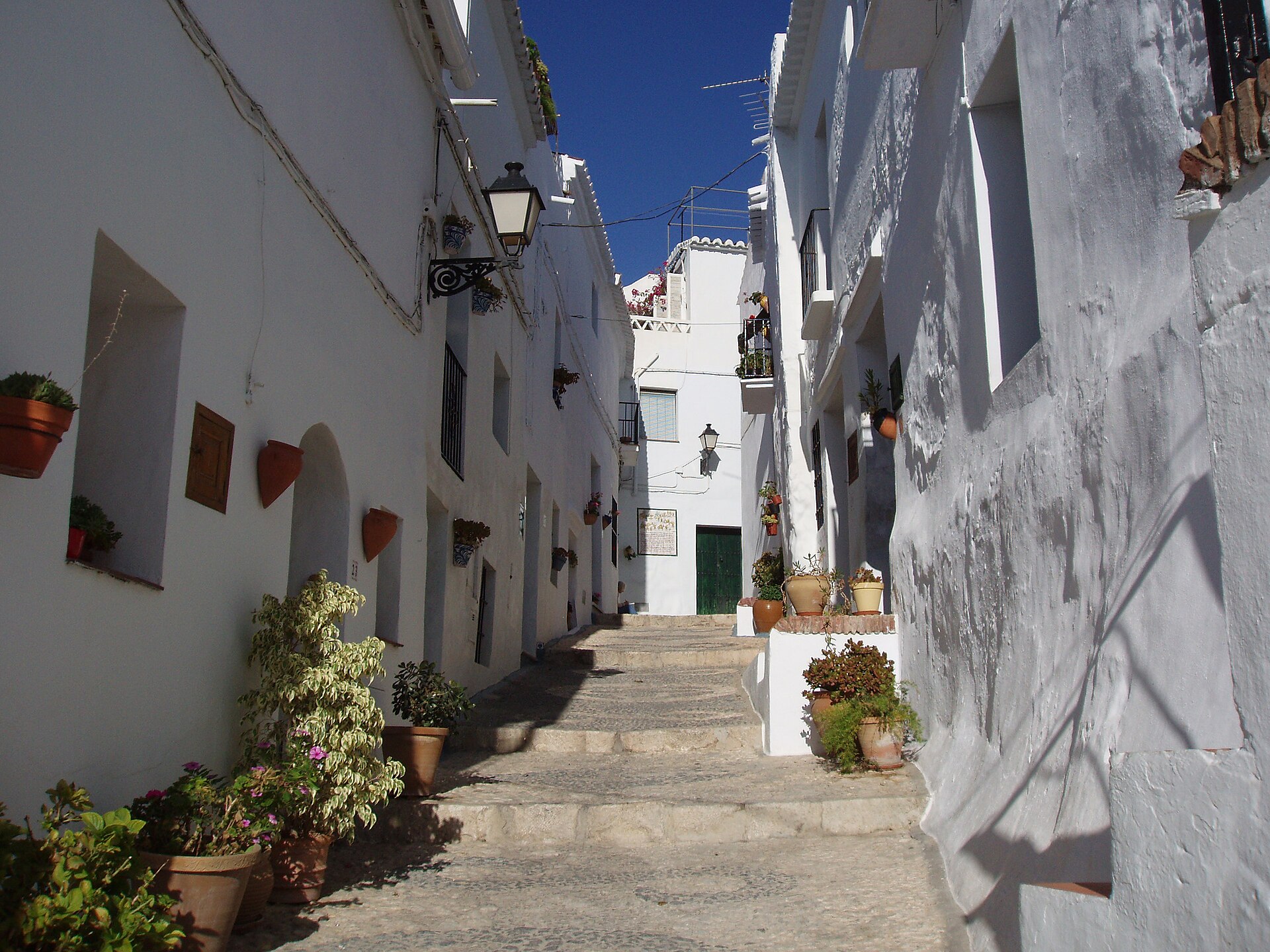
Frigiliana & Nerja: The Costa del Sol's Prettiest Corner
Ask anyone who's lived here a while where the Costa del Sol is still genuinely pretty — not the high-rise stretch, the real thing — and they'll point east, past Málaga, to where the Sierra de Almijara drops almost straight into the sea. That's Nerja, and 7km up the switchbacks behind it, Frigiliana. We do this pair as a single day trip a couple of times a season, and it's the one we send visiting friends to do first. Here's how to combine both properly, what's worth your time, and what's quietly a tourist trap. Start at the Balcón de Europa. Nerja's old town funnels everyone down to the Balcón de Europa, a palm-lined promenade built on the stump of a clifftop fortress. It juts out over the sea with a 180-degree view of coves and the mountains behind. It's genuinely beautiful and genuinely mobbed — there's a busker, a guy who'll draw your caricature, and at the very tip a bronze statue of King Alfonso XII that every tourist photographs. Get there before 11am or after 6pm. Midday in July it's shoulder-to-shoulder. The streets feeding into it — Calle Pintada, Calle Almirante Ferrándiz (locals still call it Calle Cristo) — are the prettiest, whitewashed and tiled, and where the better restaurants hide. Down the steps on either side are Nerja's town beaches: Playa Calahonda — tiny, sheltered, right under the Balcón. Charming but it fills by 10am. Playa Burriana — the big one, 800m of sand a 15-minute walk east, with proper chiringuitos. This is where you actually swim and eat. If you only swim once in Nerja, make it Burriana and have lunch at Ayo's, the paella place at the far end that's been cooking rice in giant pans over orange-wood fires since the 1960s. The all-you-can-eat paella is around €11 and the spectacle is half the point. The Nerja Caves — go, but manage expectations. The Cuevas de Nerja, 4km east of town, are a genuine natural wonder — vast caverns with one of the world's largest stalactite columns, lit theatrically. Tickets are about €15 (children cheaper), and you should book online for a timed slot in summer because the on-the-day queue is brutal. Honest take: it's impressive for 30–40 minutes, the walkways are well-made, and it's blessedly cool when it's 33°C outside. But it's a one-way loop, fairly quick, and the gift-shop-and-coach-park energy at the entrance is strong. If your day is tight, the caves are the thing I'd cut before the coves. Bus N-3 runs out here from the centre, or it's a €7–8 taxi. The Maro coves — the part most people miss. This is the secret that isn't really a secret anymore but still feels like one. East of the caves, around the hamlet of Maro, the Acantilados de Maro-Cerro Gordo cliffs hide a string of small, clear-water coves backed by a waterfall. Playa de Maro is the easiest — there's a dirt car park above and a steepish path down (10 minutes, wear real shoes, not flip-flops). The water is the clearest on this whole coast. In summer the access road to the cove gets restricted and you may have to park up top and walk, or use the seasonal shuttle. Kayak operators on Burriana run morning trips along these cliffs to the waterfall for around €30–35, which honestly is the best way to see them and skips the parking headache entirely. For more on where the good swimming is along the coast, our best beaches guide has the full list. Up to Frigiliana. Now drive (or bus) the 7km up. The M-345 bus from Nerja's bus stop on Avenida de Pescia runs roughly hourly, takes about 15 minutes and costs around €1.20. By car it's ten minutes of tight bends with a car park at the bottom of the village — don't try to drive into the old town, the streets are donkey-width and you will regret it. Frigiliana repeatedly wins "prettiest village in Andalucía" polls and you'll see why in about four steps. The Barribarto quarter — the old Moorish kasbah — is a vertical maze of dazzling-white houses, cobbled ramps, blue plant pots, bougainvillea spilling over everything, and ceramic plaques telling the (bloody) story of the 1569 Morisco rebellion. It's small. You can walk the whole historic core in 90 minutes including coffee stops, and that's the right amount of time. Things worth doing here: Buy a bottle of miel de caña (sugarcane molasses) from Nuestra Señora del Carmen, the last cane-honey mill of its kind in Europe, right in the village. Climb to the top for the viewpoint over the valley to the sea — the higher you go, the fewer people. Eat at a place with a terrace. El Mirador de Frigiliana and the little bars around Plaza de las Tres Culturas do honest Andalusian food; a plate of local goat, a glass of wine and the view is the whole experience. The downside: the lower main street is wall-to-wall souvenir shops selling the same fridge magnets, and a few "típico" restaurants on the through-road are overpriced and forgettable. Climb past them. The magic is in the upper lanes where nobody's selling you anything. Combining both in one day. The rhythm we use: Morning — arrive in Nerja by 9.30, walk the Balcón before the crowds, swim at Burriana. Lunch — paella at Ayo's or a long lunch on Calle Cristo. Early afternoon — either the caves (cool, indoors, good for the hottest hours) or a kayak to the Maro coves. Late afternoon — drive up to Frigiliana for golden hour, when the white walls turn warm and the day-trippers have left. Evening — dinner on a Frigiliana terrace, then the dark drive back down. That's a full, satisfying day. Don't try to add the caves and the coves and a long beach session — something will feel rushed. Best season. Late May, June, and September are the sweet spot: warm sea, long days, and Frigiliana's lanes not yet crammed. July and August are hot and very busy — go early and late, never midday. The Festival de las Tres Culturas in Frigiliana (usually late August) is wonderful but packs the village. April and October are lovely for walking but the sea is still bracing; our sea-temperature page tells you when it's actually swimmable. Practical tips. Getting there: From Málaga, the Avanza/ALSA bus to Nerja runs frequently from the bus station (~1 hour, around €5). By car it's the A-7 motorway, about 50 minutes. From the western resorts, see our Nerja page for routes — it's a solid 75–90 minutes from Marbella. Park smart: Use Nerja's underground car park near Plaza de España, and Frigiliana's lot at the foot of the village. Don't circle the old towns hunting for street parking. Book ahead: Cave tickets online in summer; kayak trips a day or two ahead. Restaurants generally don't need booking except August evenings in Frigiliana. Wear proper shoes for the cove paths and Frigiliana's cobbles. Bring water — the village climb is hot. Skip if short on time: the lower souvenir strip in Frigiliana and the day's third activity. Less, done well, beats a checklist. Do it right and this is the corner of the coast people remember long after the beach resorts blur together.
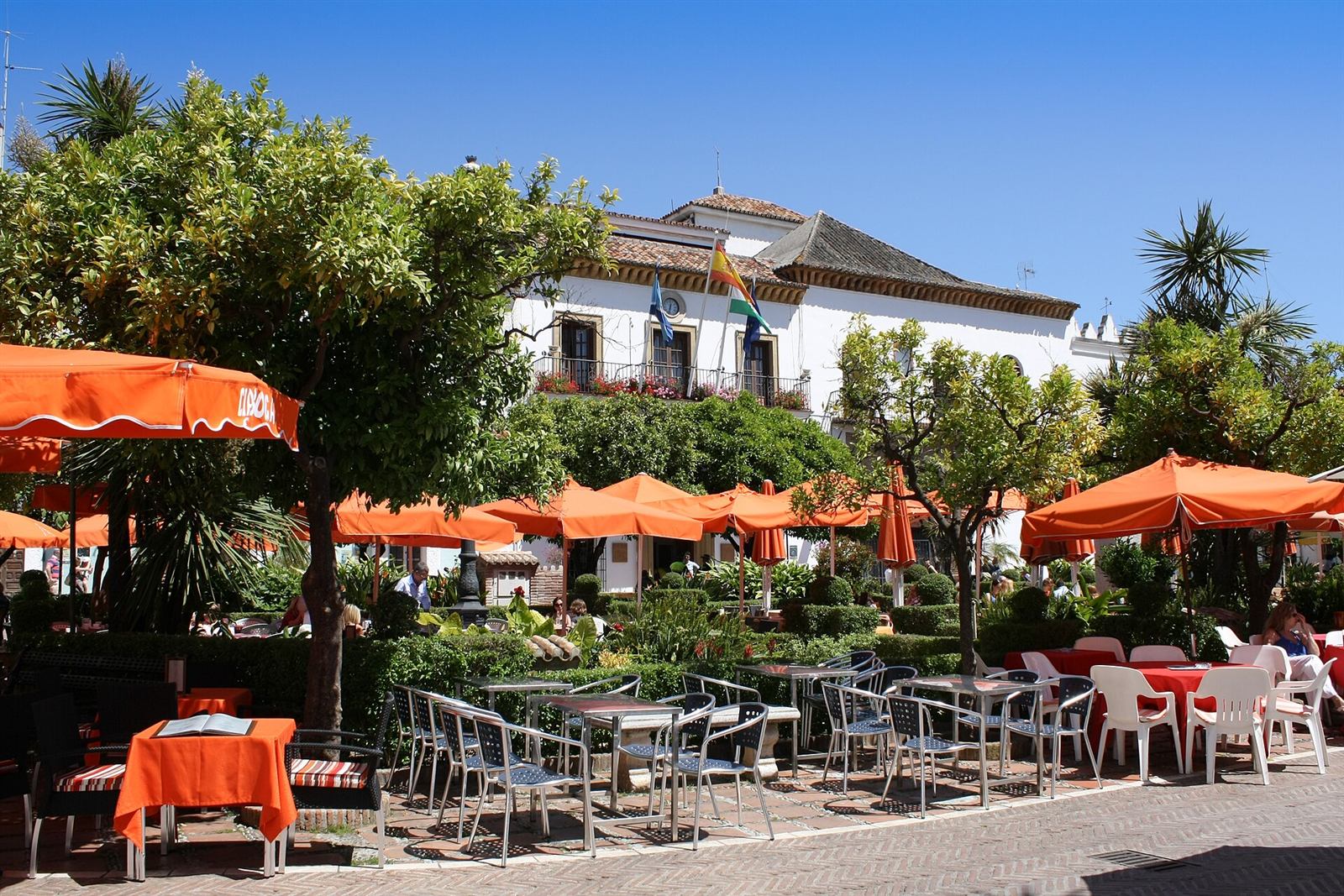
Marbellas gamleby: hva som venter bortenfor Plaza de los Naranjos
Plaza de los Naranjos får 95 % av alle bilder av Marbellas gamleby på Instagram. Hva du går glipp av ved å bli der: fire århundrer med kirkehistorie, et sjømatsted som har solgt rå reker siden 1958, og den smaleste gata i Andalusia utenfor Sevilla. Her er runden gjennom Marbellas casco antiguo som de lokale går. Plaza de los Naranjos — Pass forbi, sett deg ikke. Plaza de los Naranjos har 12 appelsintrær, en fontene fra 1500-tallet, rådhuset fra 1568 og seks restauranter med uteserveringer som tar €8 for en øl og €18 for paella i juli/august. Kom — ta bildet — og gå videre. Vi bruker plassen som orienteringspunkt, ikke som destinasjon. Den som vil spise her, gjør det i januar når de lokale tar tilbake uteserveringen. Beste tidspunkt: 09:00-10:30 (rolig, lys kaffe) Rådhuset (Ayuntamiento) gratis å se på fra østsiden Tips: fontenen har en inskripsjon fra 1504 som ingen legger merke til — se Iglesia de la Encarnación — Andalusisk barokkskjønnhet. Fem minutters gange fra plassen, på Calle de la Iglesia, står Iglesia de Nuestra Señora de la Encarnación — bygget 1505-1515 på grunnmuren av en moské, deretter gjenoppbygd i 1748 i full andalusisk barokk. Freskene innenfor er 15 minutters stirring verdt. Vi var her i desember til julemessen — gratis, åpen for alle, ingen turister. Det er et av få steder i Marbella der du virkelig står i byen fra før turismeboomen. Åpent: daglig 09:30-13:00 og 18:00-20:30, gratis Tips: fredag kveld er det jevnlig en orgelkonsert Ikke gå glipp av: sølvalteret fra 1788 (venstre sideskip) Calle Aduar og sidegatene — Smalhvit autentisitet. Fra plassen går du nordover langs Calle Aduar — den smaleste gata i Marbella Casco Antiguo (1,8 meter bred enkelte steder). Her finner du de hvite murene med fuchsia- og rødfarget bougainvillea som pryder hvert postkort — men uten plassens trengsel. Gå videre til Calle Buitrago, så Calle Remedios, og tilbake via Calle de los Caballeros. Vi går denne runden hver fredag morgen i mai — en time, ingen plan, bare murer fra 1500-tallet. Beste tidspunkt: før 11:00 eller etter 18:00 Ikke gå glipp av: plaketten på Calle Buitrago 12 (fødehjemmet til en prest fra 1600-tallet) Tips: se oppover — mange hus har geometriske Mudejar-fliser i dørstokkene Restaurante Altamirano — Sjømatsted siden 1958. Altamirano ved Plaza Altamirano (200 meter fra Plaza de los Naranjos) har vært åpen siden 1958 og serverer pescaíto, skalldyr og grillet fisk på en skyggefull uteservering for 60 personer. Vi har kommet hit siden 2018, minst fem ganger i året — ingenting forandrer seg. Bestill gambas blancas (€16 per ración), chocos a la plancha (€14) og en flaske Verdejo Rueda (€18). Forvent €35-45 per person inkludert drikke — for Marbella Casco Antiguo en normal pris. Åpent: daglig 13:00-16:00 og 20:00-23:30 Reservasjon ja, +34 952 824 932 — lunsj som regel greit, kveld book på forhånd Tips: be om bord 14, hjørnebordet med utsikt over hele plassen Ermita de Santiago — Kapellet fra 1400-tallet gjemt i murene. Ermita de Santiago er det eldste religiøse bygget i hele Marbella — et kapell fra 1400-tallet oppført rett etter den kristne gjenerobringen i 1485. Det gjemmer seg på Calle Carmen og åpner bare ved spesielle anledninger. Vi har sett det innenfra to ganger (en begravelse, et lokalt helgenjubileum) — et gotisk interiør på 6×4 meter så intimt at man hvisker. Utenfra: Mudejar-overliggeren med det spanske kongevåpenet er omveien verdt alene. Åpent: sjelden, som regel bare under lokale fester Eksteriør: gratis å se, døgnet rundt Tips: spør ved Iglesia de la Encarnación om neste åpning Praktisk vandrerute gjennom gamlebyen. Start: Plaza de la Iglesia (parker ved Recinto Ferial nedenfor) Anbefalt runde: Iglesia → Calle Carmen (Ermita) → Plaza Altamirano (lunsj) → Plaza Naranjos → Calle Aduar → Calle Buitrago → tilbake via Calle Remedios Tid: 2-3 timer inkludert lunsj Beste måneder: mai + juni + oktober (mildt) Tips: kombiner med Avenida del Mar (Dalís skulpturhage) — 10 min gange fra sentrum til havet --- Foto: Mark Gilbert (CC BY-SA 3.0), Zarateman (CC0), via Wikimedia Commons; Google Maps-bidragsytere.
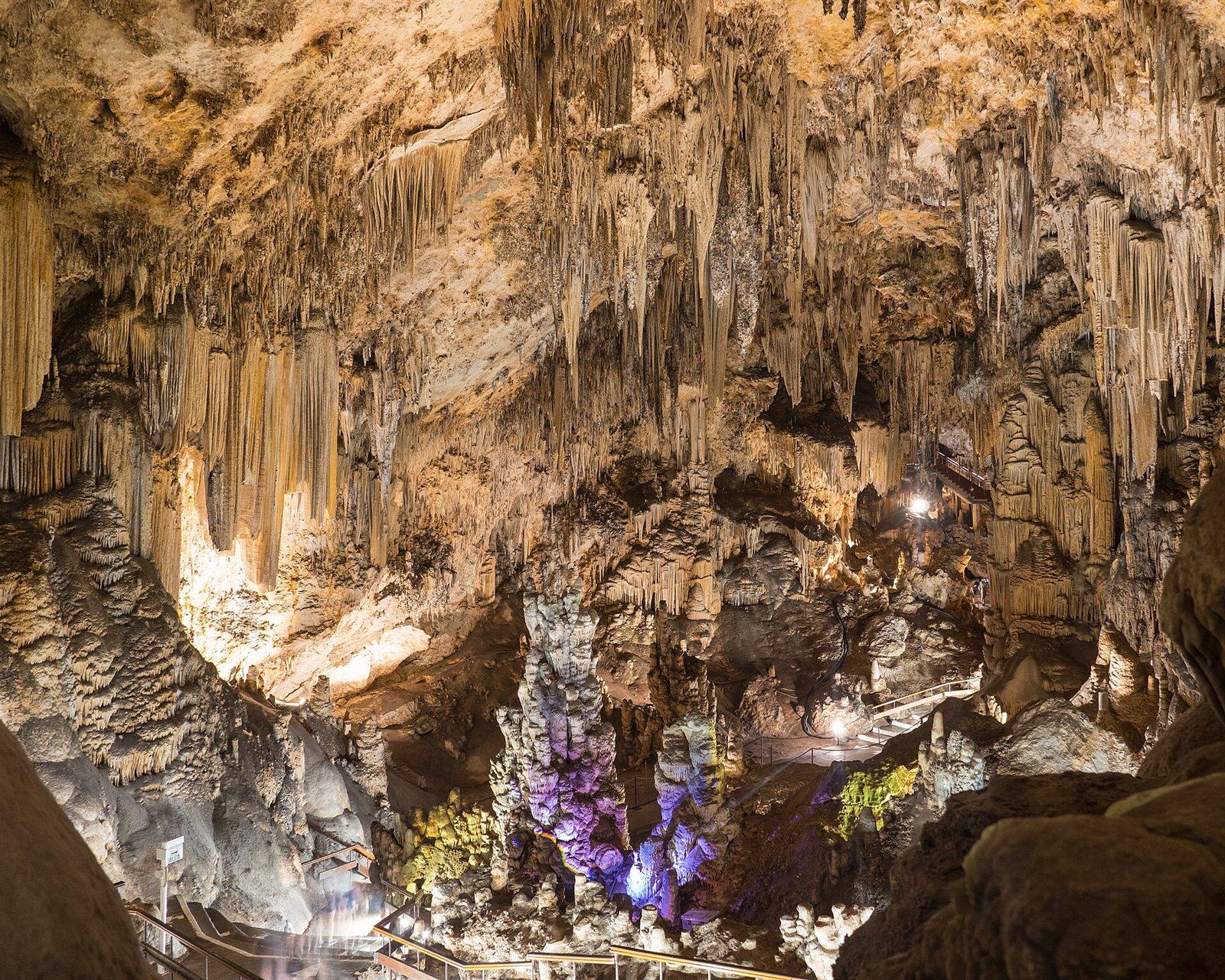
Nerja og grottene: Mer enn en turistfelle hvis du timer det riktig
Cuevas de Nerja står på alle topp-10-lister over severdigheter på Costa del Sol — som er nettopp det som gjør den til en av de ti største turistfellene. Men er du inne før 11:00, planlegger dagen rundt den og spiser på de rette stedene, er dette fortsatt en av de mest spektakulære dagsturene fra kysten. Her er de lokales versjon. Cuevas de Nerja — Trikset er timingen, ikke turen. Cuevas de Nerja ble oppdaget i 1959 av fem gutter som lette etter flaggermus. Grottene rommer paleolittiske malerier (noen 42 000 år gamle — arkeologer diskuterer fortsatt om disse kan være verdens eldste), verdens største stalagmitt (32 m) og en naturlig amfiteatersal som er vert for Festival Internacional Cueva de Nerja i juli/august. Vi var der i oktober i fjor klokken 10:00 — femten minutters venting, to turistbusser foran oss; klokken 11:30 hadde tre til kommet. Det er forskjellen. Åpent: 09:00-19:00 (juni-september), 09:00-16:30 (ellers) Pris: €15 voksne, €13 barn 6-12 Tips: kjøp billett på nett kvelden før, kom 09:45 Hopp over turen: velg lydguiden (€3 ekstra), ikke den guidede turen Balcón de Europa — Utsikten og sentrum av Nerja. Etter grottene kjører du 5 min til sentrum av Nerja og parkerer ved Parking del Balcón. Balcón de Europa er den ikoniske promenadeutsikten med palmer, en marmorhvit balustrade og utsikt mot Sierra Almijara — gratis, ingen venting. Vi går alltid rett til den østligste delen (de fleste blir på vestsiden) — derfra ser du begge strendene samtidig, og fotografen har solen i ryggen. Beste tid: 11:30-12:30 eller etter 17:00 Kaffe: Café Rubens ved Balcón lager en skikkelig espresso (€2) Tips: fortsett til Calle Carabeo for terrasserestauranter med den EKTE utsikten Playa de Burriana og Chiringuito Ayo — Paella på sanden. Playa de Burriana er Nerjas hovedstrand — 800 m sand, klart vann, og i østenden: Chiringuito Ayo, som serverer ubegrenset paella for €13 per person til lunsj. Ayo García (grunnleggeren) lagde pannen selv hver dag i 50 år — han gikk bort i 2023, sønnen driver den nå, og kvaliteten er nøyaktig den samme. Vi kommer hit minst én gang hver ferie — kom 13:15 (første paella klar 13:30). Åpent: daglig 12:00-22:00 (april-oktober) Paella special: spis så mye du orker €13 per person, daglig 13:30-15:30 Tips: be om risskorpen i bunnen (socarrat) på den andre pannen Parkering: gratis langs promenaden, fullt fra 12:00 Frigiliana — Den hvite landsbyen 10 minutter fra Nerja. Mange glemmer at Nerja har en sideturlandsby: Frigiliana, 7 km innover i landet. En helhvit landsby i en fjellside, smale smug med blomsterkrukker og det vakreste gamle mauriske kvarteret på hele Costa del Sol. Vi parkerer i utkanten og går oppover — en time holder for sentrum. Onsdag morgen er det gatemarked der Frigiliana-honning selges (honningfestivalen i slutten av april/begynnelsen av mai er berømt). Gratis å besøke Beste tid: før 11:00 eller etter 17:00 (midt på dagen er det varmt) Mat: Bar El Mirador til lunsj, El Adarve for en mer komplett middag Honning: kjøp hos La Casa del Apicultor i sentrum Å spise i gamle Nerja — Ikke ved Balcón. Restaurantene rett ved Balcón de Europa er for det meste turistpriset — €18 for paella av fryskvalitet. Gå én gate nordover (Calle Pintada), så finner du Bar Patanegra (€12 menu del día med jamón ibérico) eller El Pulguilla for tapas (€2-4 per stykk, gratis tapa til hver drink). Vi spiser alltid her etter grottene — den forskjellen mellom turiststrøket og de lokales strøk er nøyaktig én gate. Bar Patanegra: Calle Pintada 9, daglig 12:00-15:30 og 19:00-23:00 El Pulguilla: Calle Almirante Ferrándiz 26, daglig unntatt mandag Tips: på El Pulguilla får du én gratis tapa per drink — tre øl er en hel lunsj Praktisk: ruten fra Marbella. Bil: A-7 østover, 90-110 min (Marbella → Nerja, ~120 km) Buss: ALSA direkte Marbella → Nerja, 2 timer, €14 enkeltbillett Beste måneder: mai + juni + september + oktober (sommer = 35°C+ i grotter og by) Tidsplan: avreise 08:30 → 10:00 grotter → 11:30 Balcón → 13:30 Burriana paella → 16:00 Frigiliana → 19:00 retur = hel dag Å kombinere med Caminito del Rey går ikke som dagstur — velg én per dag --- Foto: Fernando (CC BY-SA 4.0), via Wikimedia Commons; bidragsytere til Google Maps.
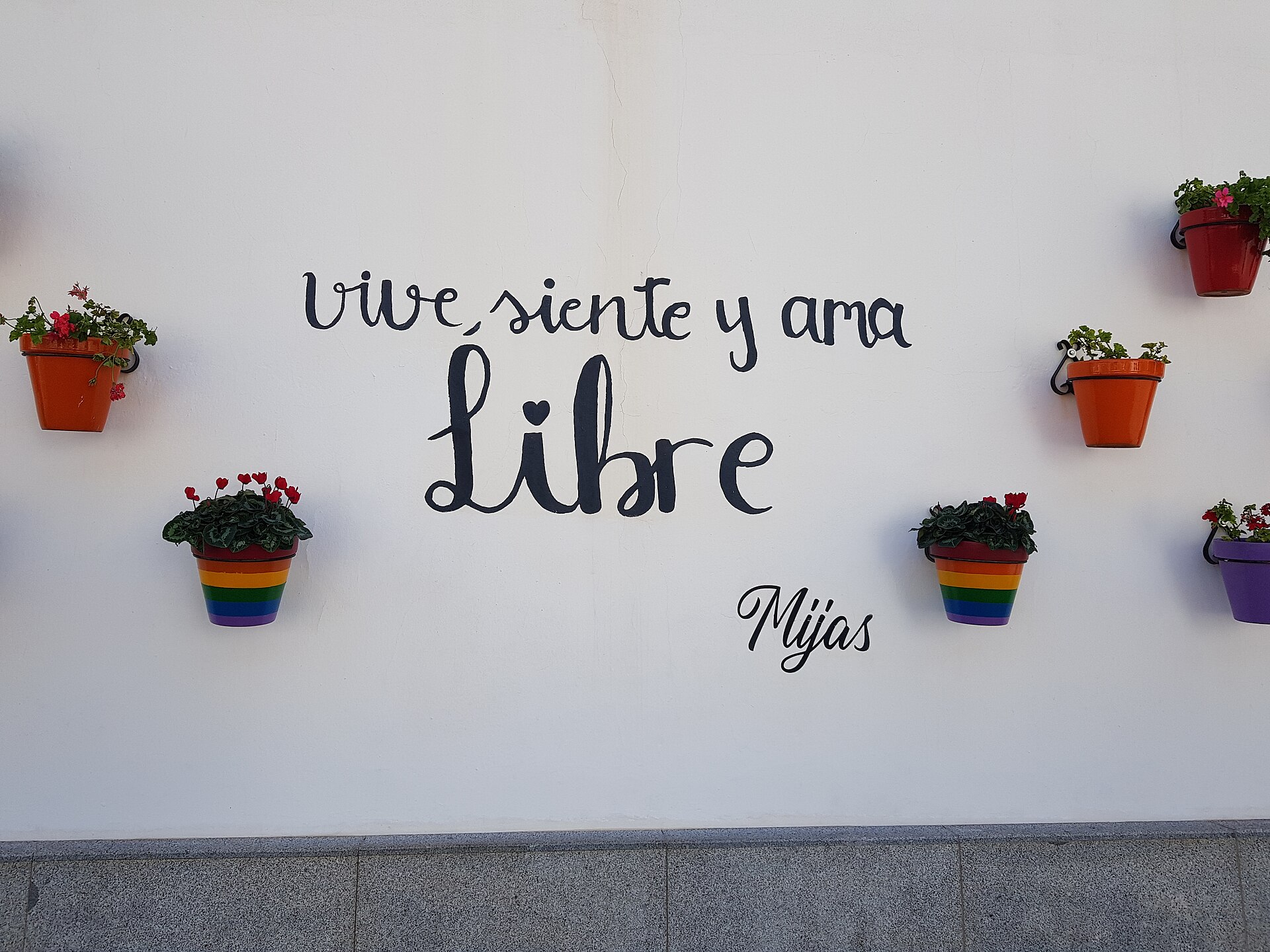
Mijas Pueblo: The White Village Above the Costa del Sol
Most people on the Costa del Sol never get further than the beach bars of Fuengirola or Torremolinos, which is exactly why the smartest afternoon you can plan is the 30-minute drive up into the hills to Mijas Pueblo. It's the postcard "white village" everyone pictures when they imagine Andalucía — geranium pots, lime-washed walls, donkeys in the square — except it's a real working pueblo, not a film set. We send every visiting friend up here, and here's how to do it without falling into the obvious traps. Why bother leaving the coast. The resort strip below is fine for a swim and a beer, but it's flat, busy, and looks like a hundred other places. Mijas Pueblo sits at roughly 430 metres, clinging to the side of the Sierra de Mijas, and the temperature drops a noticeable few degrees as you climb — a genuine relief in July and August. On a clear day you can see the whole bay from Fuengirola round to Gibraltar and, when the haze lifts, the Rif mountains of Morocco across the water. What makes it worth the trip is the contrast. Down on the coast everything is built in the last 50 years. Up here the lanes are too narrow for two cars, the houses are whitewashed twice a year by hand, and within ten minutes of parking you've swapped sunbeds for a proper Andalusian hill town. For an afternoon, it genuinely beats the Costa del Sol resort strip. The viewpoints (start here). The single best thing to do is just walk the perimeter for the views. Three spots are worth aiming for: Mirador del Compás — the terrace beside the bullring at the top of the village. Free, open, and the classic panorama of the coast laid out below. The Muralla / Jardines de la Muralla — landscaped gardens along the old town wall on the Fuengirola-facing side, full of cascading plants and benches. Quiet in the late afternoon. Plaza de la Constitución — the main square, framed by the rock face and a good orientation point before you wander. The whole historic core is small — you can loop it in 30–40 minutes at a stroll — so don't over-plan. Half the pleasure is getting briefly lost in lanes like Calle San Sebastián, probably the most photographed street in the village, a cobbled alley of white walls and blue flowerpots. The donkey-taxi debate — what we tell people. You can't write honestly about Mijas without the burro-taxi. Since the 1960s, donkeys have ferried tourists around the village, and the painted carts and saddled donkeys still wait near the entrance off Avenida del Compás. A short ride runs around €10–15, a cart for a few people more. Here's the honest take: it's the village's most famous "thing" and also its most uncomfortable one. The animals stand in the heat for long hours, and welfare campaigners have pushed hard against it for years. The town has added shade, water and rest rules, but plenty of locals and regular visitors simply won't use it any more, and we don't either. Photograph the donkeys if you like, give them a wide berth in the midday sun, and walk the village on your own feet — it's tiny, and you'll see far more. If you want to support animals, the small donkey sanctuary projects in the wider area are a better place to put your money. Chapels, the bullring and the small museums. For its size, Mijas packs in a surprising number of little sights, almost all free or a euro or two: Ermita de la Virgen de la Peña — a tiny chapel carved straight into the rock by a Carmelite monk in the 1680s, just off the gardens. Cool, dim and genuinely atmospheric; it's the village's patron shrine. Iglesia de la Inmaculada Concepción — the main parish church, with a Mudéjar tower built over an old minaret. Climb up for another view. Plaza de Toros — the small oval (not rectangular) bullring from 1900, one of the most unusual in Spain. There's a modest museum; you can usually look in for a couple of euros even when nothing's on. CAC Mijas — a free contemporary art centre with a clutch of minor Picasso and Dalí ceramics. Small, but a nice air-conditioned 20 minutes. None of these need more than 15 minutes each, which is the point — graze, don't grind. Eating and drinking (and what to skip). The square and the main approach lanes are wall-to-wall tourist menús del día with laminated photos — fine in a pinch, but not why you came. Walk two streets back from the main drag and prices drop and quality rises. For a coffee or a caña with the coast spread out below you, the terrace cafés along the Muralla are hard to beat — you pay a small view premium, worth it once. For an actual meal, look for the places up the hill where you hear Spanish being spoken: simple plates of espetos aren't really a hill-town thing (those belong down on the best beaches), so up here go for grilled meats, croquetas, and local Mijas wine. Skip the first three restaurants you see on the way in from the car park; they exist purely on passing footfall. A sweet tip: there are a couple of old-school bakeries doing tortas and almond pastries — buy some to eat on a bench in the gardens rather than sitting down somewhere with a cover charge. Getting there and parking. By car from the coast it's genuinely about 25–30 minutes from Fuengirola, slightly more from Marbella or Málaga, up a well-signed but winding road. Do not try to drive into the old village — the lanes are barely car-width and you'll regret it. Park in the large underground car park at Plaza Virgen de la Peña right at the village entrance; it's cheap (a couple of euros an hour) and drops you 30 seconds from the gardens. No car? The M-122 bus run by Avanza connects Fuengirola bus station to Mijas Pueblo roughly hourly, takes about 25–30 minutes and costs only a few euros each way. From Fuengirola you can reach the coast on the C-1 Cercanías train from Málaga (and the airport), so the whole thing is doable on public transport in an afternoon. Practical tips. When to go: Late afternoon is ideal — softer light for the views, cooler lanes, and you can stay for sunset over the bay. Mornings before the coach tours arrive (they roll in around 11am) are the other sweet spot. Avoid the 12–3pm peak in summer. How long: Two to three hours is plenty for the core. Half a day if you linger over lunch. Crowds: It is undeniably touristy — that's the trade-off for being this pretty and this close to the coast. Visiting off-peak hours fixes most of it. Combine it: Pair Mijas Pueblo with a swim back down in Fuengirola, or make it part of a hill-town loop with Ronda further inland. Wear: Proper shoes — the cobbles are steep and slick. Bring a layer for the evening; it's cooler up here than on the sand. What to book: Nothing, really. This is a walk-up afternoon. Check the events calendar though — village fiestas like the September romería transform the place. Go for the views, skip the donkey ride, eat two streets back from the square, and you'll understand why Mijas Pueblo is the one inland trip even die-hard beach people don't regret.
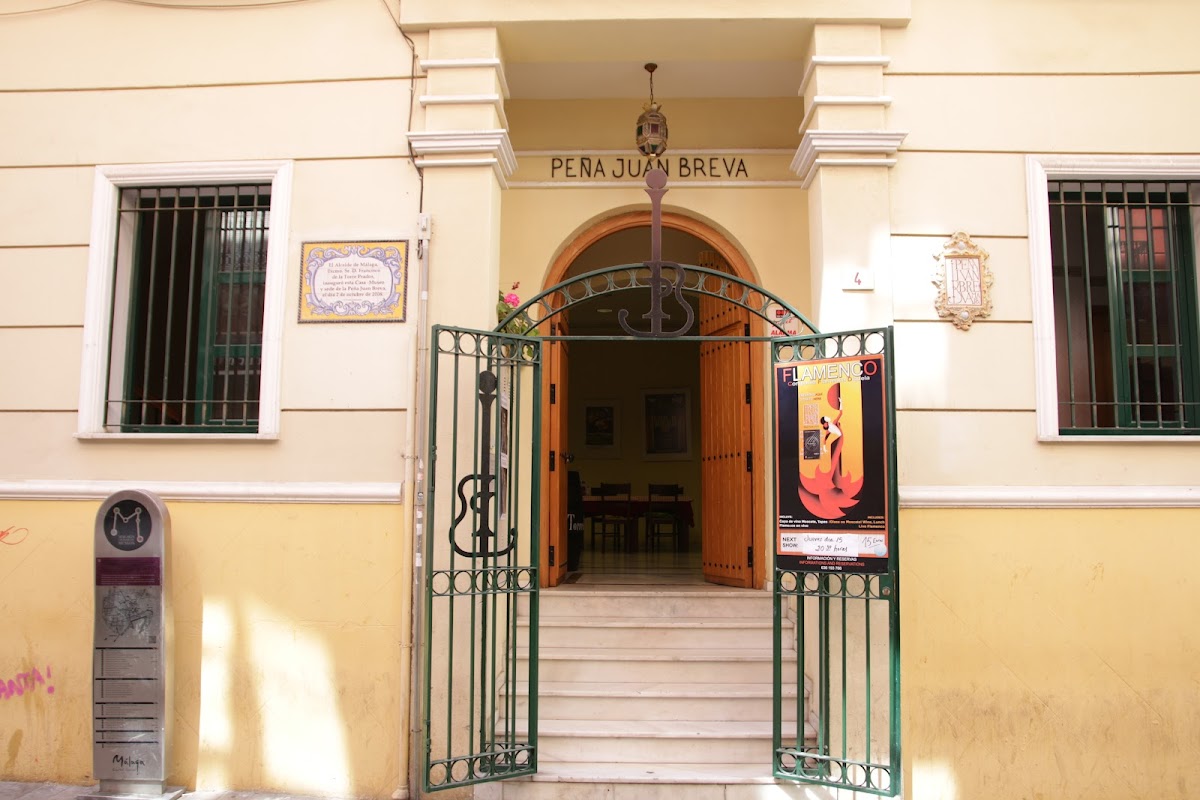
Flamenco i Málaga: det ekte mot turistshowet
En god flamencoforestilling er ikke et show — det er et rom der gitaristen, danseren og sangeren låser seg fast i noe sammen, og du enten kjenner det eller ikke. Málaga er ikke Sevilla og ikke Jerez. Men byen har en overraskende bred flamencoscene: fra gratis fredagskvelder på Spanias eldste peña til polerte tablao-show for cruisegjester. Slik skiller du dem fra hverandre — og hvilket som passer for deg. Peña Juan Breva — Spanias eldste peña. Grunnlagt i 1958 og gjemt i en sidegate til Calle Beatas er Peña Juan Breva den eldste peñaen som fortsatt drives i Spania. Første etasje rommer et lite museum med over 5 000 lydarkiver, 2 500 CD-er og 20 gitarer — noen av dem mer enn to århundrer gamle. Nede er det en tablao som holder en fredagskveldskonsert klokken 20. Gratis inngang. Publikummet er lokalt, artistene er en blanding av amatører og profesjonelle, og mellom numrene stopper de opp for å prate med rommet. Dette er flamenco slik den skal være: liten, ærlig og av og til svimlende god. Forestillinger: fredag kl. 20 (av og til torsdag eller lørdag — ring på forhånd) Museum: man–lør 10–14, donasjon 3 € Calle Ramón Franquelo 4, Málaga sentrum Tlf: (+34) 952 22 13 80 eller (+34) 687 607 526 Teatro Cervantes — Når de store navnene kommer innom. Hver april holder Teatro Cervantes sin egen festival Flamenco Serás Tú, med artister på nasjonalt nivå som du ellers bare ser i Jerez eller Sevilla. Resten av året dukker flamencokonserter regelmessig opp i programmet. Bare interiøret — tre etasjer, et malt tak fra 1870, varmt gyllent lys — gjør kvelden til noe å kle seg fint til. Akustikken er så god at du kan høre danserens fottramp helt fra øverste balkong. Billetter fra 12 €, hovednavn opptil 40 € Sjekk programmet på teatrocervantes.com Calle Ramos Marín, 2 min gange fra Plaza de la Merced Book i god tid til Flamenco Serás Tú Kelipé Centro de Arte Flamenco — Intimt og seriøst. Bak Atarazanas-markedet ligger Kelipé — en flamencoskole som også holder show. Nettopp fordi det er en skole, er nivået jevnt høyt: gjesteartister stikker innom for å opptre for elevene. Salen er liten (rundt 40 plasser), noe som betyr at du sitter bokstavelig talt tre meter fra danseren. Showet heter Flamenco De Ley og varer omtrent en time. Vil du virkelig forstå det: book også en workshop — en ettermiddag blant elevene lærer deg mer om duende enn ti show. Forestillinger onsdag–søndag kl. 20 Billetter fra 28 € inkludert én drink Calle Muro de Puerta Nueva 10 Workshops etter avtale via kelipe.net Alegría Flamenco y Gastronomía — Tablaoen som gjør det riktig. Nær havnen, 2 minutter fra Pompidou-senteret, er Alegría det mest tilgjengelige alternativet — og samtidig byens best gjennomførte turisttablao. Flere show om dagen, som regel fire artister på scenen (danser, sanger, gitarist, perkusjon), med mulighet for middag på terrassen først. Ingen forestilling om å være det ekte — men et profesjonelt fremført spektakkel. Ideelt hvis du er med familie eller gruppe og vil ha en første smak av flamenco uten å navigere rare tidspunkter eller telefonbestillinger. Forestillinger daglig kl. 17.30, 20.45 og 22.30 Billetter fra 28 €, middag bookes separat Calle Vélez Málaga 6, Málaga-Este Det tidlige showet pleier å være mindre fullt Slik velger du. Første gang du ser flamenco og bare én kveld i byen? Alegría eller Kelipé — garantert et godt show. Har vært på en tablao før og vil ha noe ekte? Peña Juan Breva en fredagskveld. Møt opp i god tid — salen er liten. Du er fan, og et stort navn står på programmet? Teatro Cervantes, parkett eller første rad. Du har en hel kveld og en nysgjerrig mage? Vino Mio eller Los Amayas — middag pluss show, mindre intenst men koselig. Duende — hva du skal lytte etter. Flamenco går ikke på koreografi. Gitaristen, sangeren og danseren lytter til hverandre, øker tempoet, drar tilbake, spiller opp mot hverandre. Øyeblikket der alle tre låser seg fast i samme lomme kalles duende — bokstavelig 'ånd' — og det er da publikum begynner å rope 'Olé!', selv når ingenting åpenbart skjer. Har du aldri kjent det i et show: dra til Peña Juan Breva. Dra fire ganger om du må.
Ofte stilte spørsmål om kultur
Hvor ser jeg ekte flamenco i stedet for turistshow?+
I Málaga: Peña Juan Breva, en tradisjonell flamencoforening i gamlebyen, torsdagskvelder fra kl. 21, gratis for medlemmer, et lite gebyr for besøkende. I Marbella: Ana María på Paseo Marítimo for middagsforestillinger. Unngå show med busslaster av turistgrupper — de er for fotoet, ikke for musikken.
Kan Alhambra i Granada nås som en dagstur fra Marbella?+
Ja, men det er stramt. Det er halvannen times kjøring, og du trenger minst tre timer inne på Alhambra-området. Bestill billetter minst en måned i forveien — de selges ikke lenger ved porten. Dra før kl. 8, og sett av tid til Albaicín-kvarteret og lunsj på Plaza Larga.
Hva kan jeg se på én dag i Málaga?+
Start ved Mercado de Atarazanas (frokost + innkjøp), gå ned Calle Larios til katedralen. Picasso-museet krever minst to timer. Lunsj på El Pimpi. Deretter opp til Alcazaba og det romerske teateret. Om kvelden: Muelle Uno ved solnedgang. Sett av fire timer bare til museene.