
Kultura
Flamenco, mauretańska historia, sztuka współczesna i stare miasta, gdzie Costa del Sol zaczęła się na długo przed przybyciem turystów.
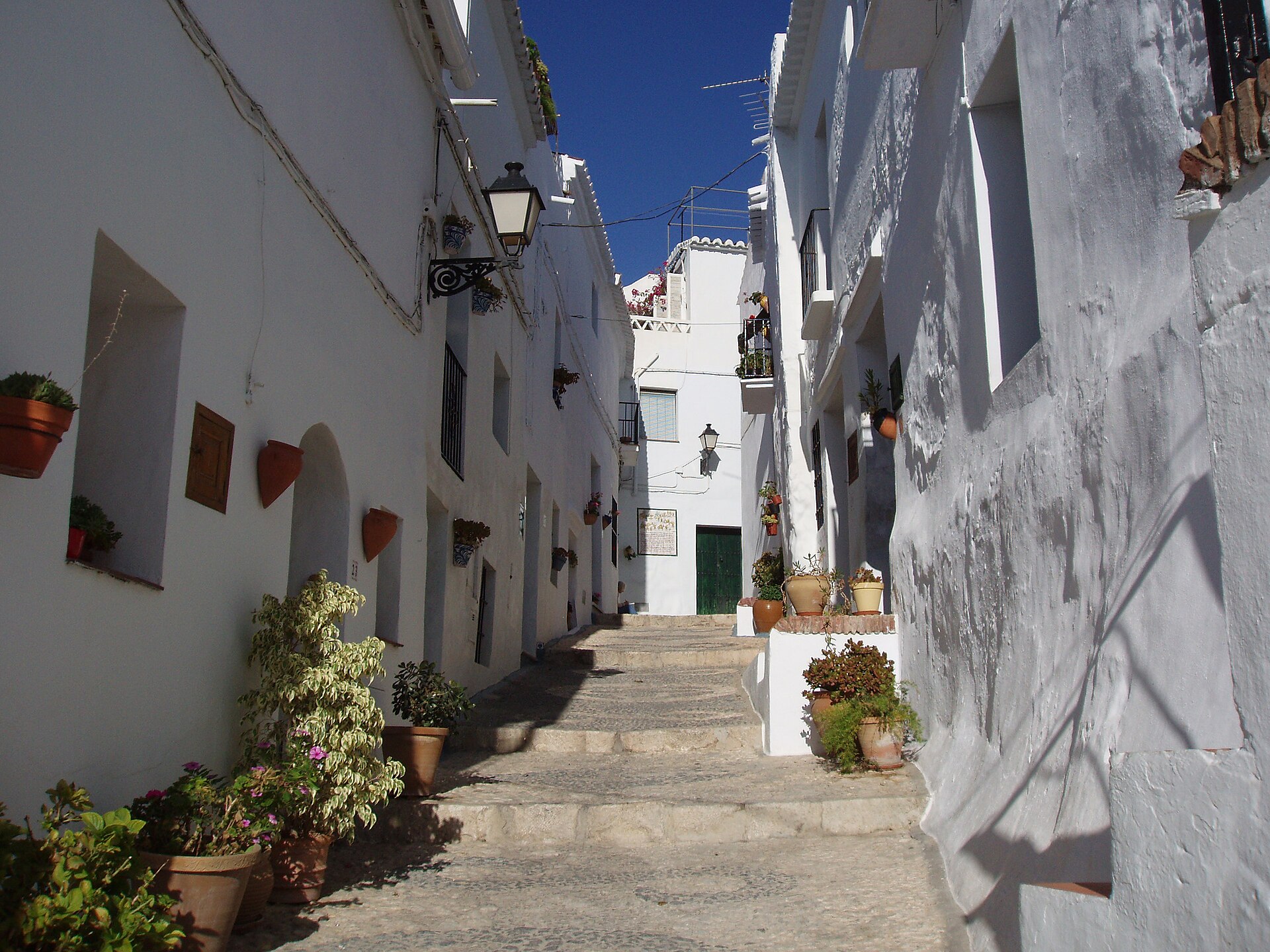
Frigiliana & Nerja: The Costa del Sol's Prettiest Corner
Ask anyone who's lived here a while where the Costa del Sol is still genuinely pretty — not the high-rise stretch, the real thing — and they'll point east, past Málaga, to where the Sierra de Almijara drops almost straight into the sea. That's Nerja, and 7km up the switchbacks behind it, Frigiliana. We do this pair as a single day trip a couple of times a season, and it's the one we send visiting friends to do first. Here's how to combine both properly, what's worth your time, and what's quietly a tourist trap. Start at the Balcón de Europa. Nerja's old town funnels everyone down to the Balcón de Europa, a palm-lined promenade built on the stump of a clifftop fortress. It juts out over the sea with a 180-degree view of coves and the mountains behind. It's genuinely beautiful and genuinely mobbed — there's a busker, a guy who'll draw your caricature, and at the very tip a bronze statue of King Alfonso XII that every tourist photographs. Get there before 11am or after 6pm. Midday in July it's shoulder-to-shoulder. The streets feeding into it — Calle Pintada, Calle Almirante Ferrándiz (locals still call it Calle Cristo) — are the prettiest, whitewashed and tiled, and where the better restaurants hide. Down the steps on either side are Nerja's town beaches: Playa Calahonda — tiny, sheltered, right under the Balcón. Charming but it fills by 10am. Playa Burriana — the big one, 800m of sand a 15-minute walk east, with proper chiringuitos. This is where you actually swim and eat. If you only swim once in Nerja, make it Burriana and have lunch at Ayo's, the paella place at the far end that's been cooking rice in giant pans over orange-wood fires since the 1960s. The all-you-can-eat paella is around €11 and the spectacle is half the point. The Nerja Caves — go, but manage expectations. The Cuevas de Nerja, 4km east of town, are a genuine natural wonder — vast caverns with one of the world's largest stalactite columns, lit theatrically. Tickets are about €15 (children cheaper), and you should book online for a timed slot in summer because the on-the-day queue is brutal. Honest take: it's impressive for 30–40 minutes, the walkways are well-made, and it's blessedly cool when it's 33°C outside. But it's a one-way loop, fairly quick, and the gift-shop-and-coach-park energy at the entrance is strong. If your day is tight, the caves are the thing I'd cut before the coves. Bus N-3 runs out here from the centre, or it's a €7–8 taxi. The Maro coves — the part most people miss. This is the secret that isn't really a secret anymore but still feels like one. East of the caves, around the hamlet of Maro, the Acantilados de Maro-Cerro Gordo cliffs hide a string of small, clear-water coves backed by a waterfall. Playa de Maro is the easiest — there's a dirt car park above and a steepish path down (10 minutes, wear real shoes, not flip-flops). The water is the clearest on this whole coast. In summer the access road to the cove gets restricted and you may have to park up top and walk, or use the seasonal shuttle. Kayak operators on Burriana run morning trips along these cliffs to the waterfall for around €30–35, which honestly is the best way to see them and skips the parking headache entirely. For more on where the good swimming is along the coast, our best beaches guide has the full list. Up to Frigiliana. Now drive (or bus) the 7km up. The M-345 bus from Nerja's bus stop on Avenida de Pescia runs roughly hourly, takes about 15 minutes and costs around €1.20. By car it's ten minutes of tight bends with a car park at the bottom of the village — don't try to drive into the old town, the streets are donkey-width and you will regret it. Frigiliana repeatedly wins "prettiest village in Andalucía" polls and you'll see why in about four steps. The Barribarto quarter — the old Moorish kasbah — is a vertical maze of dazzling-white houses, cobbled ramps, blue plant pots, bougainvillea spilling over everything, and ceramic plaques telling the (bloody) story of the 1569 Morisco rebellion. It's small. You can walk the whole historic core in 90 minutes including coffee stops, and that's the right amount of time. Things worth doing here: Buy a bottle of miel de caña (sugarcane molasses) from Nuestra Señora del Carmen, the last cane-honey mill of its kind in Europe, right in the village. Climb to the top for the viewpoint over the valley to the sea — the higher you go, the fewer people. Eat at a place with a terrace. El Mirador de Frigiliana and the little bars around Plaza de las Tres Culturas do honest Andalusian food; a plate of local goat, a glass of wine and the view is the whole experience. The downside: the lower main street is wall-to-wall souvenir shops selling the same fridge magnets, and a few "típico" restaurants on the through-road are overpriced and forgettable. Climb past them. The magic is in the upper lanes where nobody's selling you anything. Combining both in one day. The rhythm we use: Morning — arrive in Nerja by 9.30, walk the Balcón before the crowds, swim at Burriana. Lunch — paella at Ayo's or a long lunch on Calle Cristo. Early afternoon — either the caves (cool, indoors, good for the hottest hours) or a kayak to the Maro coves. Late afternoon — drive up to Frigiliana for golden hour, when the white walls turn warm and the day-trippers have left. Evening — dinner on a Frigiliana terrace, then the dark drive back down. That's a full, satisfying day. Don't try to add the caves and the coves and a long beach session — something will feel rushed. Best season. Late May, June, and September are the sweet spot: warm sea, long days, and Frigiliana's lanes not yet crammed. July and August are hot and very busy — go early and late, never midday. The Festival de las Tres Culturas in Frigiliana (usually late August) is wonderful but packs the village. April and October are lovely for walking but the sea is still bracing; our sea-temperature page tells you when it's actually swimmable. Practical tips. Getting there: From Málaga, the Avanza/ALSA bus to Nerja runs frequently from the bus station (~1 hour, around €5). By car it's the A-7 motorway, about 50 minutes. From the western resorts, see our Nerja page for routes — it's a solid 75–90 minutes from Marbella. Park smart: Use Nerja's underground car park near Plaza de España, and Frigiliana's lot at the foot of the village. Don't circle the old towns hunting for street parking. Book ahead: Cave tickets online in summer; kayak trips a day or two ahead. Restaurants generally don't need booking except August evenings in Frigiliana. Wear proper shoes for the cove paths and Frigiliana's cobbles. Bring water — the village climb is hot. Skip if short on time: the lower souvenir strip in Frigiliana and the day's third activity. Less, done well, beats a checklist. Do it right and this is the corner of the coast people remember long after the beach resorts blur together.
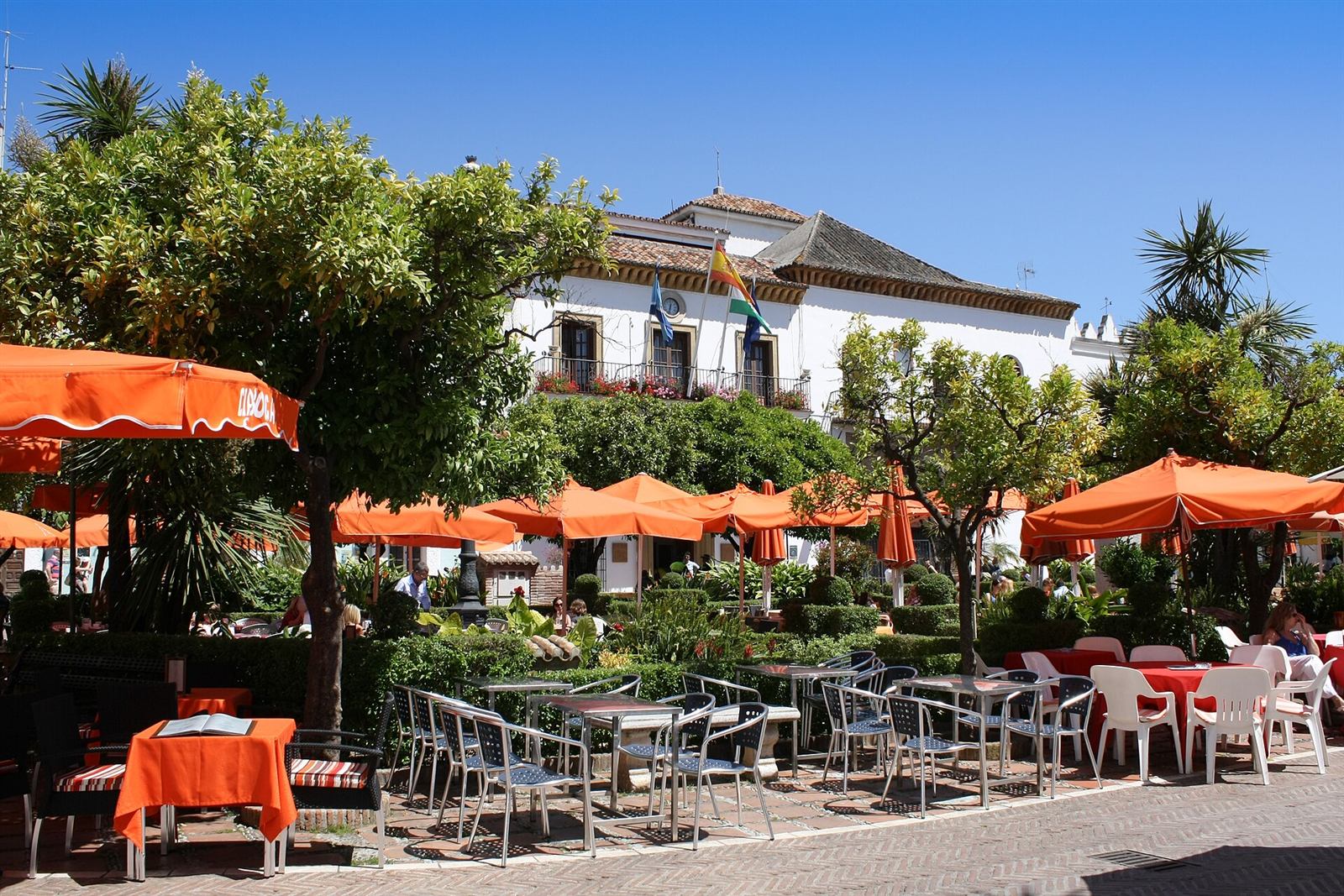
Het Oude Centrum van Marbella: Wat Voorbij Plaza de los Naranjos Wacht
Plaza de los Naranjos krijgt 95% van de Marbella-old-town fotos op Instagram. Wat je verlieest als je daar blijft staan: vier eeuwen kerk-geschiedenis, een marisquería die rauwe garnalen verkoopt sinds 1958, en de oudste straat van Andalusië buiten Sevilla. Hier de Marbella casco antiguo loop die locals lopen. Plaza de los Naranjos — Wel komen, niet blijven. Plaza de los Naranjos heeft 12 sinaasappelbomen, een 16e-eeuwse fontein, het stadshuis uit 1568 en zes restaurants met terrassen die in juli/augustus €8 voor een biertje en €18 voor paella vragen. Kom hier — neem de foto — en wandel direct door. Wij gebruiken de plaza als oriëntatiepunt, niet als bestemming. Wie hier wil eten doet dat in januari als locals het terras terugnemen. Beste tijd: 09:00-10:30 (rustig, lichte koffie) Stadhuis (Ayuntamiento) gratis te bekijken aan de oostkant Tip: de fontein heeft een inscriptie uit 1504 die niemand opmerkt — kijk Iglesia de la Encarnación — Andalusische barokke schoonheid. Vijf minuten lopen van de plaza, op Calle de la Iglesia, staat de Iglesia de Nuestra Señora de la Encarnación — gebouwd 1505-1515 op de fundamenten van een moskee, en daarna in 1748 herbouwd in volle Andalusische barokke stijl. De fresco's binnen zijn 15 minuten staren waard. Wij gingen hier in december voor de kerstmis-mis — gratis, voor iedereen open, geen toeristen. Het is een van de weinige plekken in Marbella waar je écht in de stad van vóór de toerisme-boom staat. Open: dagelijks 09:30-13:00 en 18:00-20:30, gratis Tip: vrijdagavond is er regelmatig een organist-recital Niet missen: het zilveren altaar uit 1788 (linker zijbeuk) Calle Aduar + omliggende zijstraten — De smal-witte authenticiteit. Vanuit de Plaza loop je noord langs Calle Aduar — de smalste straat in het Marbella Casco Antiguo (op sommige plekken 1,8 meter breed). Hier vind je de witte muren met fuchsia-en-rode bougainvillea die op alle posters staan — alleen zonder de drukte van de plaza. Loop door naar Calle Buitrago, dan Calle Remedios, dan terug via Calle de los Caballeros. Wij doen deze lus elke vrijdagochtend in mei — een uur, geen plan, alleen 16e-eeuwse muren. Beste tijd: vóór 11:00 of na 18:00 Niet gemerkt: plaque-bord op Calle Buitrago 12 (geboortehuis van een 17e-eeuwse priester) Tip: kijk omhoog — veel huizen hebben Moors-Mudejar geometrische tegels in de drempels Restaurante Altamirano — Marisquería sinds 1958. Altamirano op Plaza Altamirano (200 meter van Plaza de los Naranjos) bestaat sinds 1958 en serveert pescaíto, marisco en verse gegrilde vis op een schaduwrijk terras voor 60 mensen. Wij komen hier al sinds 2018 minimaal vijf keer per jaar — niets verandert. Bestel de gambas blancas (€16 per ración), de chocos a la plancha (€14) en een fles Verdejo Rueda (€18). Reken op €35-45 p.p. inclusief drank — voor Marbella Casco Antiguo een normaal tarief. Open: dagelijks 13:00-16:00 en 20:00-23:30 Reservering ja, +34 952 824 932 — 's middags meestal genoeg, 's avonds vooraf Tip: vraag om tafel 14, hoek-tafel met uitzicht op de hele plaza Ermita de Santiago — Het 15e-eeuwse kapelletje verborgen in de muren. Ermita de Santiago is de oudste religieuze structuur in heel Marbella — een 15e-eeuws kapelletje gebouwd direct na de Christelijke Reconquista van 1485. Het ligt verborgen in Calle Carmen, en is alleen geopend bij speciale gelegenheden. Wij hebben het twee keer van binnen gezien (begrafenis en lokale begrafenis-anniversary) — een gotisch interieur van 6×4 meter dat zo intiem voelt dat je fluistert. Vanaf buiten: de Mudejar-bovendrempel met het Spaanse koningswapen is alleen al de moeite waard. Open: zelden, meestal alleen tijdens lokale feesten Buitenkant: gratis te bekijken, 24/7 Tip: vraag bij Iglesia de la Encarnación naar de eerstvolgende openings-mogelijkheid Praktische loop door het oude centrum. Startpunt: Plaza de la Iglesia (parkeer in Recinto Ferial onderaan) Aanbevolen loop: Iglesia → Calle Carmen (Ermita) → Plaza Altamirano (lunch) → Plaza Naranjos → Calle Aduar → Calle Buitrago → terug via Calle Remedios Tijd: 2-3 uur incl. lunch Beste maanden: mei + juni + oktober (matig warm) Tip: combineer met Avenida del Mar (sculptuur-tuin van Dalí) — 10 min wandelen vanuit centrum naar de zee --- Foto's: Mark Gilbert (CC BY-SA 3.0), Zarateman (CC0), via Wikimedia Commons; Google Maps-bijdragers.
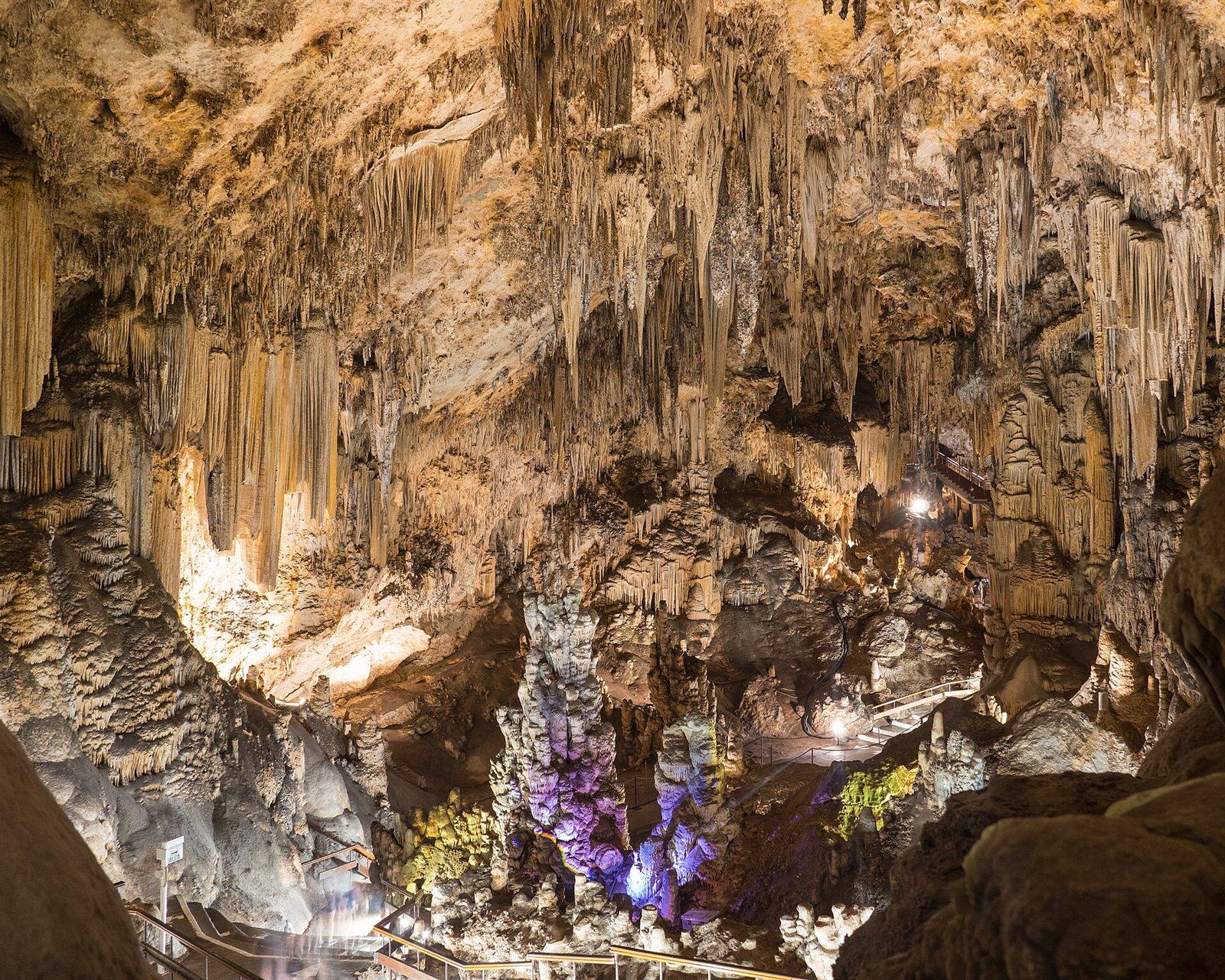
Nerja en de Cuevas: Meer dan een Toeristenval als Je Het Goed Aanpakt
Cuevas de Nerja staat op elke top-10 lijst van Costa-del-Sol bezienswaardigheden — wat 'm ook tot de top-10 toeristen-vallen maakt. Maar als je voor 11:00 binnen bent, je dag eromheen plant, en de juiste plekken eet, is dit nog steeds een van de meest spectaculaire dagtrips vanaf de kust. Hier de versie die locals doen. Cuevas de Nerja — De truc is het tijdstip, niet de tour. De Cuevas de Nerja zijn ontdekt in 1959 door vijf jongens die op zoek waren naar vleermuizen. De grotten hebben paleolithische schilderingen (sommige 42.000 jaar oud — discussie onder archeologen of dit de oudste ter wereld zijn), de grootste stalagmiet van de wereld (32m hoog) en een natuurlijke amfitheater-zaal die in juli/augustus dienst doet als concertruimte voor het Festival Internacional Cueva de Nerja. Wij gingen vorig oktober om 10:00 — kwartier wachten, twee tour-bussen voor ons, op 11:30 zaten er drie meer. Dat is het verschil. Open: 09:00-19:00 (juni-september), 09:00-16:30 (overig) Prijs: €15 volwassenen, €13 kind 6-12 Tip: koop ticket online avond ervoor, kom 09:45 Tour mijden: kies de audio-guide (€3 extra), niet de live tour Balcón de Europa — Het uitzicht en het centrum van Nerja. Na de grotten rij je 5 min naar het centrum van Nerja en parkeer je in Parking del Balcón. Balcón de Europa is het iconische promenade-uitzicht met palmen, een marmer-witte balustrade en zicht op de Sierra Almijara — gratis, geen wachttijd. Wij gaan hier altijd direct naar de uiterste oostkant (het meeste publiek staat aan de west-kant) — daar zie je beide stranden tegelijk en heeft de fotograaf de zon achter zich. Beste tijd: 11:30-12:30 of na 17:00 Koffie: Café Rubens aan de Balcón doet een serieuze Espresso (€2) Tip: loop door naar Calle Carabeo voor terras-restaurants met het ECHTE uitzicht Playa de Burriana + Chiringuito Ayo — Paella op het zand. Playa de Burriana is de grote strand van Nerja — 800m zand, helder water, en aan de oostkant: Chiringuito Ayo, wat 's middags onbeperkt paella serveert voor €13 per persoon. Ayo Garcia (de oprichter) maakte 50 jaar lang elke dag de pan zelf — hij overleed in 2023, zijn zoon doet het nu, en de kwaliteit is exact hetzelfde. Wij gaan hier elke vakantie minimaal één keer — kom 13:15 (eerste paella om 13:30 klaar). Open: dagelijks 12:00-22:00 (april-oktober) Paella special: all-you-can-eat €13 per persoon, dagelijks 13:30-15:30 Tip: vraag om het rijst-laagje op de bodem (socarrat) van de tweede pan Parkeren: gratis langs de promenade, vol vanaf 12:00 Frigiliana — De witte stad op 10 minuten van Nerja. Veel mensen vergeten dat Nerja een uitstap-stad ernaast heeft: Frigiliana, op 7 km in het binnenland. Een geheel wit dorp op een berghelling, smalle gangetjes met bloembakken, en het mooiste oude Moorse stadsdeel van de hele Costa del Sol. Wij parkeren bij de buitenrand en lopen omhoog — een uur is genoeg voor het centrum. Op woensdagochtend is er de straatmarkt waar Frigiliana-honing wordt verkocht (de honing-festival in eind april/begin mei is famous). Vrij te bezoeken Beste tijd: vóór 11:00 of na 17:00 (middag is heet) Eten: Bar El Mirador voor lunch, El Adarve voor een meer compleet diner Honing: koop bij La Casa del Apicultor in het centrum Eten in oud Nerja — Niet aan de Balcón. De restaurants direct aan de Balcón de Europa zijn voornamelijk voor toeristen geprijsd — €18 voor paella van diepvries-niveau. Loop één straat noord (Calle Pintada) en je vindt Bar Patanegra (€12 menu del día met jamón ibérico) of El Pulguilla voor tapas (€2-4 per stuk, gratis tapa bij elk drankje). Wij eten hier altijd na de grotten — dat verschil tussen toeristenstrook en locals-strook is precies één straat. Bar Patanegra: Calle Pintada 9, dagelijks 12:00-15:30 en 19:00-23:00 El Pulguilla: Calle Almirante Ferrándiz 26, dagelijks behalve maandag Tip: in El Pulguilla bestel je per drankje één tapa gratis — drie biertjes is een hele lunch Praktisch: route vanaf Marbella. Auto: A-7 oostwaarts, 90-110 min (Marbella → Nerja, ~120 km) Bus: ALSA direct Marbella → Nerja, 2 uur, €14 enkele reis Beste maanden: mei + juni + september + oktober (zomer = 35°C+ in grotten en stad) Tijdsindeling: vertrek 08:30 → 10:00 grotten → 11:30 Balcón → 13:30 Burriana paella → 16:00 Frigiliana → 19:00 terug = volle dag Combineren met Caminito del Rey kan niet als dagtrip — kies één per dag --- Foto's: Fernando (CC BY-SA 4.0), via Wikimedia Commons; Google Maps-bijdragers.
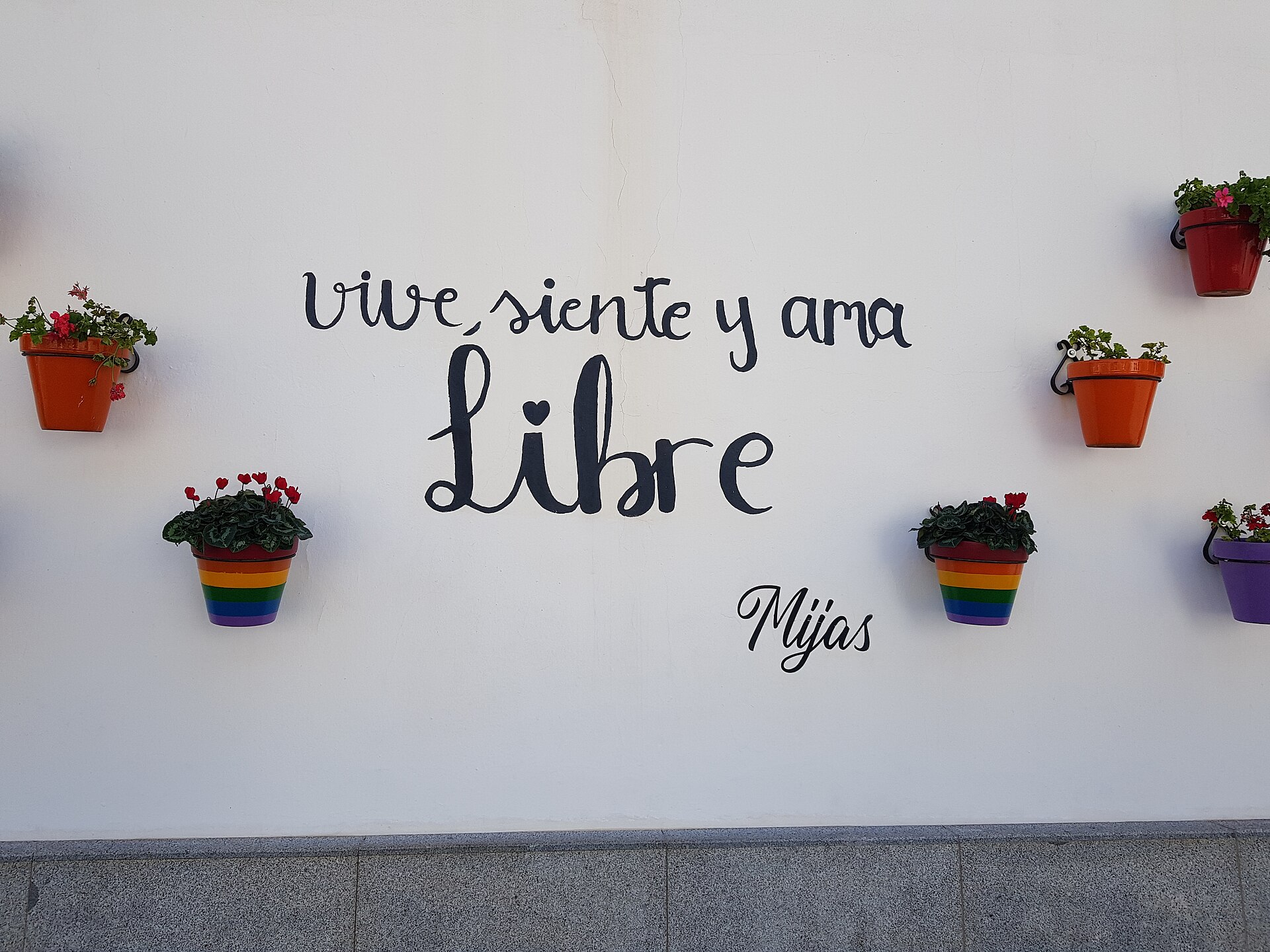
Mijas Pueblo: The White Village Above the Costa del Sol
Most people on the Costa del Sol never get further than the beach bars of Fuengirola or Torremolinos, which is exactly why the smartest afternoon you can plan is the 30-minute drive up into the hills to Mijas Pueblo. It's the postcard "white village" everyone pictures when they imagine Andalucía — geranium pots, lime-washed walls, donkeys in the square — except it's a real working pueblo, not a film set. We send every visiting friend up here, and here's how to do it without falling into the obvious traps. Why bother leaving the coast. The resort strip below is fine for a swim and a beer, but it's flat, busy, and looks like a hundred other places. Mijas Pueblo sits at roughly 430 metres, clinging to the side of the Sierra de Mijas, and the temperature drops a noticeable few degrees as you climb — a genuine relief in July and August. On a clear day you can see the whole bay from Fuengirola round to Gibraltar and, when the haze lifts, the Rif mountains of Morocco across the water. What makes it worth the trip is the contrast. Down on the coast everything is built in the last 50 years. Up here the lanes are too narrow for two cars, the houses are whitewashed twice a year by hand, and within ten minutes of parking you've swapped sunbeds for a proper Andalusian hill town. For an afternoon, it genuinely beats the Costa del Sol resort strip. The viewpoints (start here). The single best thing to do is just walk the perimeter for the views. Three spots are worth aiming for: Mirador del Compás — the terrace beside the bullring at the top of the village. Free, open, and the classic panorama of the coast laid out below. The Muralla / Jardines de la Muralla — landscaped gardens along the old town wall on the Fuengirola-facing side, full of cascading plants and benches. Quiet in the late afternoon. Plaza de la Constitución — the main square, framed by the rock face and a good orientation point before you wander. The whole historic core is small — you can loop it in 30–40 minutes at a stroll — so don't over-plan. Half the pleasure is getting briefly lost in lanes like Calle San Sebastián, probably the most photographed street in the village, a cobbled alley of white walls and blue flowerpots. The donkey-taxi debate — what we tell people. You can't write honestly about Mijas without the burro-taxi. Since the 1960s, donkeys have ferried tourists around the village, and the painted carts and saddled donkeys still wait near the entrance off Avenida del Compás. A short ride runs around €10–15, a cart for a few people more. Here's the honest take: it's the village's most famous "thing" and also its most uncomfortable one. The animals stand in the heat for long hours, and welfare campaigners have pushed hard against it for years. The town has added shade, water and rest rules, but plenty of locals and regular visitors simply won't use it any more, and we don't either. Photograph the donkeys if you like, give them a wide berth in the midday sun, and walk the village on your own feet — it's tiny, and you'll see far more. If you want to support animals, the small donkey sanctuary projects in the wider area are a better place to put your money. Chapels, the bullring and the small museums. For its size, Mijas packs in a surprising number of little sights, almost all free or a euro or two: Ermita de la Virgen de la Peña — a tiny chapel carved straight into the rock by a Carmelite monk in the 1680s, just off the gardens. Cool, dim and genuinely atmospheric; it's the village's patron shrine. Iglesia de la Inmaculada Concepción — the main parish church, with a Mudéjar tower built over an old minaret. Climb up for another view. Plaza de Toros — the small oval (not rectangular) bullring from 1900, one of the most unusual in Spain. There's a modest museum; you can usually look in for a couple of euros even when nothing's on. CAC Mijas — a free contemporary art centre with a clutch of minor Picasso and Dalí ceramics. Small, but a nice air-conditioned 20 minutes. None of these need more than 15 minutes each, which is the point — graze, don't grind. Eating and drinking (and what to skip). The square and the main approach lanes are wall-to-wall tourist menús del día with laminated photos — fine in a pinch, but not why you came. Walk two streets back from the main drag and prices drop and quality rises. For a coffee or a caña with the coast spread out below you, the terrace cafés along the Muralla are hard to beat — you pay a small view premium, worth it once. For an actual meal, look for the places up the hill where you hear Spanish being spoken: simple plates of espetos aren't really a hill-town thing (those belong down on the best beaches), so up here go for grilled meats, croquetas, and local Mijas wine. Skip the first three restaurants you see on the way in from the car park; they exist purely on passing footfall. A sweet tip: there are a couple of old-school bakeries doing tortas and almond pastries — buy some to eat on a bench in the gardens rather than sitting down somewhere with a cover charge. Getting there and parking. By car from the coast it's genuinely about 25–30 minutes from Fuengirola, slightly more from Marbella or Málaga, up a well-signed but winding road. Do not try to drive into the old village — the lanes are barely car-width and you'll regret it. Park in the large underground car park at Plaza Virgen de la Peña right at the village entrance; it's cheap (a couple of euros an hour) and drops you 30 seconds from the gardens. No car? The M-122 bus run by Avanza connects Fuengirola bus station to Mijas Pueblo roughly hourly, takes about 25–30 minutes and costs only a few euros each way. From Fuengirola you can reach the coast on the C-1 Cercanías train from Málaga (and the airport), so the whole thing is doable on public transport in an afternoon. Practical tips. When to go: Late afternoon is ideal — softer light for the views, cooler lanes, and you can stay for sunset over the bay. Mornings before the coach tours arrive (they roll in around 11am) are the other sweet spot. Avoid the 12–3pm peak in summer. How long: Two to three hours is plenty for the core. Half a day if you linger over lunch. Crowds: It is undeniably touristy — that's the trade-off for being this pretty and this close to the coast. Visiting off-peak hours fixes most of it. Combine it: Pair Mijas Pueblo with a swim back down in Fuengirola, or make it part of a hill-town loop with Ronda further inland. Wear: Proper shoes — the cobbles are steep and slick. Bring a layer for the evening; it's cooler up here than on the sand. What to book: Nothing, really. This is a walk-up afternoon. Check the events calendar though — village fiestas like the September romería transform the place. Go for the views, skip the donkey ride, eat two streets back from the square, and you'll understand why Mijas Pueblo is the one inland trip even die-hard beach people don't regret.
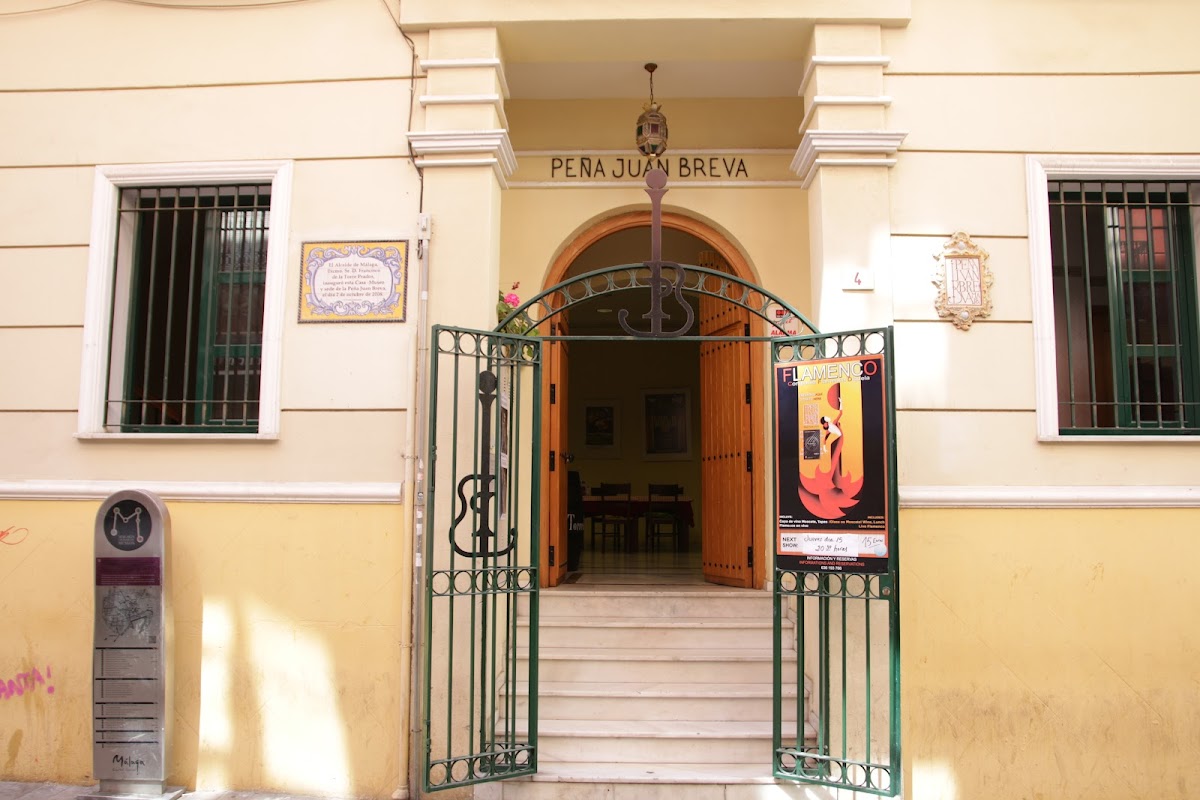
Flamenco in Málaga: De Echte Versus de Toeristenshow
Een goede flamencoshow is geen show — het is een kamer waar de gitarist, de danser en de zanger in iets samenkomen en jij er óf bent, óf niet bent. Málaga is niet Sevilla en niet Jerez. Maar de stad heeft een verrassend brede flamencoscene: van gratis vrijdagavonden in de oudste peña van Spanje tot gepolijste tablao-shows voor cruisepassagiers. Hier is hoe je het verschil ziet — en welke optie bij jou past. Peña Juan Breva — De oudste peña van Spanje. Opgericht in 1958, verstopt in een zijstraat van Calle Beatas, is de Peña Juan Breva de oudste nog actieve peña van Spanje. De begane grond is een klein museum met meer dan 5.000 geluidsarchieven, 2.500 CD's en 20 gitaren — waaronder een paar die meer dan twee eeuwen oud zijn. Beneden is een tablao waar op vrijdagavond om 20:00 een optreden plaatsvindt. Gratis entree. Het publiek is lokaal, de artiesten zijn amateurs én professionals die tussen de toeren door stoppen om met de zaal te babbelen. Dit is flamenco zoals hij hoort: klein, eerlijk, en af en toe duizelingwekkend goed. Shows: vrijdag 20:00 (soms ook donderdag of zaterdag — vooraf bellen) Museum: ma-za 10:00-14:00, €3 donatie Calle Ramón Franquelo 4, Málaga centrum Tel: (+34) 952 22 13 80 of (+34) 687 607 526 Teatro Cervantes — Wanneer de groten langskomen. In april heeft Teatro Cervantes het eigen Flamenco Serás Tú festival, met nationale topnamen die je elders alleen in Jerez of Sevilla ziet. De rest van het jaar staan er geregeld flamencoconcerten in de agenda. Het interieur alleen al — drie niveaus, beschilderd plafond uit 1870, warm goud licht — maakt een avond hier bijzonder. De akoestiek is zodanig dat je zelfs vanaf de bovenste rang de voet-tap van de danser kunt horen. Tickets vanaf €12, topacts tot €40 Controleer vooraf de agenda op teatrocervantes.com Calle Ramos Marín, 2 min lopen van Plaza de la Merced Voor Flamenco Serás Tú reserveer je ver van tevoren Kelipé Centro de Arte Flamenco — Intiem en serieus. Achter de Atarazanas markt ligt Kelipé — een flamencoschool die óók shows geeft. Juist omdat het een school is, is het niveau consistent hoog: de gasten-artiesten komen langs om aan de studenten te laten zien wat ze kunnen. Het zaaltje is klein (ongeveer 40 stoelen), wat betekent dat je letterlijk drie meter van de danser af zit. De show heet Flamenco De Ley en duurt ongeveer een uur. Als je het echt wilt begrijpen: boek daarnaast een workshop — een middag tussen de leerlingen leert je meer over duende dan tien shows. Shows woensdag t/m zondag 20:00 Tickets vanaf €28 inclusief één drankje Calle Muro de Puerta Nueva 10 Workshops op afspraak via kelipe.net Alegría Flamenco y Gastronomía — De tablao die het goed doet. Dichtbij de haven, 2 minuten van het Pompidou-centrum, is Alegría de meest toegankelijke optie — en tegelijk de best uitgevoerde toeristentablao van de stad. Meerdere shows per dag, veelal vier artiesten op het podium (danseres, zanger, gitarist, percussie), en de optie om vooraf te eten op het terras. Geen pretenties van authenticiteit, wél een professioneel spektakel. Ideaal als je met familie of een groep bent en een eerste kennismaking met flamenco wilt zonder bellen of reserveren op rare tijden. Shows dagelijks om 17:30, 20:45 en 22:30 Tickets vanaf €28, diner los bij te boeken Calle Vélez Málaga 6, Málaga-Este Vroege show is meestal minder vol Hoe je kiest. Eerste keer flamenco en je bent maar één avond in Málaga? Alegría of Kelipé — gegarandeerd een goede show. Je bent al eens naar een tablao geweest en wilt iets echts? Peña Juan Breva op een vrijdagavond. Kom op tijd — het zaaltje is klein. Je bent een fan, en er staat een grote naam in de agenda? Teatro Cervantes, parterre of eerste rang. Je hebt een hele avond en een nieuwsgierige maag? Vino Mio of Los Amayas — diner plus show, minder intens maar gezellig. Duende — waar je op let. Flamenco werkt niet als choreografie. De gitarist, zanger en danser luisteren naar elkaar, versnellen, remmen, ketsen op elkaar af. Het moment waarop alle drie tegelijk in de zone zitten heet duende — letterlijk 'geest' — en dan begint het publiek 'Olé!' te roepen, ook als er geen hoogtepunt lijkt. Als je dat in een show nog nooit hebt meegemaakt: ga naar Peña Juan Breva. Kom er vier keer als je moet.
Najczęściej zadawane pytania o kultura
Gdzie zobaczę prawdziwe flamenco zamiast pokazów dla turystów?+
W Maladze: Peña Juan Breva, tradycyjne stowarzyszenie flamenco na starym mieście — w czwartkowe wieczory od 21:00, dla członków bezpłatnie, dla zwiedzających symboliczna opłata. W Marbelli: Ana María na Paseo Marítimo na kolacje z pokazem. Unikaj miejsc z autokarami pełnymi wycieczek — są dla zdjęcia, nie dla muzyki.
Czy Alhambrę w Granadzie da się zwiedzić w ramach jednodniowej wycieczki z Marbelli?+
Tak, ale na styk. To półtorej godziny jazdy, a w Alhambrze potrzebujesz co najmniej trzech godzin. Zarezerwuj bilety przynajmniej miesiąc wcześniej — nie sprzedają ich już przy bramie. Wyrusz przed 8:00 i zaplanuj czas na dzielnicę Albaicín oraz obiad na Plaza Larga.
Co mogę zobaczyć w Maladze w jeden dzień?+
Zacznij od Mercado de Atarazanas (śniadanie + zakupy), zejdź Calle Larios do katedry. Muzeum Picassa wymaga co najmniej dwóch godzin. Obiad w El Pimpi. Potem w górę do Alcazaby i teatru rzymskiego. Wieczorem: Muelle Uno o zachodzie słońca. Zaplanuj cztery godziny na same muzea.