
Kultur
Flamenco, morisk historia, samtidskonst och de gamla stadskärnorna där Costa del Sol började långt innan turisterna kom.
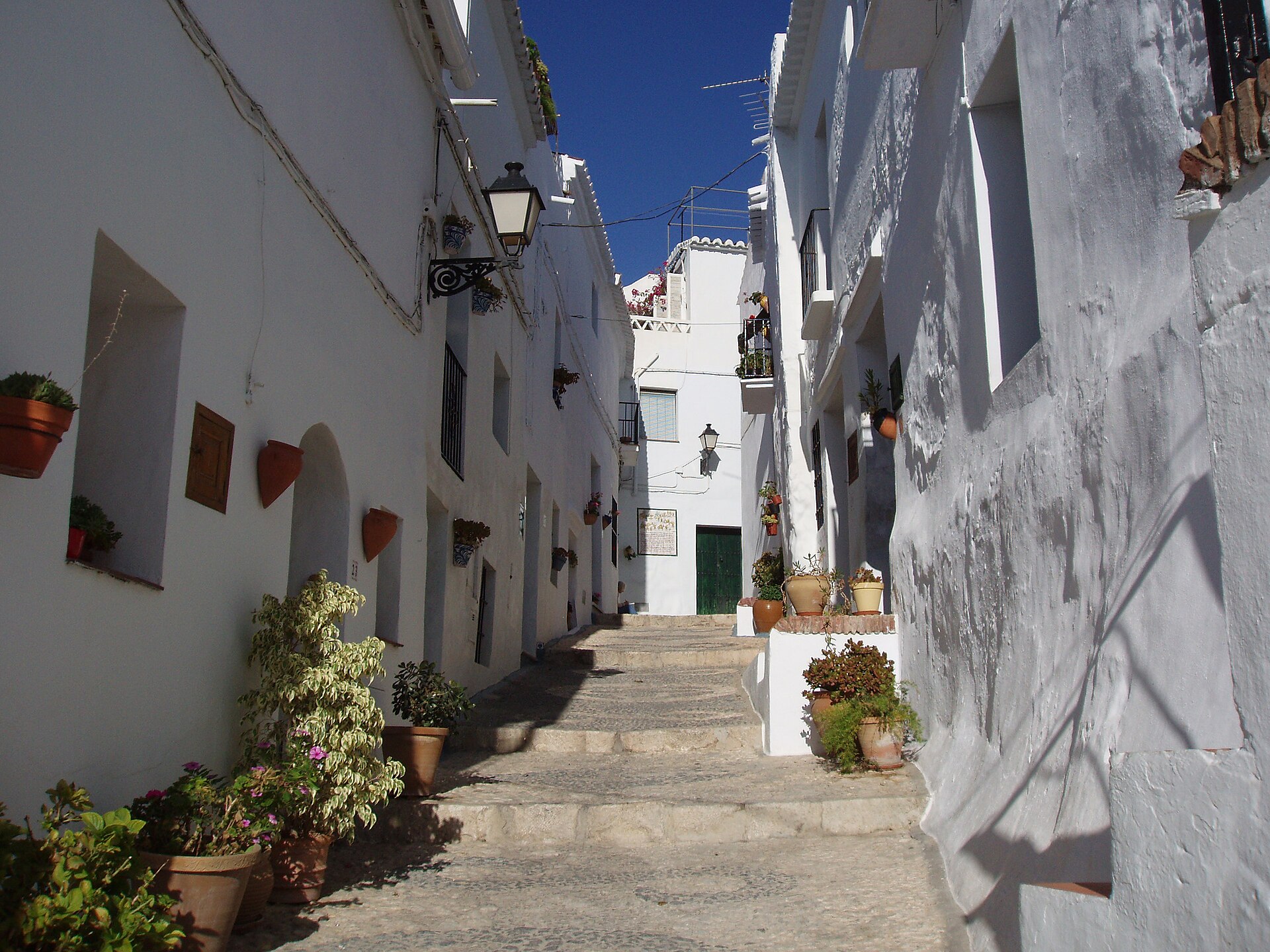
Frigiliana & Nerja: The Costa del Sol's Prettiest Corner
Ask anyone who's lived here a while where the Costa del Sol is still genuinely pretty — not the high-rise stretch, the real thing — and they'll point east, past Málaga, to where the Sierra de Almijara drops almost straight into the sea. That's Nerja, and 7km up the switchbacks behind it, Frigiliana. We do this pair as a single day trip a couple of times a season, and it's the one we send visiting friends to do first. Here's how to combine both properly, what's worth your time, and what's quietly a tourist trap. Start at the Balcón de Europa. Nerja's old town funnels everyone down to the Balcón de Europa, a palm-lined promenade built on the stump of a clifftop fortress. It juts out over the sea with a 180-degree view of coves and the mountains behind. It's genuinely beautiful and genuinely mobbed — there's a busker, a guy who'll draw your caricature, and at the very tip a bronze statue of King Alfonso XII that every tourist photographs. Get there before 11am or after 6pm. Midday in July it's shoulder-to-shoulder. The streets feeding into it — Calle Pintada, Calle Almirante Ferrándiz (locals still call it Calle Cristo) — are the prettiest, whitewashed and tiled, and where the better restaurants hide. Down the steps on either side are Nerja's town beaches: Playa Calahonda — tiny, sheltered, right under the Balcón. Charming but it fills by 10am. Playa Burriana — the big one, 800m of sand a 15-minute walk east, with proper chiringuitos. This is where you actually swim and eat. If you only swim once in Nerja, make it Burriana and have lunch at Ayo's, the paella place at the far end that's been cooking rice in giant pans over orange-wood fires since the 1960s. The all-you-can-eat paella is around €11 and the spectacle is half the point. The Nerja Caves — go, but manage expectations. The Cuevas de Nerja, 4km east of town, are a genuine natural wonder — vast caverns with one of the world's largest stalactite columns, lit theatrically. Tickets are about €15 (children cheaper), and you should book online for a timed slot in summer because the on-the-day queue is brutal. Honest take: it's impressive for 30–40 minutes, the walkways are well-made, and it's blessedly cool when it's 33°C outside. But it's a one-way loop, fairly quick, and the gift-shop-and-coach-park energy at the entrance is strong. If your day is tight, the caves are the thing I'd cut before the coves. Bus N-3 runs out here from the centre, or it's a €7–8 taxi. The Maro coves — the part most people miss. This is the secret that isn't really a secret anymore but still feels like one. East of the caves, around the hamlet of Maro, the Acantilados de Maro-Cerro Gordo cliffs hide a string of small, clear-water coves backed by a waterfall. Playa de Maro is the easiest — there's a dirt car park above and a steepish path down (10 minutes, wear real shoes, not flip-flops). The water is the clearest on this whole coast. In summer the access road to the cove gets restricted and you may have to park up top and walk, or use the seasonal shuttle. Kayak operators on Burriana run morning trips along these cliffs to the waterfall for around €30–35, which honestly is the best way to see them and skips the parking headache entirely. For more on where the good swimming is along the coast, our best beaches guide has the full list. Up to Frigiliana. Now drive (or bus) the 7km up. The M-345 bus from Nerja's bus stop on Avenida de Pescia runs roughly hourly, takes about 15 minutes and costs around €1.20. By car it's ten minutes of tight bends with a car park at the bottom of the village — don't try to drive into the old town, the streets are donkey-width and you will regret it. Frigiliana repeatedly wins "prettiest village in Andalucía" polls and you'll see why in about four steps. The Barribarto quarter — the old Moorish kasbah — is a vertical maze of dazzling-white houses, cobbled ramps, blue plant pots, bougainvillea spilling over everything, and ceramic plaques telling the (bloody) story of the 1569 Morisco rebellion. It's small. You can walk the whole historic core in 90 minutes including coffee stops, and that's the right amount of time. Things worth doing here: Buy a bottle of miel de caña (sugarcane molasses) from Nuestra Señora del Carmen, the last cane-honey mill of its kind in Europe, right in the village. Climb to the top for the viewpoint over the valley to the sea — the higher you go, the fewer people. Eat at a place with a terrace. El Mirador de Frigiliana and the little bars around Plaza de las Tres Culturas do honest Andalusian food; a plate of local goat, a glass of wine and the view is the whole experience. The downside: the lower main street is wall-to-wall souvenir shops selling the same fridge magnets, and a few "típico" restaurants on the through-road are overpriced and forgettable. Climb past them. The magic is in the upper lanes where nobody's selling you anything. Combining both in one day. The rhythm we use: Morning — arrive in Nerja by 9.30, walk the Balcón before the crowds, swim at Burriana. Lunch — paella at Ayo's or a long lunch on Calle Cristo. Early afternoon — either the caves (cool, indoors, good for the hottest hours) or a kayak to the Maro coves. Late afternoon — drive up to Frigiliana for golden hour, when the white walls turn warm and the day-trippers have left. Evening — dinner on a Frigiliana terrace, then the dark drive back down. That's a full, satisfying day. Don't try to add the caves and the coves and a long beach session — something will feel rushed. Best season. Late May, June, and September are the sweet spot: warm sea, long days, and Frigiliana's lanes not yet crammed. July and August are hot and very busy — go early and late, never midday. The Festival de las Tres Culturas in Frigiliana (usually late August) is wonderful but packs the village. April and October are lovely for walking but the sea is still bracing; our sea-temperature page tells you when it's actually swimmable. Practical tips. Getting there: From Málaga, the Avanza/ALSA bus to Nerja runs frequently from the bus station (~1 hour, around €5). By car it's the A-7 motorway, about 50 minutes. From the western resorts, see our Nerja page for routes — it's a solid 75–90 minutes from Marbella. Park smart: Use Nerja's underground car park near Plaza de España, and Frigiliana's lot at the foot of the village. Don't circle the old towns hunting for street parking. Book ahead: Cave tickets online in summer; kayak trips a day or two ahead. Restaurants generally don't need booking except August evenings in Frigiliana. Wear proper shoes for the cove paths and Frigiliana's cobbles. Bring water — the village climb is hot. Skip if short on time: the lower souvenir strip in Frigiliana and the day's third activity. Less, done well, beats a checklist. Do it right and this is the corner of the coast people remember long after the beach resorts blur together.
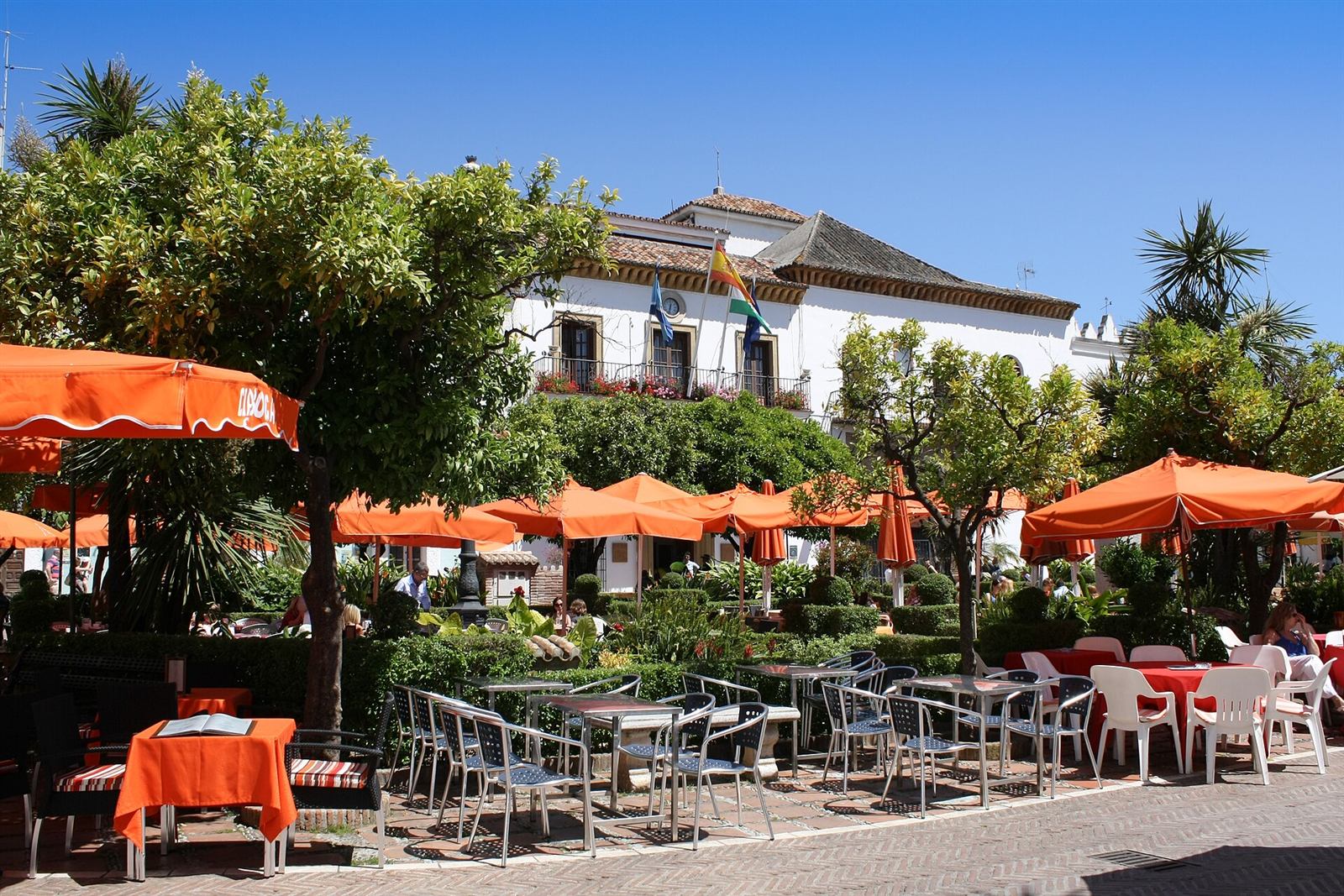
Marbellas gamla stad: vad som väntar bortom Plaza de los Naranjos
Plaza de los Naranjos får 95 % av alla bilder av Marbellas gamla stad på Instagram. Vad du missar om du stannar där: fyra århundraden av kyrkohistoria, ett skaldjursställe som sålt råa räkor sedan 1958 och den smalaste gatan i Andalusien utanför Sevilla. Här är den runda genom Marbellas casco antiguo som lokalborna går. Plaza de los Naranjos — Passera, sätt dig inte. Plaza de los Naranjos har 12 apelsinträd, en 1500-talsfontän, rådhuset från 1568 och sex restauranger med uteserveringar som tar €8 för en öl och €18 för paella i juli/augusti. Kom hit — ta bilden — och gå vidare direkt. Vi använder torget som orienteringspunkt, inte som destination. Den som vill äta här gör det i januari när lokalborna tar tillbaka uteserveringen. Bästa tid: 09:00-10:30 (lugnt, ljus kaffe) Rådhuset (Ayuntamiento) gratis att titta på från östra sidan Tips: fontänen har en inskription från 1504 som ingen lägger märke till — titta Iglesia de la Encarnación — Andalusisk barockskönhet. Fem minuters promenad från torget, på Calle de la Iglesia, står Iglesia de Nuestra Señora de la Encarnación — byggd 1505-1515 på grunderna av en moské, sedan ombyggd 1748 i full andalusisk barock. Freskerna inuti är värda 15 minuters stillastående blick. Vi var här i december för julmässan — gratis, öppen för alla, inga turister. Det är ett av få ställen i Marbella där du verkligen står i staden från före turismboomen. Öppet: dagligen 09:30-13:00 och 18:00-20:30, gratis Tips: på fredagskvällar hålls regelbundet en orgelkonsert Missa inte: silveraltaret från 1788 (vänster sidoskepp) Calle Aduar och sidogatorna — Smalvit äkthet. Från torget går du norrut längs Calle Aduar — den smalaste gatan i Marbella Casco Antiguo (1,8 meter bred på sina ställen). Här hittar du de vita murarna med fuchsia- och rödfärgad bougainvillea som syns på varje vykort — fast utan torgets folkträngsel. Gå vidare till Calle Buitrago, sedan Calle Remedios, och tillbaka via Calle de los Caballeros. Vi går den här rundan varje fredagsmorgon i maj — en timme, ingen plan, bara 1500-talsmurar. Bästa tid: före 11:00 eller efter 18:00 Missa inte: plaketten på Calle Buitrago 12 (födelsehemmet för en 1600-talspräst) Tips: titta uppåt — många hus har geometriska Mudejar-kakelplattor i trösklarna Restaurante Altamirano — Skaldjursställe sedan 1958. Altamirano vid Plaza Altamirano (200 meter från Plaza de los Naranjos) har varit öppet sedan 1958 och serverar pescaíto, skaldjur och grillad fisk på en skuggig uteservering för 60 personer. Vi har kommit hit sedan 2018, minst fem gånger om året — ingenting förändras. Beställ gambas blancas (€16 per ración), chocos a la plancha (€14) och en flaska Verdejo Rueda (€18). Räkna med €35-45 per person inklusive dryck — för Marbella Casco Antiguo en normal taxa. Öppet: dagligen 13:00-16:00 och 20:00-23:30 Bokning ja, +34 952 824 932 — lunch oftast okej, kväll boka i förväg Tips: be om bord 14, hörnbordet med utsikt över hela torget Ermita de Santiago — Kapellet från 1400-talet gömt i murarna. Ermita de Santiago är den äldsta religiösa byggnaden i hela Marbella — ett kapell från 1400-talet uppfört direkt efter den kristna återerövringen 1485. Det gömmer sig på Calle Carmen och öppnar bara vid särskilda tillfällen. Vi har sett det inifrån två gånger (en begravning, ett lokalt helgonjubileum) — ett gotiskt interiör på 6×4 meter så intimt att man viskar. Utifrån: Mudejar-överstycket med det spanska kungavapnet är värt omvägen i sig. Öppet: sällan, oftast bara under lokala fester Exteriör: gratis att se, dygnet runt Tips: fråga vid Iglesia de la Encarnación om nästa öppning Praktisk vandringsrutt genom gamla stan. Start: Plaza de la Iglesia (parkera vid Recinto Ferial nedanför) Rekommenderad runda: Iglesia → Calle Carmen (Ermita) → Plaza Altamirano (lunch) → Plaza Naranjos → Calle Aduar → Calle Buitrago → tillbaka via Calle Remedios Tid: 2-3 timmar inklusive lunch Bästa månaderna: maj + juni + oktober (milt) Tips: kombinera med Avenida del Mar (Dalís skulpturträdgård) — 10 min promenad från centrum till havet --- Foto: Mark Gilbert (CC BY-SA 3.0), Zarateman (CC0), via Wikimedia Commons; Google Maps-bidragsgivare.
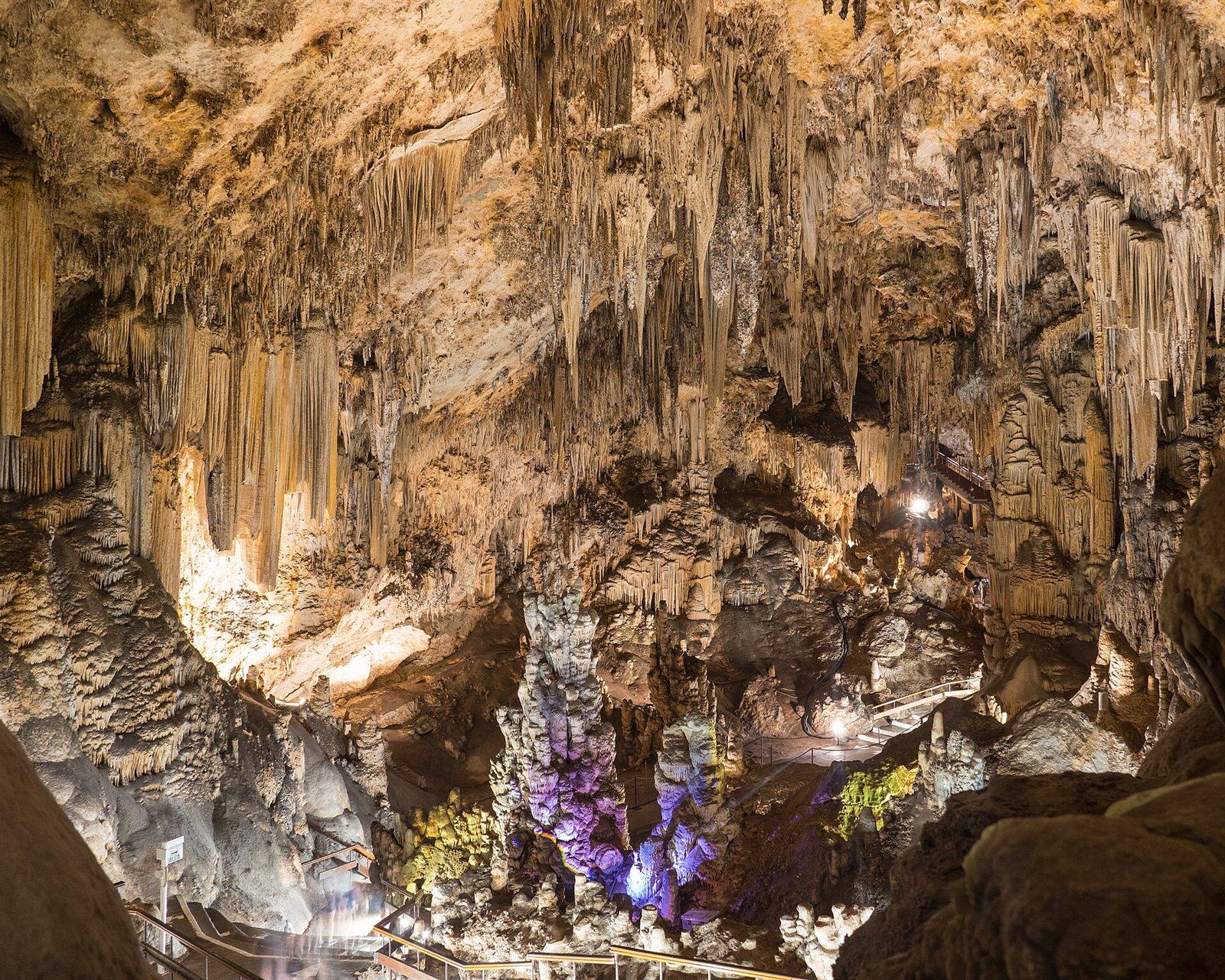
Nerja och grottorna: Mer än en turistfälla om du tajmar det rätt
Cuevas de Nerja står på varje topp-10-lista över sevärdheter på Costa del Sol — vilket är precis det som gör den till en av de tio största turistfällorna. Men är du inne före 11:00, planerar dagen runt den och äter på rätt ställen, är detta fortfarande en av de mest spektakulära dagsutflykterna från kusten. Här är lokalbornas version. Cuevas de Nerja — Knepet är tajmingen, inte turen. Cuevas de Nerja upptäcktes 1959 av fem pojkar som letade efter fladdermöss. Grottorna rymmer paleolitiska målningar (vissa 42 000 år gamla — arkeologer tvistar fortfarande om dessa kan vara världens äldsta), världens största stalagmit (32 m) och en naturlig amfiteatersal som är värd för Festival Internacional Cueva de Nerja i juli/augusti. Vi var där i oktober förra året klockan 10:00 — femton minuters väntan, två turistbussar före oss; vid 11:30 hade tre till anlänt. Det är skillnaden. Öppet: 09:00-19:00 (juni-september), 09:00-16:30 (övrig tid) Pris: €15 vuxna, €13 barn 6-12 Tips: köp biljett online kvällen innan, kom 09:45 Hoppa över turen: välj ljudguiden (€3 extra), inte den guidade turen Balcón de Europa — Utsikten och centrum av Nerja. Efter grottorna kör du 5 min till centrum av Nerja och parkerar vid Parking del Balcón. Balcón de Europa är den ikoniska promenadutsikten med palmer, en marmorvit balustrad och vy mot Sierra Almijara — gratis, ingen väntan. Vi går alltid rakt till den östligaste delen (de flesta stannar på västsidan) — därifrån ser du båda stränderna samtidigt och fotografen har solen i ryggen. Bästa tid: 11:30-12:30 eller efter 17:00 Kaffe: Café Rubens vid Balcón gör en seriös espresso (€2) Tips: fortsätt till Calle Carabeo för terrassrestauranger med den RIKTIGA utsikten Playa de Burriana och Chiringuito Ayo — Paella på sanden. Playa de Burriana är Nerjas huvudstrand — 800 m sand, klart vatten, och i östra änden: Chiringuito Ayo, som serverar obegränsad paella för €13 per person till lunch. Ayo García (grundaren) lagade pannan själv varje dag i 50 år — han gick bort 2023, hans son driver den nu, och kvaliteten är exakt densamma. Vi kommer hit minst en gång varje semester — kom 13:15 (första paellan klar 13:30). Öppet: dagligen 12:00-22:00 (april-oktober) Paella special: ät så mycket du orkar €13 per person, dagligen 13:30-15:30 Tips: be om risskorpan i botten (socarrat) på den andra pannan Parkering: gratis längs promenaden, fullt från 12:00 Frigiliana — Den vita byn 10 minuter från Nerja. Många glömmer att Nerja har en sidoutflyktsby: Frigiliana, 7 km inåt landet. En helvit by på en bergssluttning, smala gränder med blomkrukor, och det vackraste gamla moriska kvarteret på hela Costa del Sol. Vi parkerar i utkanten och går uppåt — en timme räcker för centrum. På onsdagsmorgnar är det gatumarknad där Frigiliana-honung säljs (honungsfestivalen i slutet av april/början av maj är berömd). Gratis att besöka Bästa tid: före 11:00 eller efter 17:00 (mitt på dagen är hett) Mat: Bar El Mirador för lunch, El Adarve för en mer komplett middag Honung: köp på La Casa del Apicultor i centrum Att äta i gamla Nerja — Inte vid Balcón. Restaurangerna direkt vid Balcón de Europa är mestadels turistprissatta — €18 för paella av fryskvalitet. Gå en gata norrut (Calle Pintada) så hittar du Bar Patanegra (€12 menu del día med jamón ibérico) eller El Pulguilla för tapas (€2-4 per styck, gratis tapa till varje dryck). Vi äter alltid här efter grottorna — den skillnaden mellan turiststråket och lokalbornas stråk är exakt en gata. Bar Patanegra: Calle Pintada 9, dagligen 12:00-15:30 och 19:00-23:00 El Pulguilla: Calle Almirante Ferrándiz 26, dagligen utom måndag Tips: på El Pulguilla får du en gratis tapa per dryck — tre öl är en hel lunch Praktiskt: rutten från Marbella. Bil: A-7 österut, 90-110 min (Marbella → Nerja, ~120 km) Buss: ALSA direkt Marbella → Nerja, 2 timmar, €14 enkel resa Bästa månaderna: maj + juni + september + oktober (sommaren = 35°C+ i grottor och stad) Tidsplan: avresa 08:30 → 10:00 grottor → 11:30 Balcón → 13:30 Burriana paella → 16:00 Frigiliana → 19:00 tillbaka = hel dag Att kombinera med Caminito del Rey går inte som dagsutflykt — välj en per dag --- Foto: Fernando (CC BY-SA 4.0), via Wikimedia Commons; bidragsgivare till Google Maps.
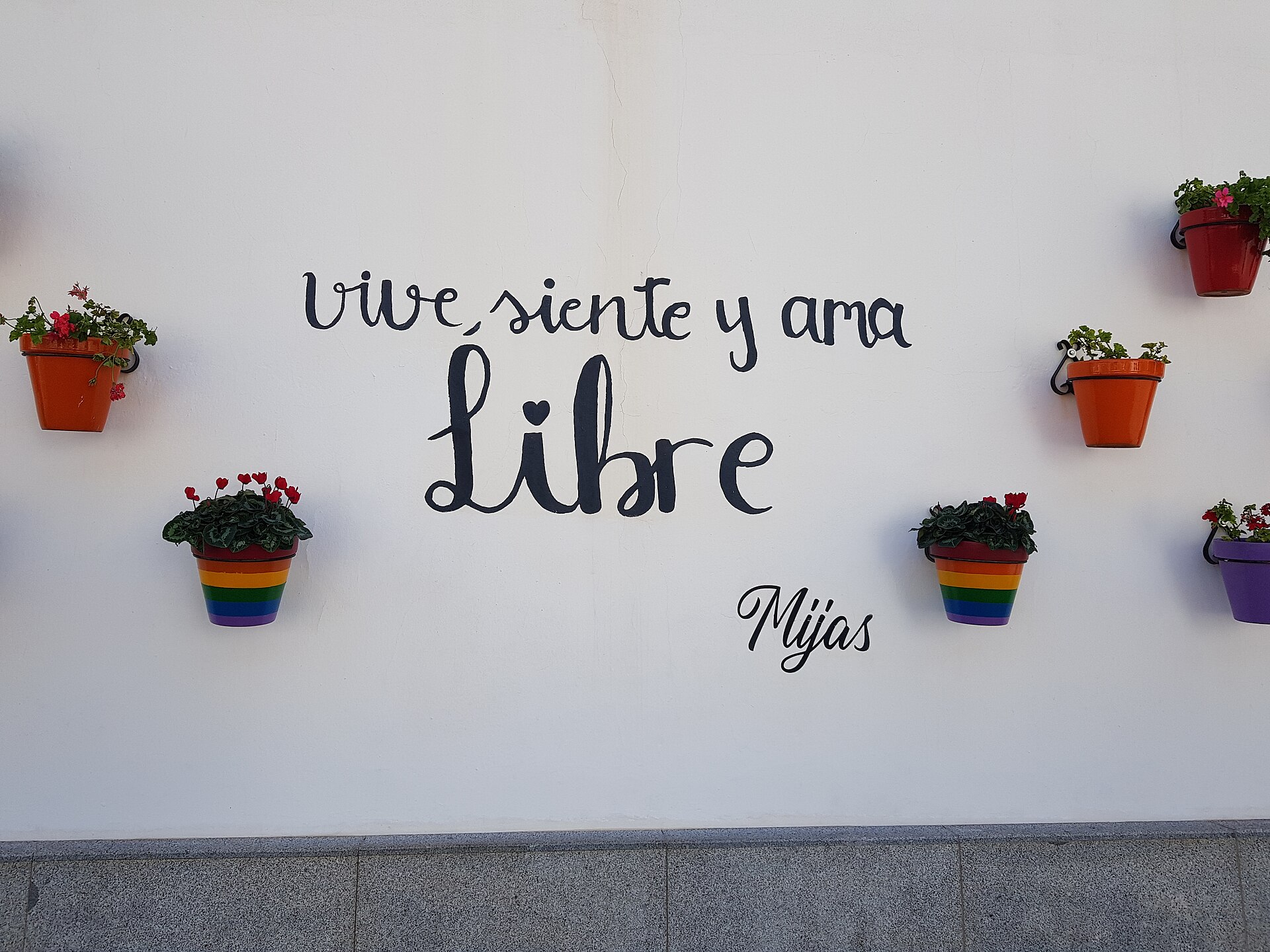
Mijas Pueblo: The White Village Above the Costa del Sol
Most people on the Costa del Sol never get further than the beach bars of Fuengirola or Torremolinos, which is exactly why the smartest afternoon you can plan is the 30-minute drive up into the hills to Mijas Pueblo. It's the postcard "white village" everyone pictures when they imagine Andalucía — geranium pots, lime-washed walls, donkeys in the square — except it's a real working pueblo, not a film set. We send every visiting friend up here, and here's how to do it without falling into the obvious traps. Why bother leaving the coast. The resort strip below is fine for a swim and a beer, but it's flat, busy, and looks like a hundred other places. Mijas Pueblo sits at roughly 430 metres, clinging to the side of the Sierra de Mijas, and the temperature drops a noticeable few degrees as you climb — a genuine relief in July and August. On a clear day you can see the whole bay from Fuengirola round to Gibraltar and, when the haze lifts, the Rif mountains of Morocco across the water. What makes it worth the trip is the contrast. Down on the coast everything is built in the last 50 years. Up here the lanes are too narrow for two cars, the houses are whitewashed twice a year by hand, and within ten minutes of parking you've swapped sunbeds for a proper Andalusian hill town. For an afternoon, it genuinely beats the Costa del Sol resort strip. The viewpoints (start here). The single best thing to do is just walk the perimeter for the views. Three spots are worth aiming for: Mirador del Compás — the terrace beside the bullring at the top of the village. Free, open, and the classic panorama of the coast laid out below. The Muralla / Jardines de la Muralla — landscaped gardens along the old town wall on the Fuengirola-facing side, full of cascading plants and benches. Quiet in the late afternoon. Plaza de la Constitución — the main square, framed by the rock face and a good orientation point before you wander. The whole historic core is small — you can loop it in 30–40 minutes at a stroll — so don't over-plan. Half the pleasure is getting briefly lost in lanes like Calle San Sebastián, probably the most photographed street in the village, a cobbled alley of white walls and blue flowerpots. The donkey-taxi debate — what we tell people. You can't write honestly about Mijas without the burro-taxi. Since the 1960s, donkeys have ferried tourists around the village, and the painted carts and saddled donkeys still wait near the entrance off Avenida del Compás. A short ride runs around €10–15, a cart for a few people more. Here's the honest take: it's the village's most famous "thing" and also its most uncomfortable one. The animals stand in the heat for long hours, and welfare campaigners have pushed hard against it for years. The town has added shade, water and rest rules, but plenty of locals and regular visitors simply won't use it any more, and we don't either. Photograph the donkeys if you like, give them a wide berth in the midday sun, and walk the village on your own feet — it's tiny, and you'll see far more. If you want to support animals, the small donkey sanctuary projects in the wider area are a better place to put your money. Chapels, the bullring and the small museums. For its size, Mijas packs in a surprising number of little sights, almost all free or a euro or two: Ermita de la Virgen de la Peña — a tiny chapel carved straight into the rock by a Carmelite monk in the 1680s, just off the gardens. Cool, dim and genuinely atmospheric; it's the village's patron shrine. Iglesia de la Inmaculada Concepción — the main parish church, with a Mudéjar tower built over an old minaret. Climb up for another view. Plaza de Toros — the small oval (not rectangular) bullring from 1900, one of the most unusual in Spain. There's a modest museum; you can usually look in for a couple of euros even when nothing's on. CAC Mijas — a free contemporary art centre with a clutch of minor Picasso and Dalí ceramics. Small, but a nice air-conditioned 20 minutes. None of these need more than 15 minutes each, which is the point — graze, don't grind. Eating and drinking (and what to skip). The square and the main approach lanes are wall-to-wall tourist menús del día with laminated photos — fine in a pinch, but not why you came. Walk two streets back from the main drag and prices drop and quality rises. For a coffee or a caña with the coast spread out below you, the terrace cafés along the Muralla are hard to beat — you pay a small view premium, worth it once. For an actual meal, look for the places up the hill where you hear Spanish being spoken: simple plates of espetos aren't really a hill-town thing (those belong down on the best beaches), so up here go for grilled meats, croquetas, and local Mijas wine. Skip the first three restaurants you see on the way in from the car park; they exist purely on passing footfall. A sweet tip: there are a couple of old-school bakeries doing tortas and almond pastries — buy some to eat on a bench in the gardens rather than sitting down somewhere with a cover charge. Getting there and parking. By car from the coast it's genuinely about 25–30 minutes from Fuengirola, slightly more from Marbella or Málaga, up a well-signed but winding road. Do not try to drive into the old village — the lanes are barely car-width and you'll regret it. Park in the large underground car park at Plaza Virgen de la Peña right at the village entrance; it's cheap (a couple of euros an hour) and drops you 30 seconds from the gardens. No car? The M-122 bus run by Avanza connects Fuengirola bus station to Mijas Pueblo roughly hourly, takes about 25–30 minutes and costs only a few euros each way. From Fuengirola you can reach the coast on the C-1 Cercanías train from Málaga (and the airport), so the whole thing is doable on public transport in an afternoon. Practical tips. When to go: Late afternoon is ideal — softer light for the views, cooler lanes, and you can stay for sunset over the bay. Mornings before the coach tours arrive (they roll in around 11am) are the other sweet spot. Avoid the 12–3pm peak in summer. How long: Two to three hours is plenty for the core. Half a day if you linger over lunch. Crowds: It is undeniably touristy — that's the trade-off for being this pretty and this close to the coast. Visiting off-peak hours fixes most of it. Combine it: Pair Mijas Pueblo with a swim back down in Fuengirola, or make it part of a hill-town loop with Ronda further inland. Wear: Proper shoes — the cobbles are steep and slick. Bring a layer for the evening; it's cooler up here than on the sand. What to book: Nothing, really. This is a walk-up afternoon. Check the events calendar though — village fiestas like the September romería transform the place. Go for the views, skip the donkey ride, eat two streets back from the square, and you'll understand why Mijas Pueblo is the one inland trip even die-hard beach people don't regret.
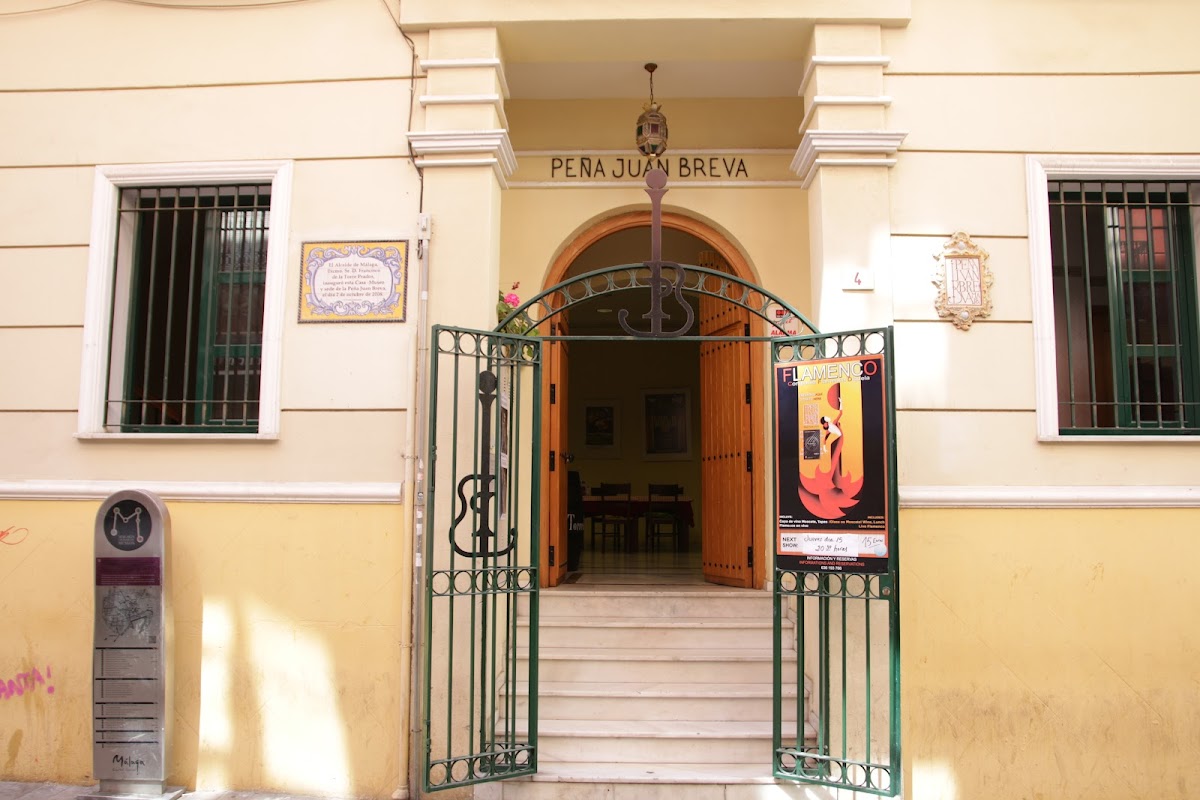
Flamenco i Málaga: det äkta mot turistshowen
En bra flamencoföreställning är ingen show — det är ett rum där gitarristen, dansaren och sångaren låser fast i något tillsammans, och du antingen känner det eller inte. Málaga är inte Sevilla och inte Jerez. Men staden har en förvånansvärt bred flamencoscen: från gratis fredagskvällar på Spaniens äldsta peña till polerade tablao-shower för kryssningspassagerare. Så här skiljer du dem åt — och vilken som passar dig. Peña Juan Breva — Spaniens äldsta peña. Grundad 1958 och undanskymd på en sidogata till Calle Beatas är Peña Juan Breva den äldsta peñan som fortfarande är i gång i Spanien. Bottenvåningen rymmer ett litet museum med över 5 000 ljudarkiv, 2 500 cd-skivor och 20 gitarrer — några av dem mer än två sekel gamla. På nedervåningen finns en tablao med en fredagskvällskonsert klockan 20. Fri entré. Publiken är lokal, artisterna är en blandning av amatörer och proffs, och mellan numren stannar de upp för att prata med rummet. Det här är flamenco som den ska vara: liten, ärlig och då och då svindlande bra. Föreställningar: fredag kl. 20 (ibland torsdag eller lördag — ring i förväg) Museum: mån–lör 10–14, donation 3 € Calle Ramón Franquelo 4, Málaga centrum Tel: (+34) 952 22 13 80 eller (+34) 687 607 526 Teatro Cervantes — När de stora namnen kommer förbi. Varje april håller Teatro Cervantes sin egen festival Flamenco Serás Tú, med artister på nationell nivå som du annars bara ser i Jerez eller Sevilla. Resten av året dyker flamencokonserter upp regelbundet i programmet. Bara interiören — tre våningsplan, ett målat tak från 1870, varmt gyllene ljus — gör kvällen till något att klä upp sig för. Akustiken är så god att du kan höra dansarens fottramp ända från översta balkongen. Biljetter från 12 €, toppakter upp till 40 € Kolla programmet på teatrocervantes.com Calle Ramos Marín, 2 min promenad från Plaza de la Merced Boka i god tid för Flamenco Serás Tú Kelipé Centro de Arte Flamenco — Intimt och seriöst. Bakom Atarazanas-marknaden ligger Kelipé — en flamencoskola som också ger föreställningar. Just för att det är en skola håller nivån genomgående hög: gästartister tittar in för att spela för eleverna. Salen är liten (omkring 40 platser), vilket betyder att du sitter bokstavligen tre meter från dansaren. Föreställningen heter Flamenco De Ley och varar cirka en timme. Vill du verkligen förstå det: boka även en workshop — en eftermiddag bland eleverna lär dig mer om duende än tio föreställningar. Föreställningar onsdag–söndag kl. 20 Biljetter från 28 € inklusive en dryck Calle Muro de Puerta Nueva 10 Workshops efter överenskommelse via kelipe.net Alegría Flamenco y Gastronomía — Tablaon som gör det rätt. Nära hamnen, 2 minuter från Pompidou-centret, är Alegría det mest lättillgängliga alternativet — och samtidigt stadens bäst genomförda turisttablao. Flera shower om dagen, oftast fyra artister på scenen (dansare, sångare, gitarrist, slagverk), med möjlighet till middag på terrassen innan. Ingen förevändning om att vara det äkta — men ett proffsigt framfört spektakel. Idealiskt om du är med familj eller grupp och vill ha en första smak av flamenco utan att navigera konstiga tider eller telefonbokningar. Föreställningar dagligen kl. 17.30, 20.45 och 22.30 Biljetter från 28 €, middag bokas separat Calle Vélez Málaga 6, Málaga-Este Den tidiga showen brukar vara mindre fullsatt Så väljer du. Första gången du ser flamenco och bara en kväll i stan? Alegría eller Kelipé — garanterat en bra show. Har varit på en tablao förut och vill ha något äkta? Peña Juan Breva en fredagskväll. Kom i tid — salen är liten. Du är ett fan och ett stort namn står på programmet? Teatro Cervantes, parkett eller första raden. Du har en hel kväll och en nyfiken mage? Vino Mio eller Los Amayas — middag plus show, mindre intensivt men sällskapligt. Duende — vad du ska lyssna efter. Flamenco bygger inte på koreografi. Gitarristen, sångaren och dansaren lyssnar på varandra, ökar takten, drar tillbaka, studsar mot varandra. Ögonblicket när alla tre låser fast i samma fåra kallas duende — bokstavligen 'ande' — och då börjar publiken ropa 'Olé!', även när inget uppenbart händer. Har du aldrig känt det i en föreställning: gå till Peña Juan Breva. Gå fyra gånger om du måste.
Vanliga frågor om kultur
Var ser jag äkta flamenco i stället för turistshower?+
I Málaga: Peña Juan Breva, en traditionell flamencoförening i gamla stan, torsdagskvällar från kl. 21, gratis för medlemmar, en liten avgift för besökare. I Marbella: Ana María på Paseo Marítimo för middagsföreställningar. Undvik shower med busslaster av turistgrupper — de är för fotot, inte för musiken.
Går Alhambra i Granada att göra som dagstur från Marbella?+
Ja men knappt. Det är en och en halv timmes bilresa, och du behöver minst tre timmar inne på Alhambra-området. Boka biljetter minst en månad i förväg — de säljs inte längre vid porten. Åk före kl. 8 och avsätt tid för Albaicín-kvarteret och lunch på Plaza Larga.
Vad kan jag se på en dag i Málaga?+
Börja vid Mercado de Atarazanas (frukost + inköp), gå nedför Calle Larios till katedralen. Picassomuseet kräver minst två timmar. Lunch på El Pimpi. Sedan upp till Alcazaba och den romerska teatern. Kväll: Muelle Uno i solnedgången. Räkna med fyra timmar enbart för museerna.