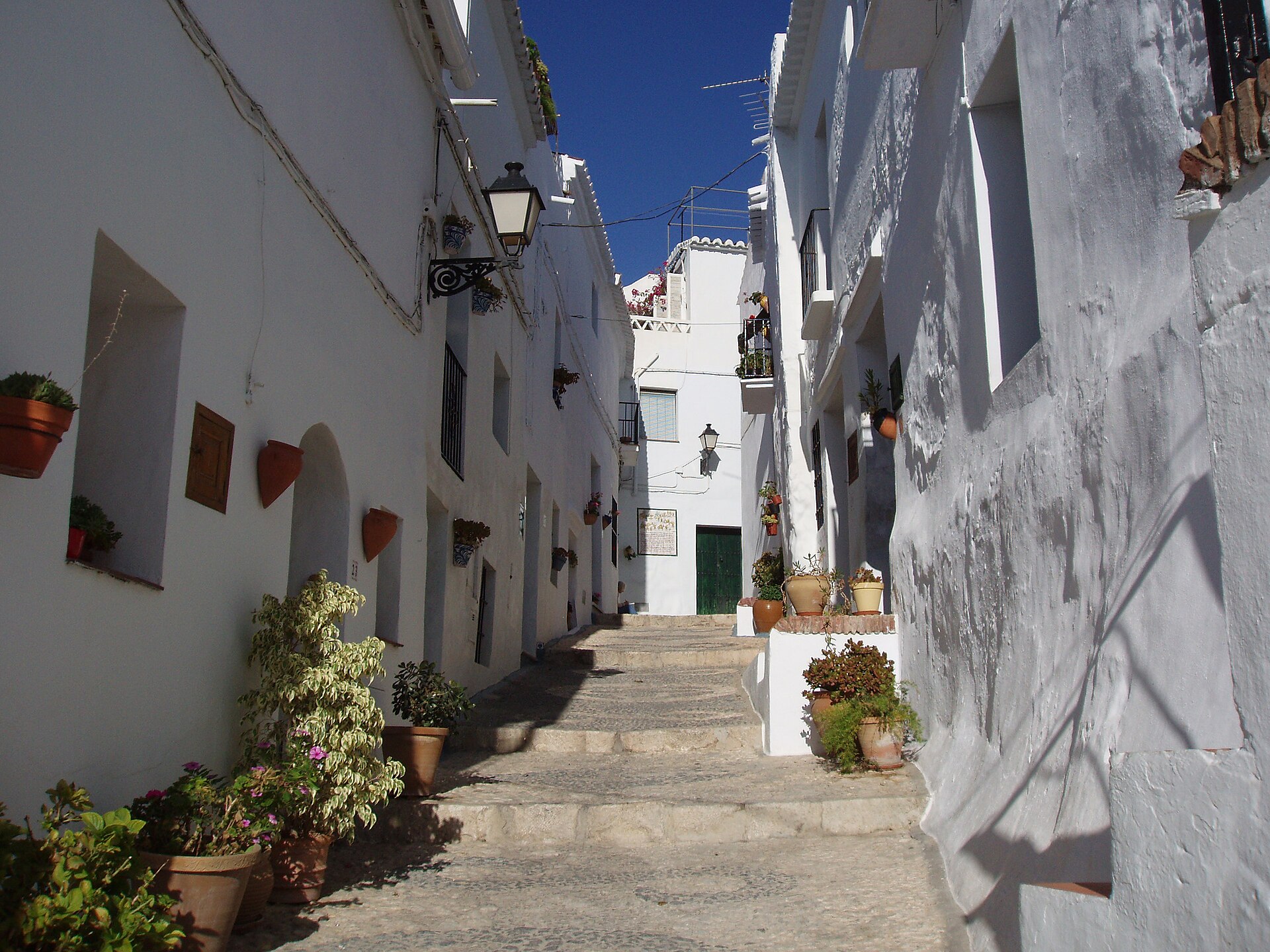
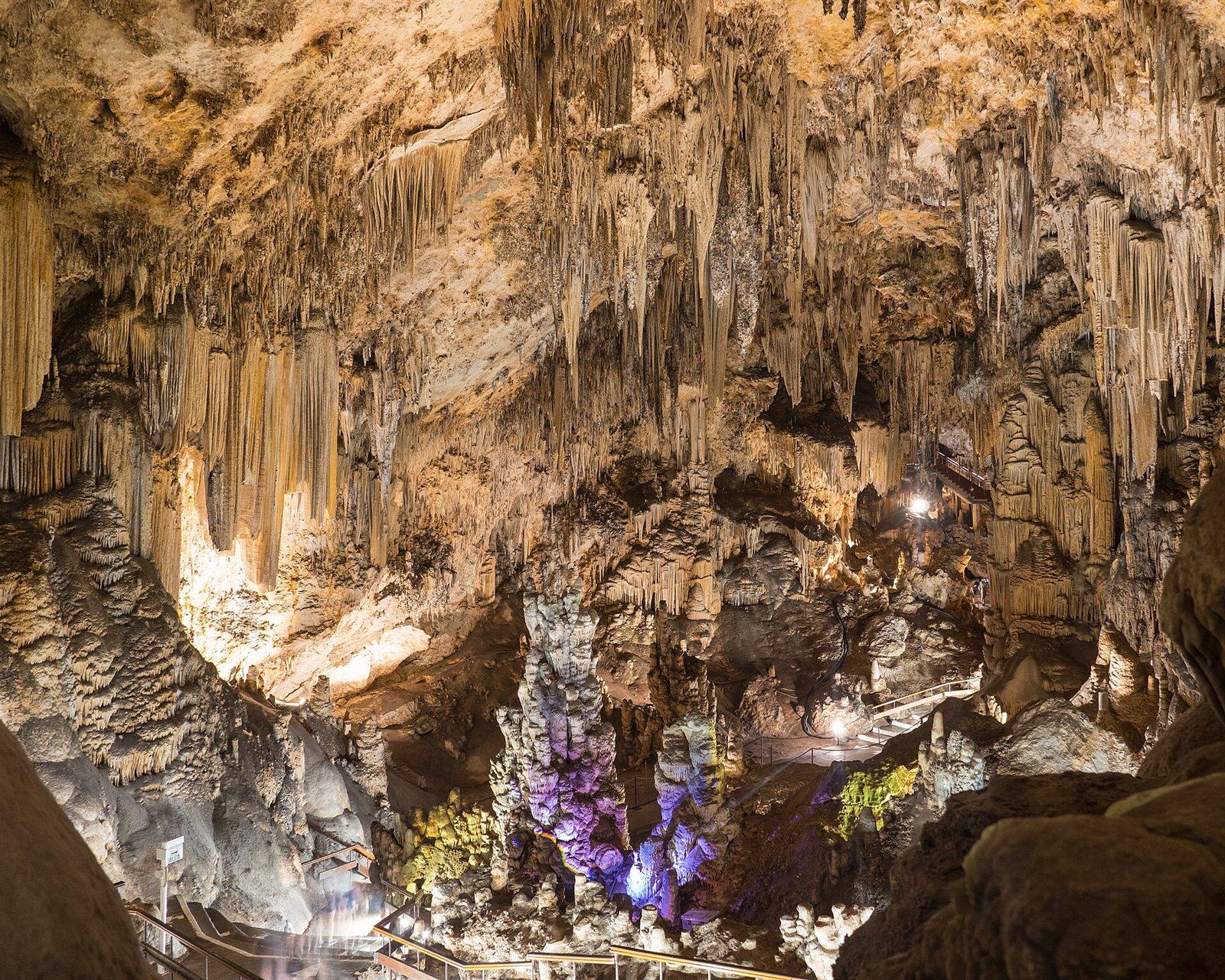
Frigiliana & Nerja: The Costa del Sol's Prettiest Corner Ask anyone who's lived here a while where the Costa del Sol is still genuinely pretty — not the high-rise stretch, the real thing — and they'll point east, past Málaga, to where the Sierra de Almijara drops almost straight into the sea. That's Nerja, and 7km up the switchbacks behind it, Frigiliana. We do this pair as a single day trip a couple of times a season, and it's the one we send visiting friends to do first. Here's how to combine both properly, what's worth your time, and what's quietly a tourist trap. Start at the Balcón de Europa. Nerja's old town funnels everyone down to the Balcón de Europa, a palm-lined promenade built on the stump of a clifftop fortress. It juts out over the sea with a 180-degree view of coves and the mountains behind. It's genuinely beautiful and genuinely mobbed — there's a busker, a guy who'll draw your caricature, and at the very tip a bronze statue of King Alfonso XII that every tourist photographs. Get there before 11am or after 6pm. Midday in July it's shoulder-to-shoulder. The streets feeding into it — Calle Pintada, Calle Almirante Ferrándiz (locals still call it Calle Cristo) — are the prettiest, whitewashed and tiled, and where the better restaurants hide. Down the steps on either side are Nerja's town beaches: Playa Calahonda — tiny, sheltered, right under the Balcón. Charming but it fills by 10am. Playa Burriana — the big one, 800m of sand a 15-minute walk east, with proper chiringuitos. This is where you actually swim and eat. If you only swim once in Nerja, make it Burriana and have lunch at Ayo's, the paella place at the far end that's been cooking rice in giant pans over orange-wood fires since the 1960s. The all-you-can-eat paella is around €11 and the spectacle is half the point. The Nerja Caves — go, but manage expectations. The Cuevas de Nerja, 4km east of town, are a genuine natural wonder — vast caverns with one of the world's largest stalactite columns, lit theatrically. Tickets are about €15 (children cheaper), and you should book online for a timed slot in summer because the on-the-day queue is brutal. Honest take: it's impressive for 30–40 minutes, the walkways are well-made, and it's blessedly cool when it's 33°C outside. But it's a one-way loop, fairly quick, and the gift-shop-and-coach-park energy at the entrance is strong. If your day is tight, the caves are the thing I'd cut before the coves. Bus N-3 runs out here from the centre, or it's a €7–8 taxi. The Maro coves — the part most people miss. This is the secret that isn't really a secret anymore but still feels like one. East of the caves, around the hamlet of Maro, the Acantilados de Maro-Cerro Gordo cliffs hide a string of small, clear-water coves backed by a waterfall. Playa de Maro is the easiest — there's a dirt car park above and a steepish path down (10 minutes, wear real shoes, not flip-flops). The water is the clearest on this whole coast. In summer the access road to the cove gets restricted and you may have to park up top and walk, or use the seasonal shuttle. Kayak operators on Burriana run morning trips along these cliffs to the waterfall for around €30–35, which honestly is the best way to see them and skips the parking headache entirely. For more on where the good swimming is along the coast, our best beaches guide has the full list. Up to Frigiliana. Now drive (or bus) the 7km up. The M-345 bus from Nerja's bus stop on Avenida de Pescia runs roughly hourly, takes about 15 minutes and costs around €1.20. By car it's ten minutes of tight bends with a car park at the bottom of the village — don't try to drive into the old town, the streets are donkey-width and you will regret it. Frigiliana repeatedly wins "prettiest village in Andalucía" polls and you'll see why in about four steps. The Barribarto quarter — the old Moorish kasbah — is a vertical maze of dazzling-white houses, cobbled ramps, blue plant pots, bougainvillea spilling over everything, and ceramic plaques telling the (bloody) story of the 1569 Morisco rebellion. It's small. You can walk the whole historic core in 90 minutes including coffee stops, and that's the right amount of time. Things worth doing here: Buy a bottle of miel de caña (sugarcane molasses) from Nuestra Señora del Carmen, the last cane-honey mill of its kind in Europe, right in the village. Climb to the top for the viewpoint over the valley to the sea — the higher you go, the fewer people. Eat at a place with a terrace. El Mirador de Frigiliana and the little bars around Plaza de las Tres Culturas do honest Andalusian food; a plate of local goat, a glass of wine and the view is the whole experience. The downside: the lower main street is wall-to-wall souvenir shops selling the same fridge magnets, and a few "típico" restaurants on the through-road are overpriced and forgettable. Climb past them. The magic is in the upper lanes where nobody's selling you anything. Combining both in one day. The rhythm we use: Morning — arrive in Nerja by 9.30, walk the Balcón before the crowds, swim at Burriana. Lunch — paella at Ayo's or a long lunch on Calle Cristo. Early afternoon — either the caves (cool, indoors, good for the hottest hours) or a kayak to the Maro coves. Late afternoon — drive up to Frigiliana for golden hour, when the white walls turn warm and the day-trippers have left. Evening — dinner on a Frigiliana terrace, then the dark drive back down. That's a full, satisfying day. Don't try to add the caves and the coves and a long beach session — something will feel rushed. Best season. Late May, June, and September are the sweet spot: warm sea, long days, and Frigiliana's lanes not yet crammed. July and August are hot and very busy — go early and late, never midday. The Festival de las Tres Culturas in Frigiliana (usually late August) is wonderful but packs the village. April and October are lovely for walking but the sea is still bracing; our sea-temperature page tells you when it's actually swimmable. Practical tips. Getting there: From Málaga, the Avanza/ALSA bus to Nerja runs frequently from the bus station (~1 hour, around €5). By car it's the A-7 motorway, about 50 minutes. From the western resorts, see our Nerja page for routes — it's a solid 75–90 minutes from Marbella. Park smart: Use Nerja's underground car park near Plaza de España, and Frigiliana's lot at the foot of the village. Don't circle the old towns hunting for street parking. Book ahead: Cave tickets online in summer; kayak trips a day or two ahead. Restaurants generally don't need booking except August evenings in Frigiliana. Wear proper shoes for the cove paths and Frigiliana's cobbles. Bring water — the village climb is hot. Skip if short on time: the lower souvenir strip in Frigiliana and the day's third activity. Less, done well, beats a checklist. Do it right and this is the corner of the coast people remember long after the beach resorts blur together.
Discover more